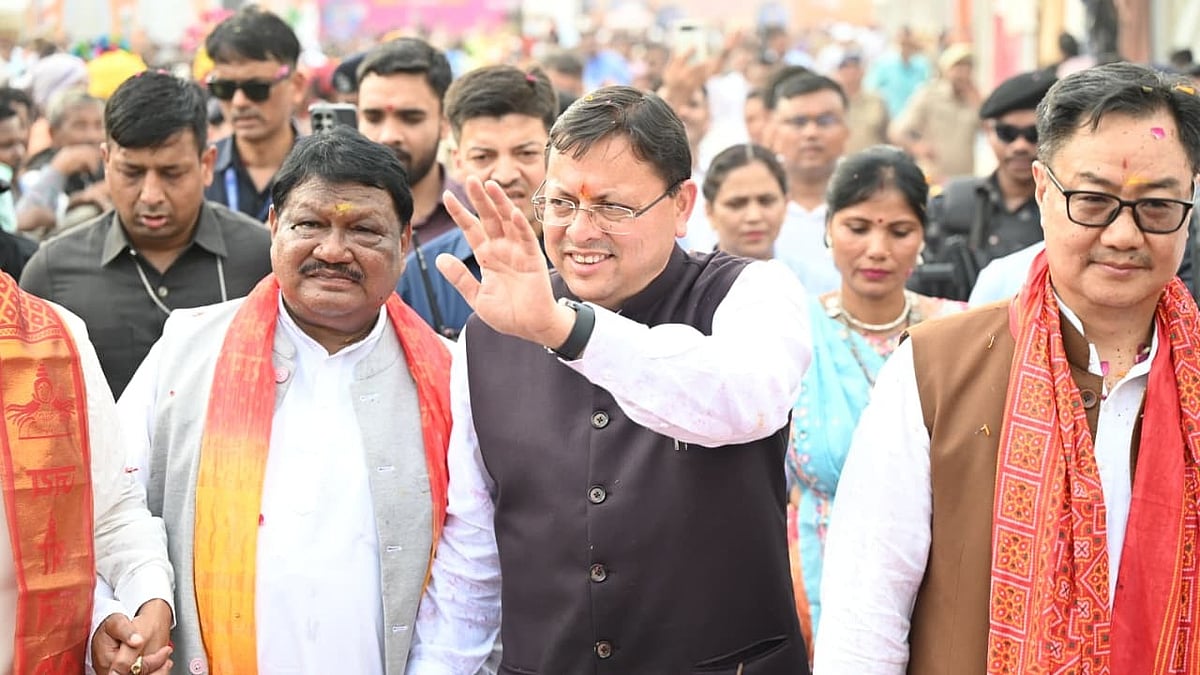
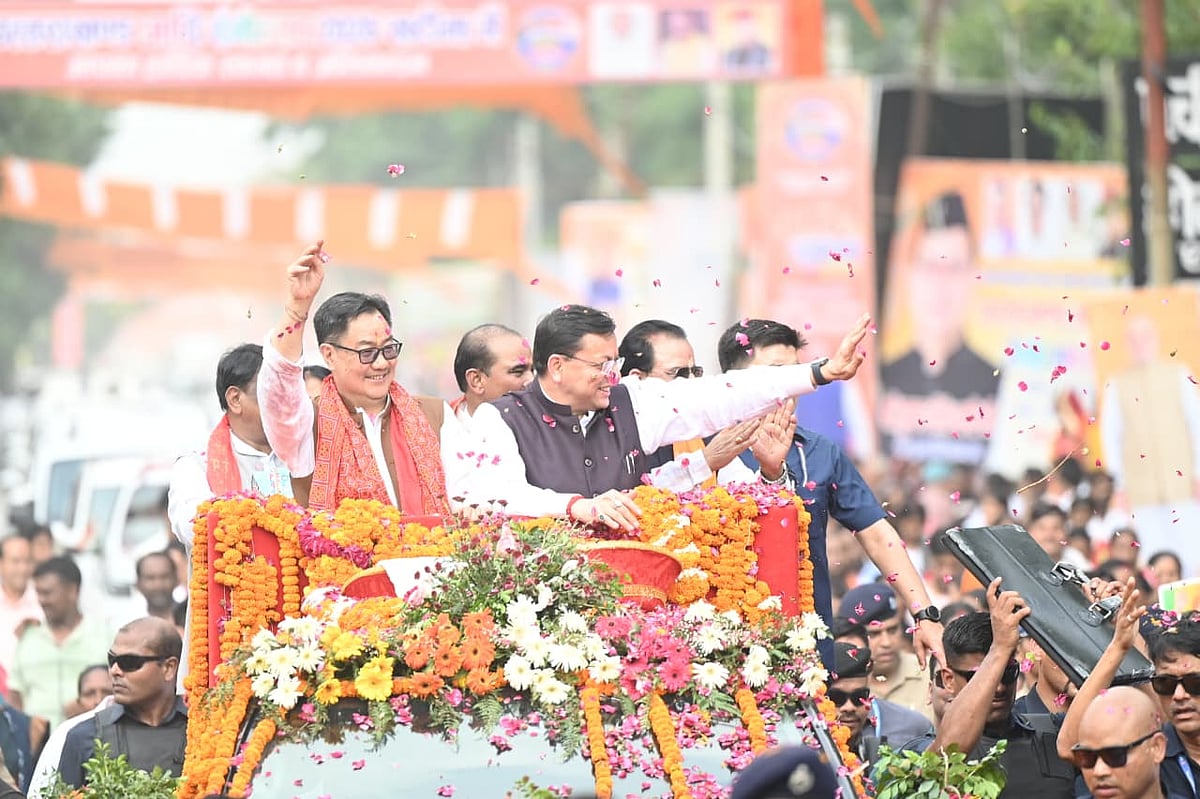
Khatima: Chief Minister Pushkar Singh Dhami, along with Union Tribal Affairs Minister Jual Oram and Union Minister Kiren Rijiju, inaugurated the three-day Uttarakhand Aadi Rangotsav in Khatima on Sunday. Before the inauguration, a grand roadshow was held, during which a large number of local residents and members of tribal communities warmly welcomed the Chief Minister and the Union ministers.
More than 15 states are represented by tribal artists, artisans and producers at the Aadi Rangotsav being held at the Naveen Mandi complex. The festival provides a common platform to showcase tribal art, folk culture, handicrafts, traditional products and cuisines from different parts of the country.
Chief Minister Pushkar Singh Dhami said that under Prime Minister Narendra Modi’s leadership, the dignity, development and empowerment of tribal communities have received greater priority since 2014. He said the Central and state governments are continuously working to connect tribal communities with the mainstream of development through education, healthcare, employment and economic empowerment.
Dhami said Ashram-style schools in Uttarakhand were being upgraded to the intermediate level, while Eklavya Model Residential Schools were providing better educational opportunities to tribal children. He also requested the Union ministers to establish an Eklavya Model Residential School in the Pithoragarh region.
The Chief Minister said the government was also working to connect traditional tribal products with markets, encourage small enterprises and make women economically self-reliant. Special attention was being given to preserving and promoting the culture, traditions and heritage of tribal communities such as the Tharu, Bhotia, Jaunsari and Boksa.
He said the decision to observe the birth anniversary of Bhagwan Birsa Munda as ‘Janjatiya Gaurav Diwas’ was an important step towards giving national recognition to the history and contribution of tribal communities. He also described President Droupadi Murmu’s elevation to the country’s highest constitutional office as a symbol of the growing participation and empowerment of tribal communities.
Union Tribal Affairs Minister Jual Oram said schemes worth more than ₹2 lakh crore were being implemented for the development of tribal communities under Prime Minister Narendra Modi’s leadership. He also praised the work being undertaken for tribal welfare in Uttarakhand under Chief Minister Dhami.
Oram announced that the Central government would provide ₹10 crore for the expansion and development of facilities at the Eklavya Model Residential School in Khatima.
Union Minister Kiren Rijiju praised Chief Minister Dhami’s work, saying he was confronting Uttarakhand’s challenges with determination while maintaining a simple and composed approach. Rijiju said extensive efforts had been undertaken for the welfare, dignity and empowerment of tribal communities since 2014 under Prime Minister Modi’s leadership.
The Aadi Rangotsav in Khatima showcased the diverse colours of tribal culture. Traditional attire, folk dances, handicrafts and tribal products gave the festival a distinctive character. With large participation from local residents, the festival has emerged as a platform not only for preserving tribal culture and heritage but also for promoting social and economic empowerment.

