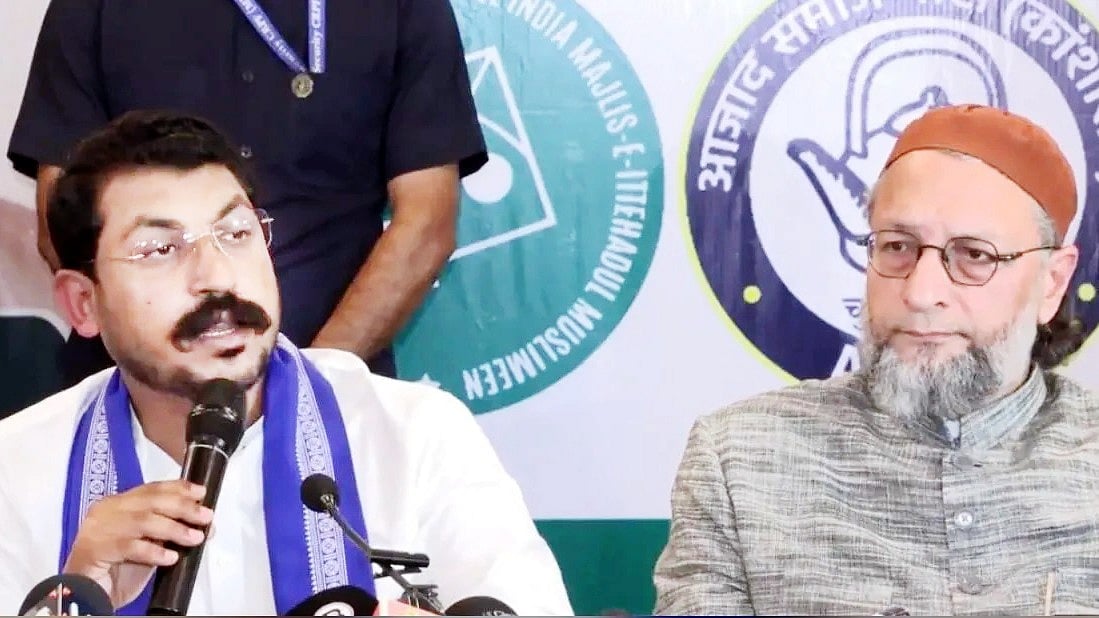
Lucknow: Uttar Pradesh's political landscape witnessed a significant development ahead of the 2027 Assembly elections as AIMIM chief Asaduddin Owaisi and Azad Samaj Party (Kanshiram) president Chandrashekhar Azad formally announced their political alliance on Thursday. The alliance has been named Samajik Parivartan Morcha, with Chandrashekhar Azad declared as its chief ministerial candidate.
Addressing a joint press conference in Lucknow, Owaisi said the alliance would work to prevent the BJP from returning to power for a third consecutive term. He described the new formation as a strong political alternative and announced that both parties would work together to ensure its success.
The alliance has announced its intention to contest all 403 Assembly seats in Uttar Pradesh. The leaders said their political agenda would focus on the rights and concerns of Dalits, backward communities, minorities and other deprived sections of society.
Chandrashekhar Azad described the formation as more than just another political front. He said it was not a traditional third front but the first front for social transformation. He added that the alliance would become stronger as more deprived, oppressed and marginalised communities joined it.
He alleged that successive governments had failed to deliver on promises made to the Bahujan community, leaving many people deprived of basic facilities, employment and equal opportunities. He also raised concerns over unemployment among educated youth, action against those raising their voices and the need to strengthen social justice.
Owaisi, meanwhile, highlighted education, unemployment and farmers' problems as key issues that the alliance would take up. He accused established political parties of treating marginalised communities merely as vote banks and said the new formation would focus on their genuine concerns. The alliance also announced a major public rally at Ramabai Ambedkar Maidan in Lucknow on November 26, which the leaders described as the beginning of a broader movement for social change.
The political significance of the alliance lies in its potential impact on the Dalit and Muslim vote base, which plays an important role in Uttar Pradesh elections. The new formation could create fresh challenges for the Samajwadi Party-led opposition alliance, particularly in constituencies where these communities have a substantial electoral presence. Owaisi had earlier expressed interest in joining the broader opposition camp, but the Samajwadi Party did not accommodate his proposal. The separate alliance now introduces another political equation ahead of the 2027 contest.
However, its electoral impact will depend on organisational strength, candidate selection, voter response and its ability to convert political support into votes.
With Chandrashekhar Azad projected as the chief ministerial face, the Samajik Parivartan Morcha has positioned itself as a new contender in Uttar Pradesh's increasingly competitive political landscape.

