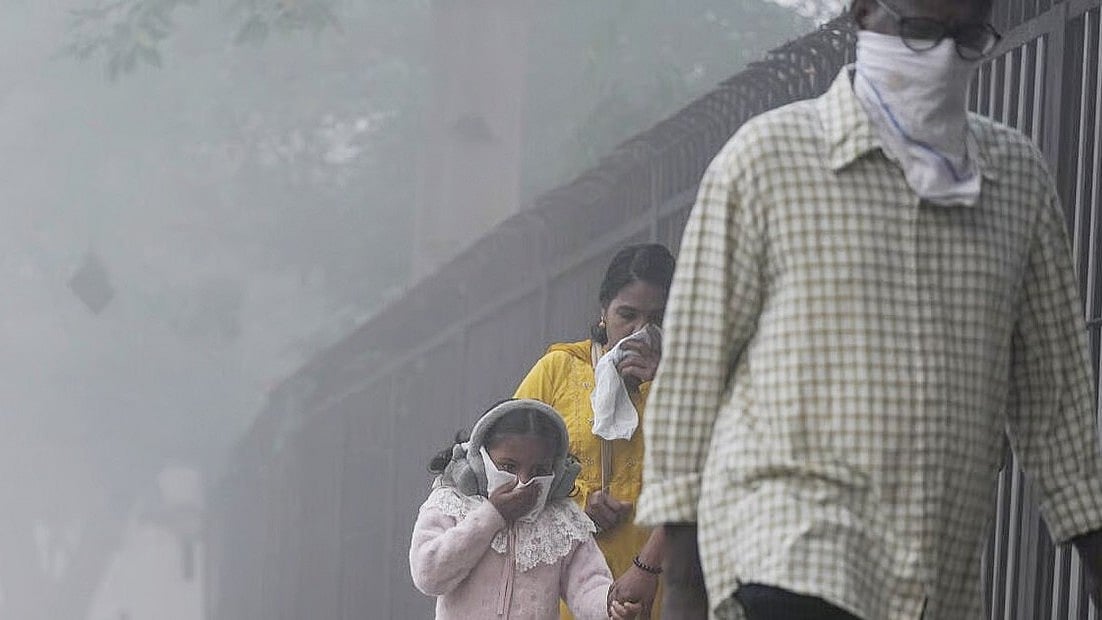
Lucknow: Air pollution is becoming a growing concern in Uttar Pradesh's capital, with the city's overall Air Quality Index (AQI) reaching 211, placing it in the 'poor' category. While residents are increasingly exposed to polluted air, another major concern has emerged: Lucknow has only six air quality monitoring stations for a population of approximately 60 lakh.
The limited monitoring network has raised questions about whether the existing infrastructure is adequate to track pollution levels across the rapidly expanding metropolitan area. With residential colonies, commercial hubs and industrial pockets spread across the city, six monitoring stations may not provide a comprehensive picture of air quality in every locality.
According to reports, areas such as Lalbagh, Aliganj and Talkatora have recorded worrying pollution levels. The AQI situation in these localities highlights the uneven distribution of pollution across the city and the need for more extensive monitoring.
Lalbagh recorded an AQI of 293, while Aliganj registered 282 and Talkatora reported 222, according to reported monitoring data. These figures indicate significant variations in air quality across different parts of Lucknow.
Vehicular emissions remain one of the major contributors to urban air pollution. The growing number of private vehicles, traffic congestion and emissions from diesel-powered vehicles add to the pollution burden.
Construction activities and road dust are other significant sources. Poorly managed construction sites, uncovered building materials, damaged roads and dust generated by vehicle movement contribute to particulate pollution.
Industrial emissions, open waste burning and other urban activities further aggravate the situation. During winter, low wind speeds and unfavourable atmospheric conditions can prevent pollutants from dispersing, resulting in their accumulation near the ground.
An AQI of 211 falls in the poor category under India's air quality classification. Prolonged exposure to such conditions can cause breathing discomfort, particularly among people with asthma and other respiratory conditions. Children, senior citizens and individuals with existing health problems are especially vulnerable.
Residents are advised to avoid prolonged outdoor physical activities during periods of high pollution and follow health advisories.
The situation has brought the need for expanding Lucknow's air quality monitoring network into focus. Additional monitoring stations in densely populated residential areas, traffic corridors and industrial zones could help authorities obtain a more representative picture of pollution levels.
Alongside expanding monitoring infrastructure, authorities need to strengthen pollution-control measures through regular road cleaning, construction dust management, vehicle emission checks and strict action against open waste burning.
With an AQI of 211 and just six monitoring stations serving nearly 60 lakh residents, Lucknow faces two interconnected challenges: controlling rising pollution and ensuring that its spread is accurately monitored. Protecting public health will require both a stronger monitoring network and sustained action against the sources of pollution.

