
Meta-owned WhatsApp has banned over 9,400 accounts connected to digital arrest scams in India over a 12-week period starting January 2026, the Supreme Court was informed.
The disclosure was made through submissions placed before the Court by Attorney General R. Venkataramani in ongoing suo motu proceedings concerning the rapid spread of scams in which fraudsters impersonate law enforcement officials and judicial authorities to extort money from victims, Bar and Bench reported.
WhatsApp's internal investigation revealed that most accounts targeting Indian users were operated from scam centres in Southeast Asia, particularly Cambodia. Fraudsters used display names such as 'Delhi Police,' 'Mumbai HQ,' 'CBI,' and 'ATS Department,' paired with official-looking logos as profile pictures to create a false sense of authority.
The company said its enforcement action followed inputs from the Indian Cyber Crime Coordination Centre (I4C), the Ministry of Electronics and Information Technology (MeitY), and the Department of Telecommunications (DoT). Notably, while government agencies had flagged around 3,800 scam-related accounts, WhatsApp's own processes led to a far wider crackdown, more than double the number of accounts identified.
"WhatsApp does not treat signals from investigation agencies and Government of India as isolated, one-off reports. Each signal is treated as a seed to map and disrupt the entire criminal network," the company said in its submission.
New detection tools deployed
WhatsApp told the Court it had deployed a suite of new enforcement tools as part of the crackdown, including a logo-matching system to detect impersonation, the logging of account display names, and a large language model trained to identify evolving scam patterns. The company has also built a database of known scam assets to enable faster detection of repeat offenders.
Enforcement targeted not only operators running such scams but also accounts promoting them within groups and channels, as well as linked assets sharing common behavioural or technical indicators such as reused media and overlapping infrastructure.
Alongside these measures, WhatsApp said it is rolling out product changes to prevent fraud at the point of first contact, including warnings for suspicious first-time messages, visibility of account age for unknown contacts, suppression of profile photos in high-risk interactions, and enhanced caller information for unknown numbers. The company said these changes are expected to result in a "material and observable decline" in such scams on the platform.

WhatsApp, however, acknowledged the limits of its own reach. "Many scams involve off-platform payment, coercion, and criminal infrastructure. WhatsApp can disrupt the accounts and networks; dismantling the underlying criminal operations requires coordinated multi-jurisdictional law enforcement action," it stated.
Several other key developments were disclosed to the Court and the Inter-Departmental Committee by the Attorney General, according to Bar and Bench.
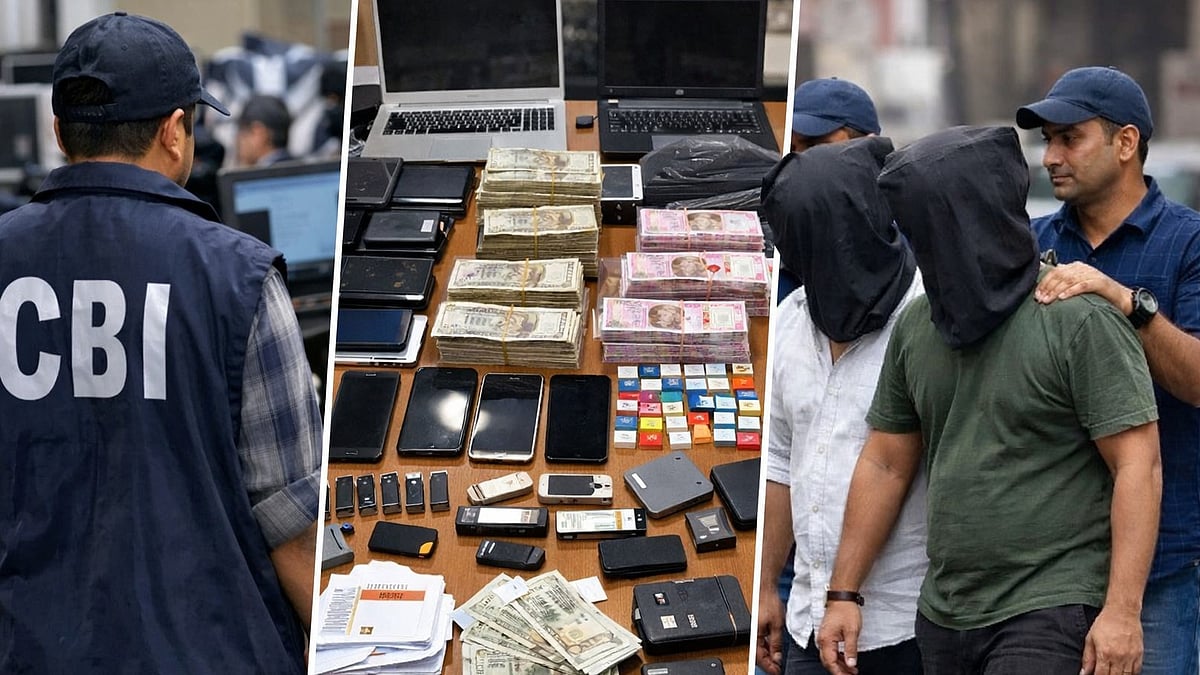
The CBI re-registered three digital arrest cases that crossed the ₹10 crore loss threshold set by the Supreme Court, two from Gujarat and one from Delhi, the latter involving a fraud of ₹22.92 crore against a single victim.

