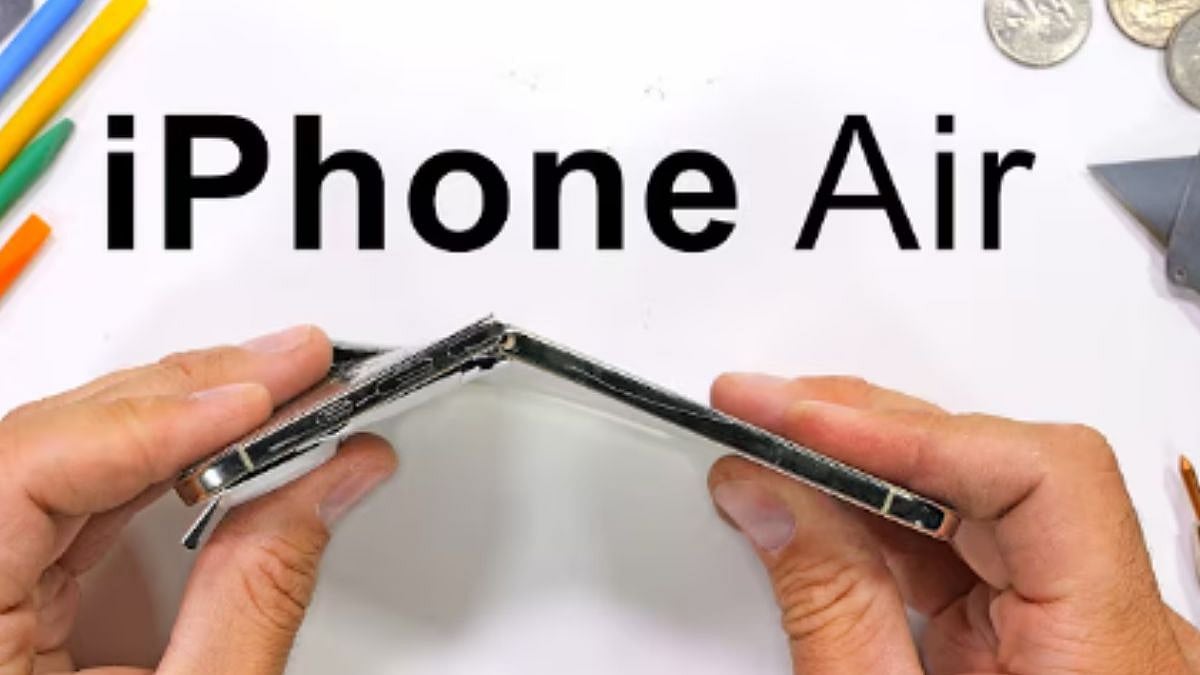
Apple released the iPhone Air with much fanfare, calling it 'the slimmest iPhone ever'. The company re-engineered the battery, changed the back camera module, and made a lot of other tweaks to attain the slim form factor. Now, three months later, Apple is scaling back production of the iPhone Air becasue of weak demand.
What went wrong? A lot of things that boils down to a clash between aesthetics and practicality. Consumer feedback shows that the iPhone Air didn't live up to the hype because of its battery endurance, steep pricing, and feature trade-offs. Forbes did a little digging and found some key factors on the epic fail of the iPhone Air.
iPhone Air battery life woes
According to surveys and reports, iPhone Air stumbled heavily on battery performance. Its compact 3,149mAh battery, while squeezing in efficiencies from the A19 processor, falls short of the iPhone 17 Pro and Pro Max models, often leaving users scrambling for a charger mid-day. Early adopters on platforms like Reddit have voiced frustration, with many planning returns due to the device's inability to sustain a full day's use under typical loads.
Accessories like the MagSafe battery pack, ironically, bulk up the slim profile, underscoring the design's inherent contradictions. Future silicon-carbon cells could tip the scales, but as things stand, they're not yet in play.
History repeats itself with the iPhone Air
This isn't Apple's first rodeo with razor-thin handsets. The iPhone 6S era sparked similar backlash, where slenderness came at the expense of stamina, leaving users divided. Today's complaints mirror those in the past. A pursuit of minimalism that sacrifices usability. As one analyst puts it, 'the trade-off between how slim the phone is and how big they can make the battery' remains unresolved. Without breakthroughs, slim phones risk perpetual criticism, especially when cases and add-ons negate the very thinness that defines them.

iPhone Air price too steep
Priced starting at Rs. 1,19,900, the iPhone Air demands justification as a four-year investment - the average upgrade cycle. Yet its single rear camera and average specifications feel stingy for the outlay, particularly when heat builds quickly during intensive tasks like gaming. No ultrawide or telephoto lenses, absent stereo speakers, and middling endurance compound the sense of it being an 'experimental' rather than essential device.
iPhone Air's biggest rival is the iPhone 17
The iPhone Air's biggest rival? Apple's own entry-level iPhone 17. For Rs. 37,000 less, the standard model packs a superior battery, dual-camera array, and negligible weight penalty - only 12 grams heavier. It even edges out the Google Pixel 10 on storage and overall bang for buck, despite the latter's display perks. Apple's base iPhone 17 stands as one of its strongest value propositions in years, making the Air look like a costly curio. No wonder consumers are leaning more towards the iPhone 17 than the slim variant.
Apple's holiday sale 2025 sees up to Rs. 10,000 off on the iPhone 17, MacBook Air M4, and other devices.

