
SpaceX's satellite internet service Starlink has announced it is now serving more than 12 million active customers across 160 countries, territories, and other markets, a milestone that underscores the extraordinary pace at which the service has scaled since its commercial debut. For now, however, that number does not include India, one of the world's largest and most underserved internet markets, where Starlink remains grounded by a tangle of regulatory approvals that have kept it on the runway for more than three years.
The announcement, made directly by Starlink, marks a significant moment for a service that entered commercial operations only a few years ago. Reaching 12 million active subscribers across more than 160 countries signals that satellite-based broadband has moved well beyond its early-adopter phase into mainstream territory.
Starlink's network is built on a constellation of Low-Earth Orbit (LEO) satellites orbiting approximately 550 kilometres above Earth, far closer than traditional geostationary satellites, which allows it to offer lower latency and faster speeds than older satellite internet technologies. The service promises speeds of 150 to 250 Mbps and has been particularly transformative in remote and rural areas where terrestrial fibre or mobile broadband infrastructure is absent or unreliable.
Starlink India: Licences in hand, launch still pending
India represents one of the most consequential markets Starlink has yet to crack. The company first announced its intent to enter the country in November 2022, the same year it was reprimanded by Indian authorities for accepting pre-orders without the necessary licences and was ordered to issue refunds.

Since then, progress has been incremental but real. India's space regulator INSPACe granted Starlink a five-year licence to offer space-based internet services in the country in July 2025, with the authorisation enabling Starlink Satellite Communications Private Limited to provide satellite communication services in India. The company had already received a key licence from India's telecom ministry in the weeks prior, making it the third company to receive India's approval to enter the space, after Eutelsat's OneWeb and Reliance Jio.
To strengthen its distribution footprint ahead of a commercial rollout, Starlink signed agreements with Mukesh Ambani's Reliance Jio and Sunil Mittal's Bharti Airtel, which together control more than 70 percent of India's telecom market.
Starlink India: The remaining roadblocks
Despite holding both a telecom ministry licence and an INSPACe authorisation, Starlink's commercial launch in India remains stalled. Fresh regulatory hurdles have emerged, with its foreign direct investment (FDI) proposal still under review and key approvals pending. The government continues to examine security-related concerns amid evolving geopolitical conditions.
Concerns have been flagged around cross-holding structures involving parent company SpaceX, along with certain technical parameters. The FDI application is currently on hold and could be rejected if the company fails to adequately address queries raised by authorities.
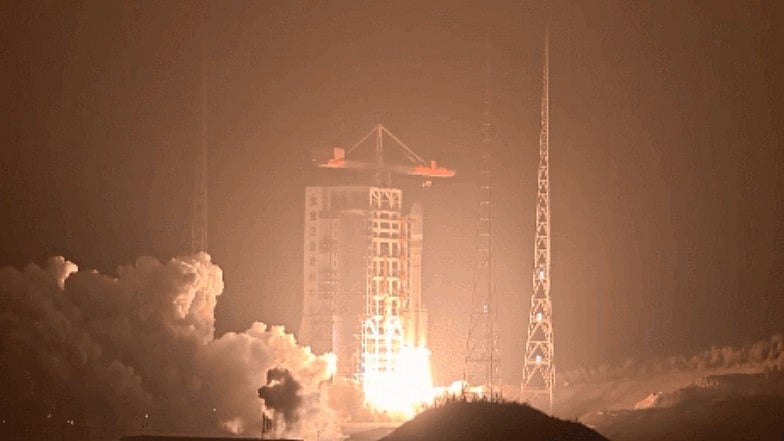
The approval process involves multiple layers. A senior government official confirmed that while Starlink has received a go-ahead from INSPACe and the Department of Telecommunications, security clearance is still in limbo. The company's FDI application is pending with the Department of Space, and permission for the use of satellites to link to India must also be granted by that department.
Even beyond FDI approval, Starlink is yet to receive spectrum allocation, a crucial requirement to start operations. Without spectrum, the company cannot legally offer satellite broadband services in India, regardless of its technological readiness. Rivals Eutelsat OneWeb and Jio-SES have moved further ahead by securing key approvals and aligning more closely with India's regulatory framework.
Starlink India: The spectrum standoff
Spectrum allocation has been one of the most contentious dimensions of Starlink's India entry. The Telecom Regulatory Authority of India (TRAI) has identified the spectrum bands and proposed a five-year allotment, extendable by two years, as per its May 2025 recommendations. Starlink, however, has pushed for a longer 20-year term.
Pricing is an equally unresolved issue. TRAI has proposed a 4 percent spectrum usage fee on adjusted gross revenue, along with additional charges that could push monthly user costs above Rs. 4,200, notably higher than Starlink's pricing in neighbouring Bhutan. This, combined with an 8 percent licence authorisation fee, raises concerns that the service may remain unaffordable for the rural and remote households it aims to serve.

