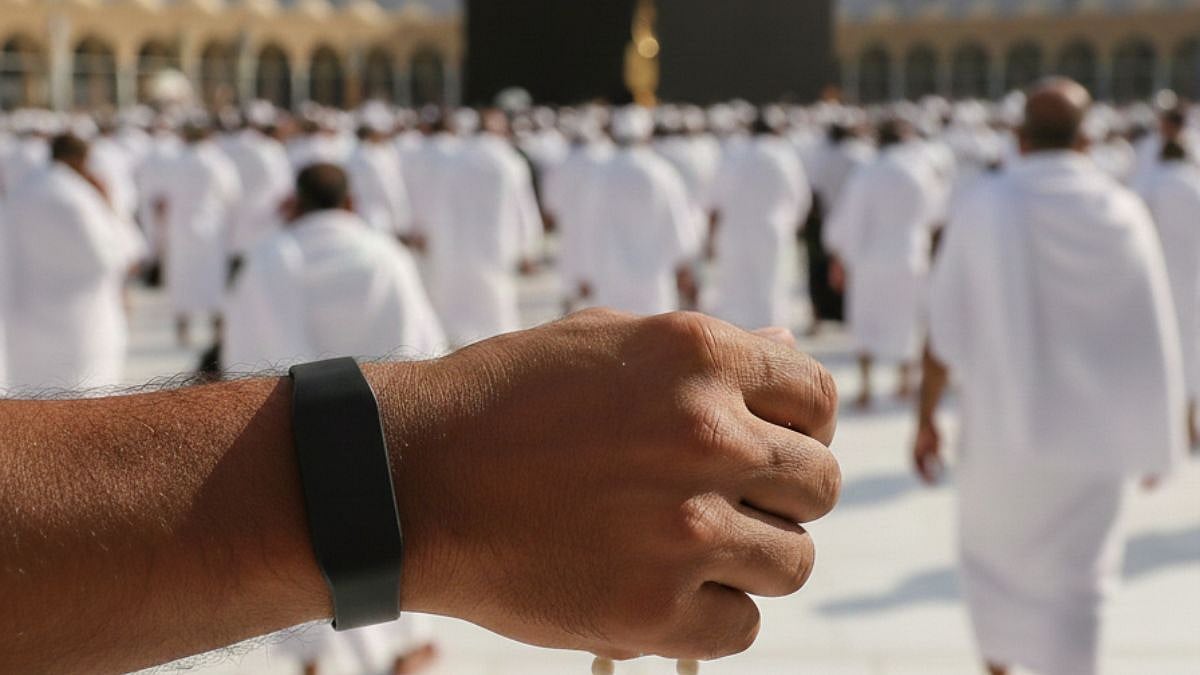
The Haj Committee of India (HCoI) will issue smart wristbands to all Indian pilgrims embarking on the sacred journey to Makkah and Madinah in 2026. The new tech mandate initiative marks a major step forward in leveraging technology to enhance pilgrim safety and convenience during the pilgrimage.
Haj 2026 smart wristband key features and Haj Suvidha app 2.0
According to the official Guidelines for Haj-2026 released by HCoI, the smart wristbands will be equipped with an array of features designed to support pilgrims throughout their journey. The devices will include a location tracker, pedometer, SOS button, Qibla compass, prayer timings, and the ability to track personal health parameters of pilgrims.

The wristbands are designed to work in conjunction with the Haj Suvidha App 2.0, which pilgrims are required to download and actively use from the application stage itself. The integration aims to create a comprehensive digital ecosystem for managing the pilgrimage experience.
Here's a comprehesive low down on the new features of the smart wristband:
1. Location Tracking: The GPS-enabled tracker will help authorities locate pilgrims in crowded areas and assist family members in staying connected during the pilgrimage. This feature becomes particularly crucial in densely populated zones like Mina, Arafat, and Muzdalifah, where millions of pilgrims converge.
2. Health Monitoring: The wristbands will track vital health parameters, providing an additional layer of safety for elderly pilgrims and those with pre-existing medical conditions. This feature aligns with HCoI's emphasis on medical screening, given that the pilgrimage involves walking up to 25 kilometers daily in harsh climatic conditions.
3. SOS Emergency Button: In case of emergencies, pilgrims can activate the SOS feature to alert authorities and receive immediate assistance.
4. Religious Guidance Tools: The device includes a Qibla compass to help pilgrims orient themselves during prayers and displays accurate prayer timings based on the pilgrim's location.
5. Pedometer: The step counter will help pilgrims track their physical activity throughout the journey, which is particularly relevant given the physically demanding nature of the pilgrimage.
The smart wristband initiative is part of a broader digital transformation of the Haj pilgrimage management system. The Haj Suvidha App 2.0 provides pilgrims with access to training content, accommodation details, flight information, baggage tracking, helpline services, grievance redressal, feedback mechanisms, and language translation services.

HCoI has mandated that the 'Cover Heads' must have working mobile numbers registered along with smartphones on international roaming or local packages with a minimum of 2GB data per day to fully utilize the app's functionalities.
All pilgrims will also receive a mandatory Nusuk Card upon arrival in Saudi Arabia, which serves as the primary identification document essential for accessing services and moving between holy sites. Pilgrims without the Nusuk Card may face penalties, denial of services, or detention by Saudi authorities.
Haj 2026: Advanced digital infrastructure
The entire Haj pilgrimage management system has been completely computerised, including the booking of Haj seats at embarkation points. The Kingdom of Saudi Arabia has mandated that all processes and information related to pilgrims - including accommodation, transportation, flight itineraries, and personal details - must be mapped online on Saudi Arabia's Nusuk portal for visa issuance.
Selection of pilgrims is conducted through Qurrah, a computerised draw of lots based on randomisation, which is live-streamed on the HCoI website for transparency.
Other key directives for Haj 2026
The Ministry of Minority Affairs has notified several important guidelines for Haj 2026. Applications opened on July 7, 2025, with the closing date set for July 31, 2025. India's Haj quota has been distributed with 70 percent allocated to HCoI and 30 percent to Hajj Group Organisers.
All applicants must possess machine-readable valid Indian passports issued before the closing date and valid until at least December 31, 2026. Medical screening and fitness certificates are mandatory for every applicant, with a two-stage screening process - once at application and again at embarkation.
The policy enforces a "once in a lifetime" rule, prohibiting repeat Haj through HCoI except for those serving as Mehrams or companions for pilgrims aged 65 and above. Pilgrims aged 65 or above must be accompanied by a companion aged 18-60 years.
A Short Haj Package with a 20-day duration will be available for up to 10,000 pilgrims at selected embarkation points including Delhi, Mumbai, Bengaluru, Chennai, Hyderabad, Cochin, and Ahmedabad.
There will be 17 embarkation points across India for Haj 2026, including major cities like Mumbai, Delhi, Kolkata, Bengaluru, Hyderabad, Ahmedabad, Lucknow, Srinagar, and others.
The advance Haj amount has been set at Rs. 1,52,300, which includes Rs. 1,50,000 advance payment, Rs. 2,000 miscellaneous dues, and Rs. 300 non-refundable processing fee. Tentative flight operations are scheduled to commence from April 18, 2026, with return flights beginning June 1, 2026.

