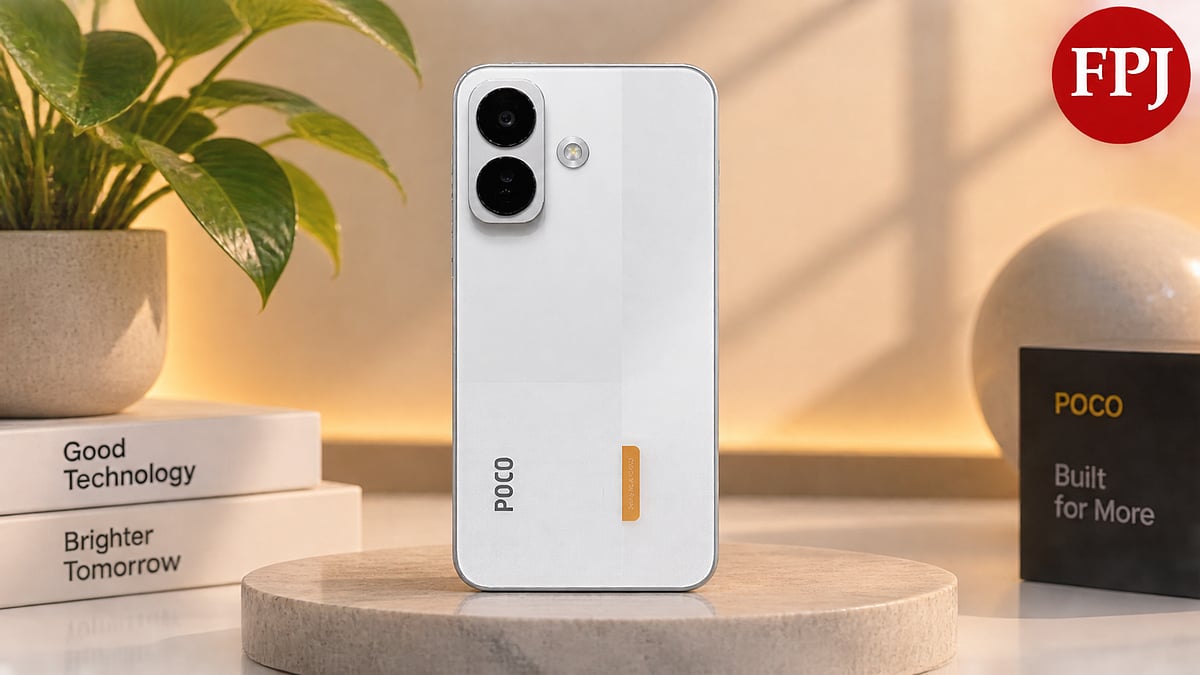
Poco has expanded its X-series lineup in India with the Poco X8, positioning it as the durability and battery-focused entrant priced from Rs. 29,999 for the 6GB RAM and 128GB storage variant, going up to Rs. 32,999 for 8GB and 128GB, and Rs. 35,999 for the top 8GB and 256GB configuration. We have spent over a week with the device as our daily driver, running it through benchmarks, camera tests, and everyday use, and here is our comprehensive, no-holds-barred review of the Poco X8.
Poco X8 Design
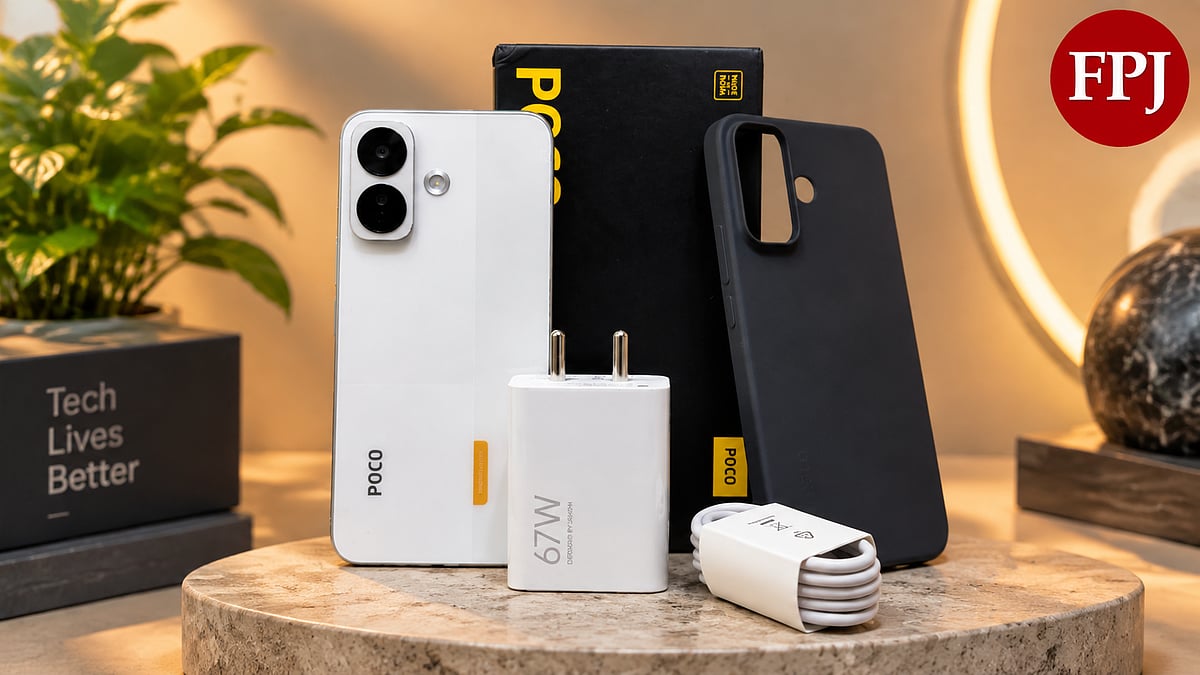
The Poco X8 leans into a utilitarian, almost industrial design language rather than chasing a premium look, and that decision pays off in how the phone actually holds up in daily use. The dual camera module sits in a rounded rectangular island on the top left of the back panel, with the two lenses stacked vertically alongside the LED flash. The rear panel on our unit has a clean, minimal finish with the Poco branding running vertically and an accent strip near the bottom, giving it a distinct look that avoids blending into the sea of similarly designed mid-rangers.
In terms of ergonomics, the phone sits well in the hand despite its large footprint, with grip aided by a flat frame and rounded corners that avoid any sharp edges digging into the palm. The volume rocker and power button are placed on the right edge, easily reachable with a thumb, and both offer good tactile feedback. The bottom edge houses the USB-C port flanked by the speaker grille and SIM tray, while the layout keeps the primary microphone and speaker cleanly separated for stereo output. Poco has clearly prioritised durability here, backing the device with Corning Gorilla Glass Victus 2 protection along with IP66, IP68, IP69, and IP69K ratings, a combination that is genuinely uncommon at this price and should offer real peace of mind against dust, high-pressure water jets, and accidental submersion.
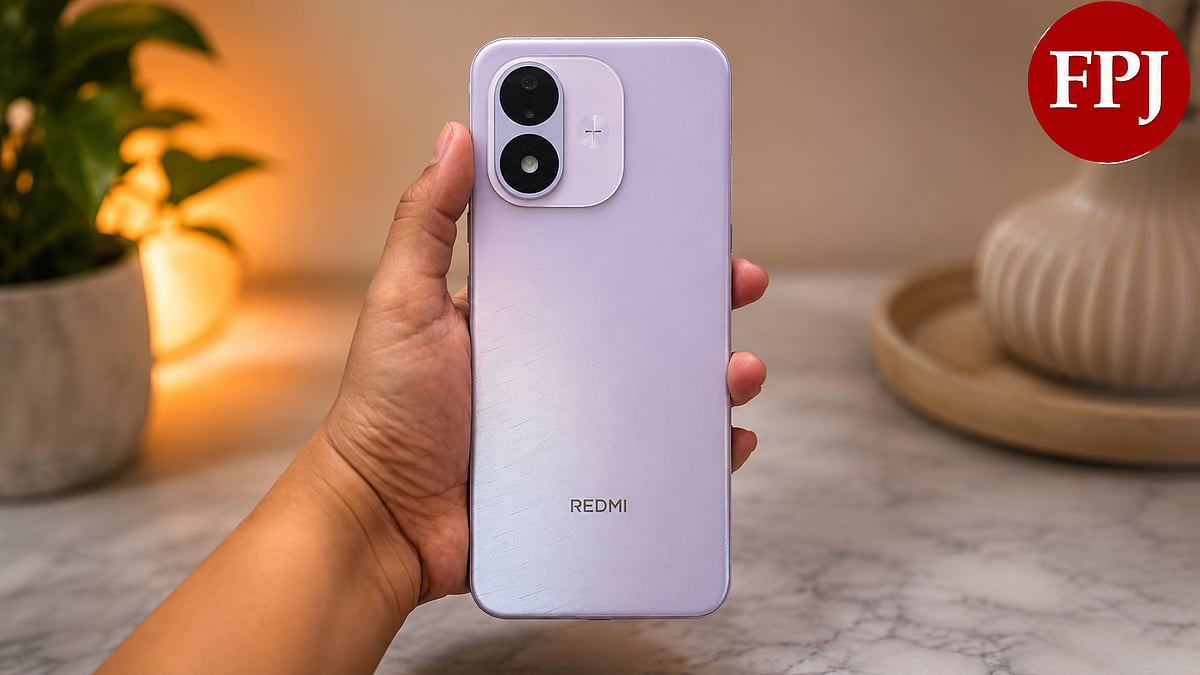
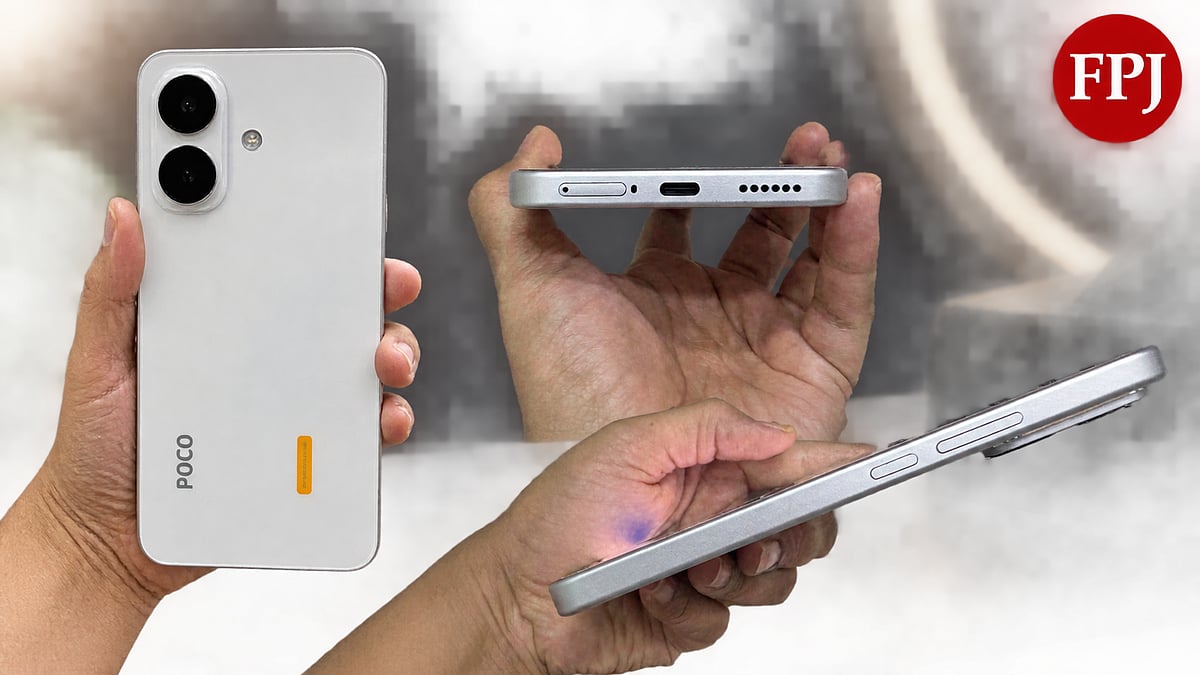
Poco X8 | FPJ
Poco X8 Display
The Poco X8 sports a large 6.83-inch 1.5K AMOLED panel with a 120Hz refresh rate, rated for peak brightness of up to 3,500 nits, along with HDR10+ and Dolby Vision support. On paper, this is a genuinely strong display for the price bracket, and our week of use backs that up. Outdoor visibility is a clear strength - even under harsh midday sun, the panel ramps up brightness convincingly enough that we rarely struggled to read text or make out on-screen elements, something budget and mid-range LCD panels routinely fail at.
Colours on the AMOLED panel are punchy without tipping into oversaturation, helped by 100 percent DCI-P3 colour coverage, and blacks are appropriately deep given the panel technology. Viewing angles hold up well too, with minimal colour shift when the phone is tilted. Poco has also included Wet Touch 2.0 for better responsiveness with wet fingers, a feature we found genuinely useful, and a high 3,200Hz instantaneous touch sampling rate that translates to noticeably good touch responsiveness during scrolling and gaming. Overall, this is one of the better displays we have used in this segment recently.
Poco X8 Processor
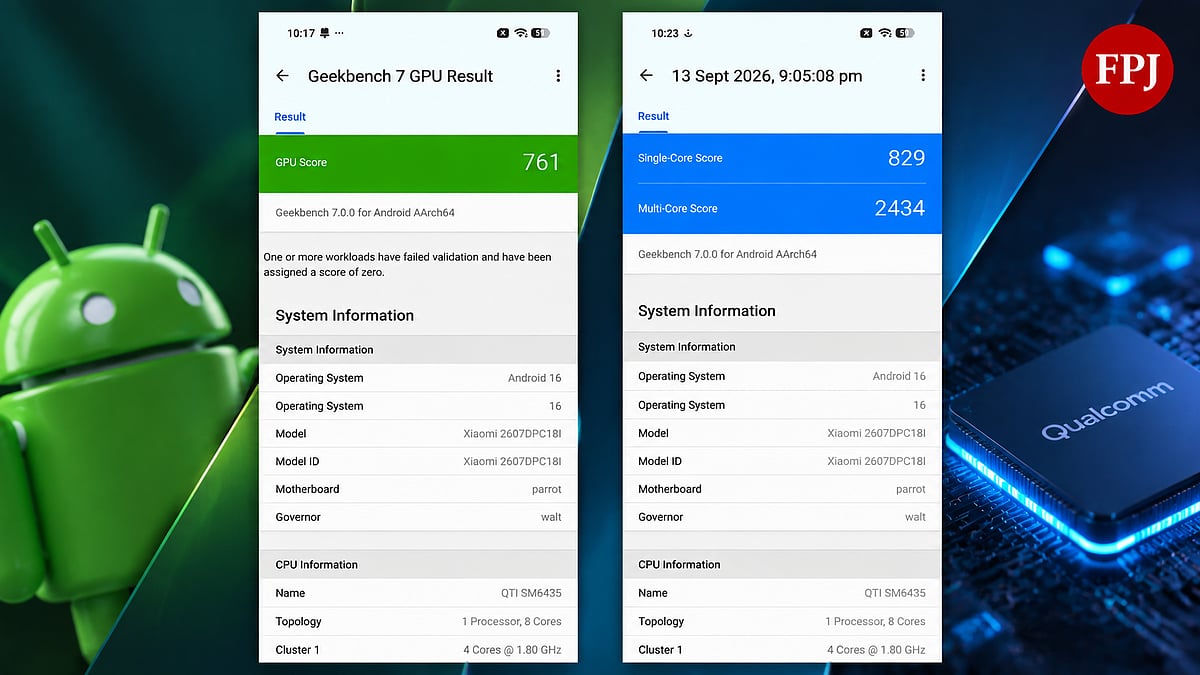
Powering the Poco X8 is the Qualcomm Snapdragon 6s Gen 4 chipset, paired with an Adreno GPU. On Geekbench 7, our unit scored 829 in single-core and 2,434 in multi-core tests, while the GPU scored 761 on Geekbench's GPU benchmark. These numbers place the chipset squarely in the capable-but-not-flagship territory typical of this segment, and our real-world experience largely mirrors that. Day-to-day tasks like browsing, streaming, and social media feel smooth, with apps opening promptly and multitasking holding up reasonably well.
Push the phone toward heavier gaming, and the Snapdragon 6s Gen 4's limitations become apparent, though this is entirely in line with what this chipset class is built for. The phone doesn't stutter through casual use, and app-switching feels consistent rather than jarring, which matters more for the average buyer this phone is aimed at than benchmark chart-topping ever will.

Poco X8 | FPJ
Poco X8 Camera
The Poco X8 uses a dual camera setup on the back, comprising a 50-megapixel primary sensor with optical image stabilisation and a 2-megapixel depth sensor for portrait shots, while a 16-megapixel camera handles selfies and video calls. In good daylight, the primary sensor produces detailed, well-exposed shots with accurate colours, and the OIS noticeably helps with steadier handheld shots and slightly better low-light stabilisation than we'd expect from a sensor at this price.
The absence of a dedicated ultrawide lens is a real trade-off worth flagging, since the 2-megapixel depth sensor exists purely to aid portrait mode rather than expand your framing options, unlike some rivals in this bracket that still offer a usable ultrawide camera. Portrait shots themselves come out with decent subject separation, though edge detection around finer details like hair still shows the usual mid-range struggles. The 16-megapixel selfie camera captures clean, natural-looking images without excessive skin smoothening, making it a reliable choice for video calls and casual selfies alike.
Poco X8 | FPJ

Poco X8 | FPJ
Poco X8 UI
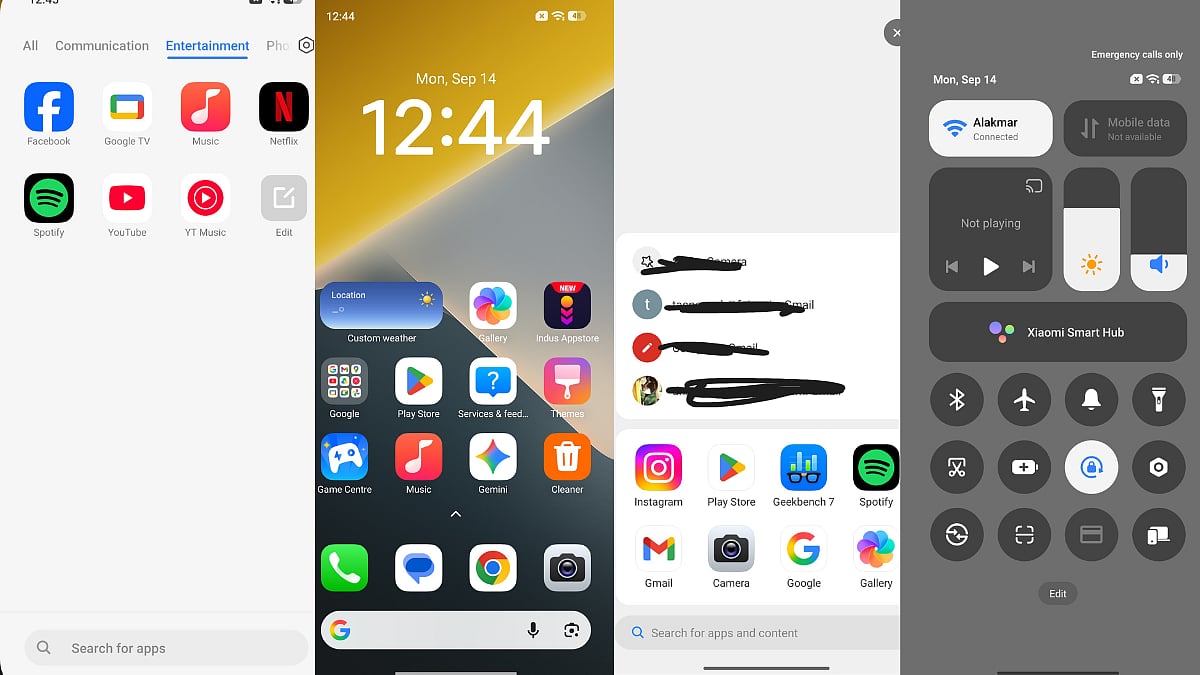
The Poco X8 runs HyperOS 3 based on Android 16, and our week with it revealed a mix of genuinely useful software touches and the usual mid-range compromises. One of the standout features is automatic app categorisation, where downloaded apps get sorted into folders like Entertainment, Communication, Photography, Shopping, Tools, and Games without any manual effort, which meaningfully cuts down on home screen clutter over time. The App Finder tool is another highlight, surfacing your most recent tasks and last-used apps in a way that makes returning to unfinished work noticeably quicker than digging through the app drawer.
Touch response across the UI feels surprisingly polished, with animations and transitions feeling fluid rather than the slightly janky experience we sometimes see on chipsets in this range. On the photo editing front, Google Photos and Xiaomi's own gallery app offer a genuinely wide range of manual editing tools, though AI-powered editing options are comparatively thin, especially when stacked against rivals that have leaned harder into generative editing features this year. The software's biggest letdown remains bloatware: the Indus App Store comes pre-installed and feels like an unnecessary addition that most users will end up removing, alongside the usual scattering of promotional apps and notifications that need manual cleanup after setup. On the positive side, Poco's promised four major Android OS upgrades and six years of security updates is a genuinely strong commitment that stands out in this price bracket.
Poco X8 | FPJ
Poco X8 Battery
The 9,000mAh silicon-carbon battery is arguably the Poco X8's headline feature, and it delivers exactly the kind of multi-day runway that number suggests. Through our review period, moderate to heavy daily use, including streaming, social media, calls, and camera use, consistently pushed the phone past a full day with battery to spare, and lighter users should comfortably stretch this closer to two days. Charging is handled via a 67W wired adapter, which offers a reasonably quick top-up given the sheer size of the battery cell, and the phone also supports 22.5W wired reverse charging, letting it double up as a power bank for other devices when needed.
Poco X8 Verdict
The Poco X8 makes a clear, confident pitch: if battery anxiety and durability concerns are what keep you from fully trusting a mid-range phone, this is one of the most convincing answers currently on shelves in India. The AMOLED display outperforms expectations at this price, the software includes some genuinely thoughtful organisational touches, and the IP66/68/69/69K rating combined with Gorilla Glass Victus 2 gives it a durability profile that few rivals can match. Where it asks for compromise is the camera system, which trades away a proper ultrawide lens, and the software experience, which still carries more bloatware than we'd like despite Poco's excellent long-term update promise.
For buyers prioritising screen-on time, display quality, and peace of mind against drops and water damage over having the most versatile camera system in the segment, the Poco X8 is a well-rounded and easy phone to recommend.
Poco X8 | FPJ
Rating: 4/5
Pros
- Massive 9,000mAh battery that comfortably lasts through a full day, often stretching into two.
- Bright, vibrant 1.5K AMOLED display with excellent outdoor visibility.
- Exceptional durability with Gorilla Glass Victus 2 and IP66/68/69/69K ratings.
- Smooth touch response and useful software features like automatic app categorisation and App Finder.
- Strong software update commitment of four OS upgrades and six years of security patches.
- Fast 67W charging and useful 22.5W reverse charging support.
Cons
- No dedicated ultrawide camera, only a 2-megapixel depth sensor.
- Noticeable bloatware, including an unnecessary pre-installed Indus App Store.
- Limited AI-powered photo editing tools compared to rivals.
- Snapdragon 6s Gen 4 shows its ceiling under sustained heavy gaming.

