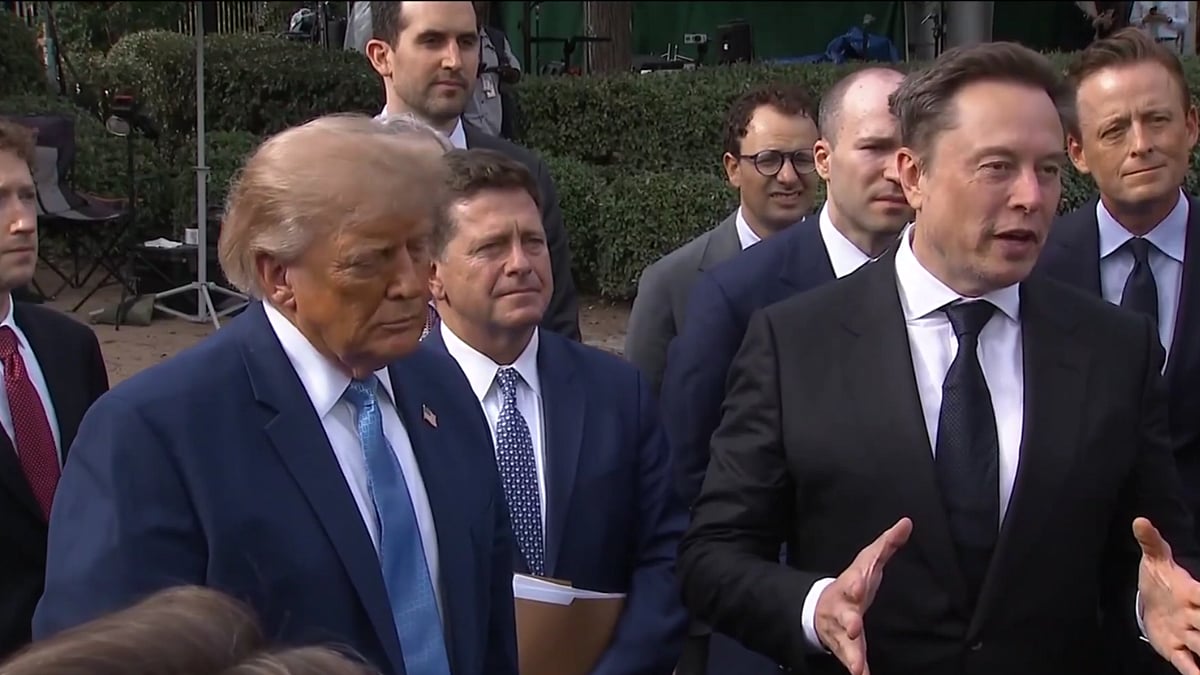
Elon Musk told reporters at the White House that advanced AI is most likely to deliver an 'age of abundance'. He said it would bring not just a basic income for citizens but a 'universal high income'.
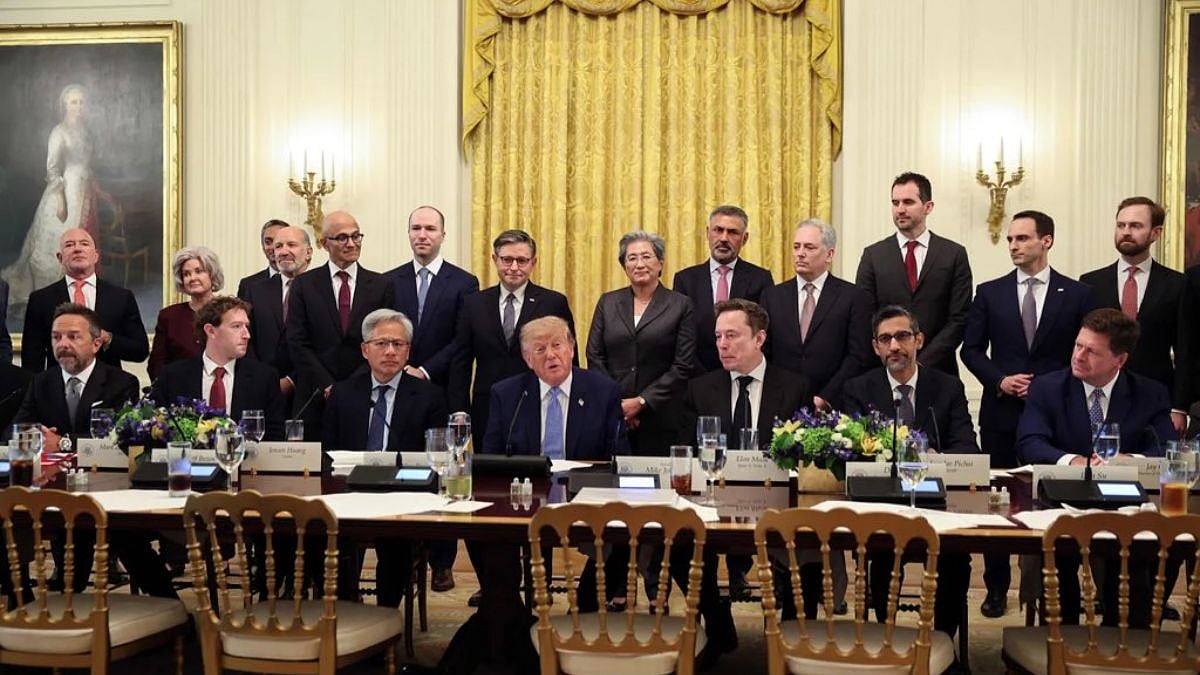
Musk spoke alongside President Donald Trump and other AI leaders after a White House luncheon. The all-day summit brought together 30 top tech executives, among them Musk, Anthropic CEO Dario Amodei and Meta CEO Mark Zuckerberg.
Healthcare for everyone
Musk said robots and superintelligence could give everyone in the world better medical care than anyone in the room now enjoys, himself included. He asked whether that wouldn't be wonderful.
"I think by FAR the most likely outcome is an AGE OF ABUNDANCE where we don't have just universal basic income, we have universal HIGH income. And people speak about medical benefits," he said.
"Jobs have always changed"
Musk acknowledged that AI will change work but said jobs have always evolved. He pointed to the human 'computers' of the past, when whole buildings of people did calculations by hand, a job digital machines took over.
"Jobs are going to change. Jobs have ALWAYS changed. But being a computer used to be a job. There used to be buildings FULL of people doing calculations, but now digital computers to do those tasks. I don't think anyone is pining to go back and do calculations all day to do bank interest rates, which is what they used to do," he explained.
He predicted an evolution of roles rather than mass job loss. Citing the President, he said unemployment has not risen and demand for workers is strong. He described the most probable outcome as hugely beneficial, a future people would want.
Other voices at the summit
Amodei said the technology poses 'very real risks' and that discussions on addressing them are still underway. Nvidia CEO Jensen Huang said there is 'no conflict' between innovation and safety.
Musk has long promoted this idea. At the UK AI Safety Summit in 2023 he said "universal high income" would replace universal basic income, without explaining how the two differ. Economists remain divided. MIT's Daron Acemoglu estimates AI will lift the economy by only about 1 percent by 2035, far short of an abundance explosion.

