
Lenskart has revised its in-store employee style guide following widespread outrage over an outdated internal document from February that reportedly banned visible Hindu symbols such as bindi, tilak, and kalawa while permitting hijabs and turbans.
The controversy erupted when the old document circulated widely on social media, sparking accusations of cultural insensitivity and selective religious accommodation. The debate on cultural sensitivity in corporate workplaces continues.
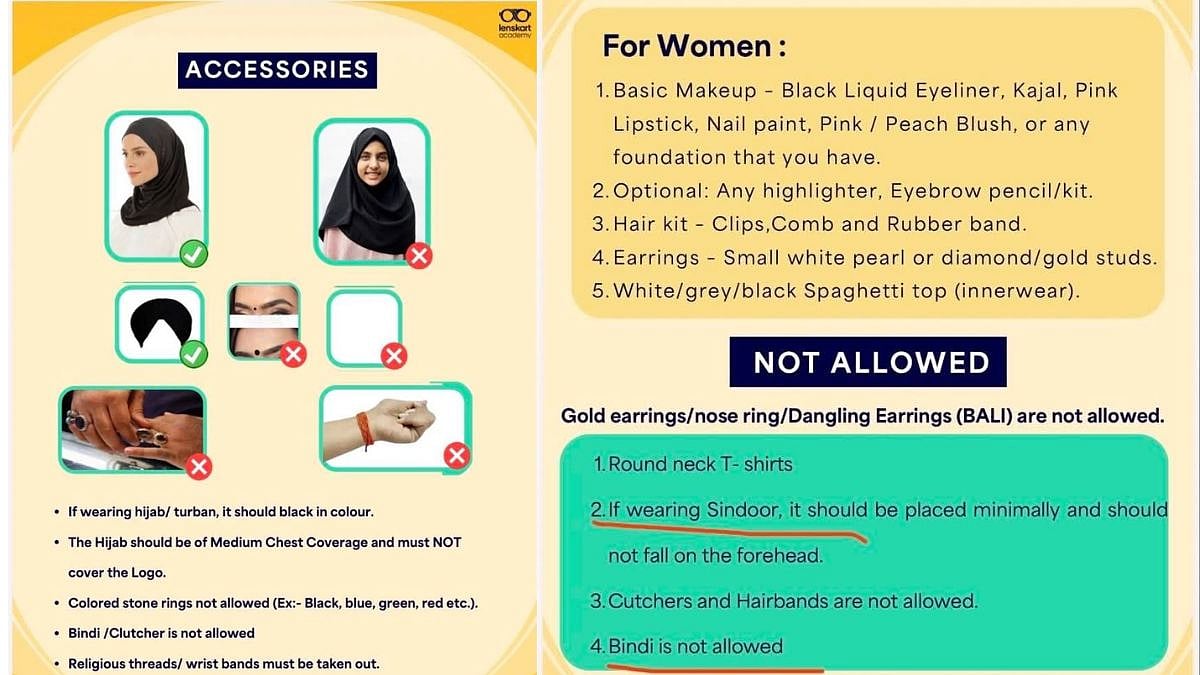
In response, Lenskart’s CEO Peyush Bansal described the February document as an internal training error that had already been withdrawn. The company has now publicly released a new standardised Style Guide for its 2,400+ stores, explicitly welcoming cultural and religious symbols.
In an official statement on X, the company said, “We have heard you. Clearly and openly… These guidelines explicitly and unambiguously welcome every symbol of faith and culture our team members carry - bindi, tilak, sindoor, kalawa, mangalsutra, kada, hijab, turban, and more. Not as exceptions. As who we are.”

Lenskart added, “If any version of our workplace communication caused hurt or made any of our team members feel that their faith was unwelcome here, we are deeply sorry. That is not who Lenskart is, and it is not who we will ever be.” The company emphasised it was “built in Bharat, by Indians, for Indians” and pledged to ensure all future policies reflect these values.
Key pointers from Lenskart’s new style guide
- Cultural & Religious Symbols Explicitly Allowed: Bindi, tilak, sindoor, kalawa, mangalsutra, kada, and any other religious or cultural items; hijab, turban, and other head coverings worn for personal, cultural, medical, or religious reasons.
- Uniform Requirements: Employees must wear company-issued Lenskart T-shirts (clean, wrinkle-free, well-fitted) with plain dark blue jeans (straight, regular, or slim fit) and closed professional footwear (black or dark-colored). Socks required.
- Grooming & Hygiene Standards: Hair must be clean, neat, and secured if it interferes with work; facial hair well-maintained; nails trimmed; daily hygiene practices mandatory. Makeup, if worn, must be appropriate for customer-facing roles.

- Inclusivity Commitment: The guide states it “fully respect[s] personal, cultural, and religious expression” and provides “reasonable accommodation for religion, culture, disability, pregnancy, or medical needs.” Policies will be applied fairly and consistently, with coaching for minor issues and escalation to HR without retaliation.
- Overall Goal: Create a 'welcoming, trustworthy, and professional store environment' while valuing diversity as 'part of what makes Lenskart the workplace it is.'
The company said the updated guide will be used in all training materials and communications going forward.

