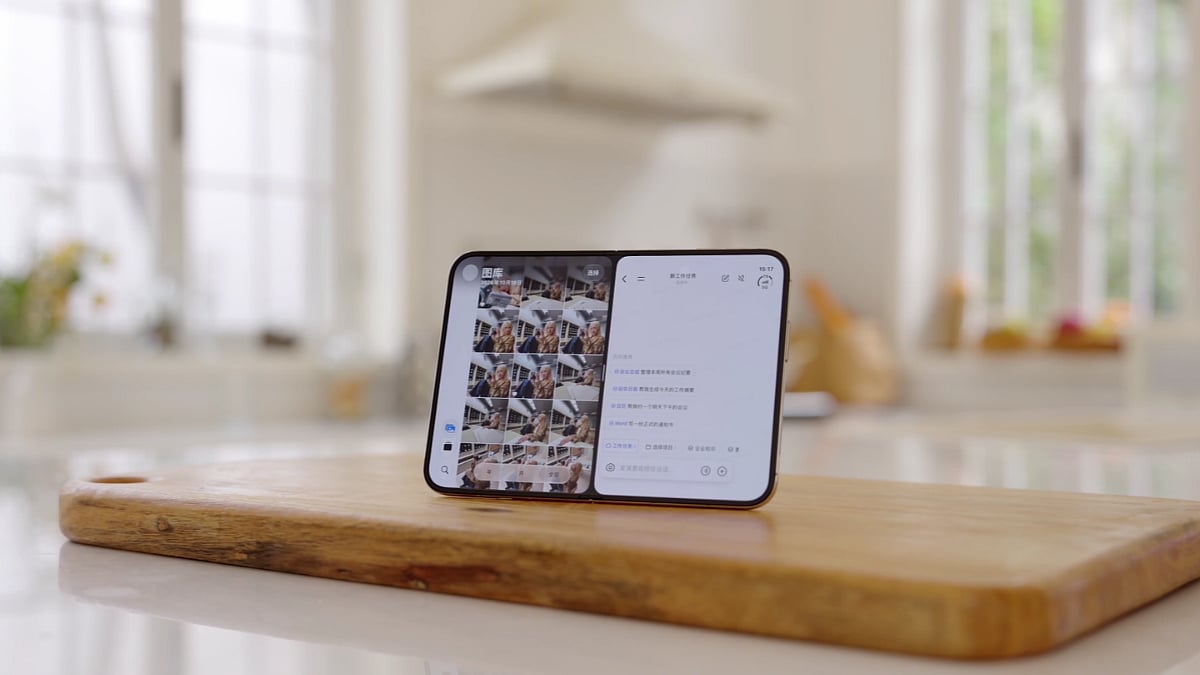
As Apple's first foldable iPhone Duo goes on sale today, a detailed durability review from Tim Pan, who runs the Chinese tech and filmmaking channel Ying Shi Ju Feng, has put the iPhone Duo through a series of stress tests, including thousands of folds at room temperature and in the cold. In a roughly 23-minute video, Pan reports that the hinge survived the abuse well, though the foldable still shows trade-offs that separate it from a conventional smartphone.
10,000 folds, then the freezer
Pan began with a simple question: does the crease get deeper with use? After 500 folds, a side-by-side comparison with a brand-new unit showed the crease had deepened, although the change was hard to spot when touching the screen or viewing it in bright mode. Since 500 cycles may not prove much, his team used a folding machine for 10,000 folds at room temperature, followed by another 1,000 at minus 4 degrees Fahrenheit.
The hinge, he said, remained smooth and still assisted the opening motion as it did on day one. The crease had visibly deepened, which Pan called expected. He cautioned that hair or sand could get into the hinge at certain angles. This is unlikely, he said, but not impossible.
Drops, water and backward bends
Apple uses a 3D-printed titanium housing around the hinge. The reviewers dropped the phone twice by accident, which left one small scratch and no dents. The Duo carries an IP68 rating, and it survived being submerged for half an hour. The team also tested the vibration motor in water containing bioluminescent algae, again with no damage. Pan found the Duo's haptics slightly weaker than those on the iPhone 18 Pro.
He also bent the phone backwards and concluded it is structurally strong, adding that users need not worry about it bending or snapping if they sit on it.
Hinge-linked software glitches
The more persistent problem is behavioural. Pan said the phone sometimes struggles to tell whether the user is opening or closing it. Moving the hinge slowly can make the wallpaper jump or one half of the screen flicker, and rotating the phone at the same time can lead to a wrong orientation or a black screen. He doubts a software update will fully fix this, since sensors and the hinge itself are involved, and suggests opening and closing the phone quickly as a workaround.
A bigger screen, with a catch
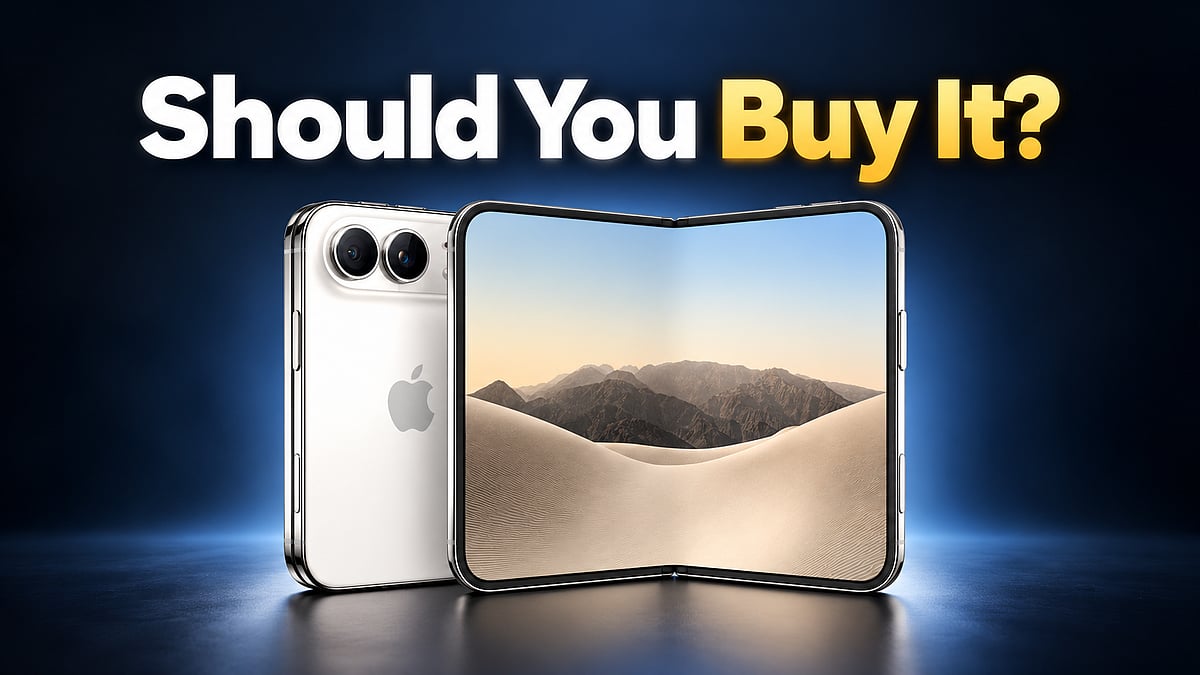
On the display, Pan was largely complimentary. The inner OLED panel runs at up to 120Hz and peaks at 3,000 nits. It is slightly smaller than an iPad mini, but about 50 per cent larger than the iPhone 18 Pro Max screen and 80 per cent larger than the iPhone 18 Pro's. Pan said reading comics and novels was his favourite use, helped by the paper-like nano-textured surface.
That surface has downsides. Under strong light, contrast is noticeably lower than on a glossy screen. Under a microscope and an atomic force microscope, the Duo's texture showed larger height variations than nano-textured iPad glass or a matte screen protector. Pan said this lets sweat, grease and some makeup cling stubbornly to a few users' screens, so cleaning fluid and a cloth are needed. The layer is removable, but Apple has stressed that only its stores or authorised providers should replace it. Pan said an official inner-screen replacement without coverage costs $999.
The review also confirmed the iPhone Duo's earlier reputation for strong demand. Pan said 70 per cent of his company's staff, about 140 people, chose to wait for the Duo rather than take an iPhone 18 Pro Max that was available immediately.
Battery, charging and heat
Battery results depended heavily on how much of the screen was in use. After two hours of continuous video recording, the Duo had 61 per cent left, against 59 per cent on the iPhone 18 Pro Max and 45 per cent on the iPhone 18 Pro. After three hours of 16:9 video playback, the Duo dropped to 84 per cent, behind the Pro Max at 93 per cent and the Pro at 87 per cent.
MagSafe charging peaked at 36-37 watts and took 88 minutes to go from zero to full. The iPhone 18 Pro Max needed about 70 minutes. On heat, Pan said Apple appears to have improved thermal management since launch, with the Duo's highest temperature reaching 120 degrees Fahrenheit. Running the phone open raised the temperature by roughly 3.6 degrees compared with closed. Because the chip sits on one half of the body, that side feels much hotter than the other.
In graphics-heavy tasks such as image processing, the Duo fell behind the iPhone 18 Pro series even with a comparable chip, while CPU performance was nearly identical. The Duo also posted slower 5G download and upload speeds than the iPhone 18 Pro series in city-wide tests, which Pan attributed to a different antenna layout.
Everyday use: no Face ID, one-sided NFC
Pan said the Duo changes daily habits. Typing was fastest in portrait mode and slowest with the phone half-folded. There is no earpiece on the inner screen, so opening the phone for a call switches it to speakerphone. NFC works on only one side, which makes tapping through a gate or subway with the phone unfolded awkward. The Duo also has no Face ID, and its fingerprint sensor was slower than the iPad mini's in his tests. He pointed to Apple Watch unlock and less frequent authentication prompts as partial fixes.
The speakers drew praise. Tested with a dummy-head microphone, the sound stayed balanced whether the phone was open, closed, upright or sideways, though it could not match the iPhone 18 Pro. Pan also said some cases need adhesive to stay on, and that certain third-party cases may interfere with a central magnet and cause unstable wireless charging.
App support and cameras
App optimisation remains uneven. Pan said iMessage and Netflix make good use of the inner screen, while Pages and GarageBand behave like upscaled phone apps. Some apps, including the PlayMagic camera app, were close to unusable, and iPad apps cannot be used as a substitute. Apple has set an April 2027 deadline for apps to be adapted, he said. There is no Apple Pencil support yet, although ChannelNews reports Apple plans to add support for the USB-C Apple Pencil later this year.
The rear cameras produced sharp photos and video with well-preserved highlights and shadows, though telephoto quality is weaker because the phone lacks an optical telephoto lens. The Duo shoots 4K Dolby Vision at 120fps, and the 10Gbps data port lets it double as a monitor for professional cameras. Pan found the inner front camera suitable only for video calls.
iPhone Duo Review: Verdict
Pan said the display is the Duo's biggest strength and the hinge is robust. But he added that the reliability of foldables as a category still differs from that of conventional smartphones, a trade-off buyers should expect. The iPhone Duo goes on sale today, October 23, after pre-orders opened on October 16.

