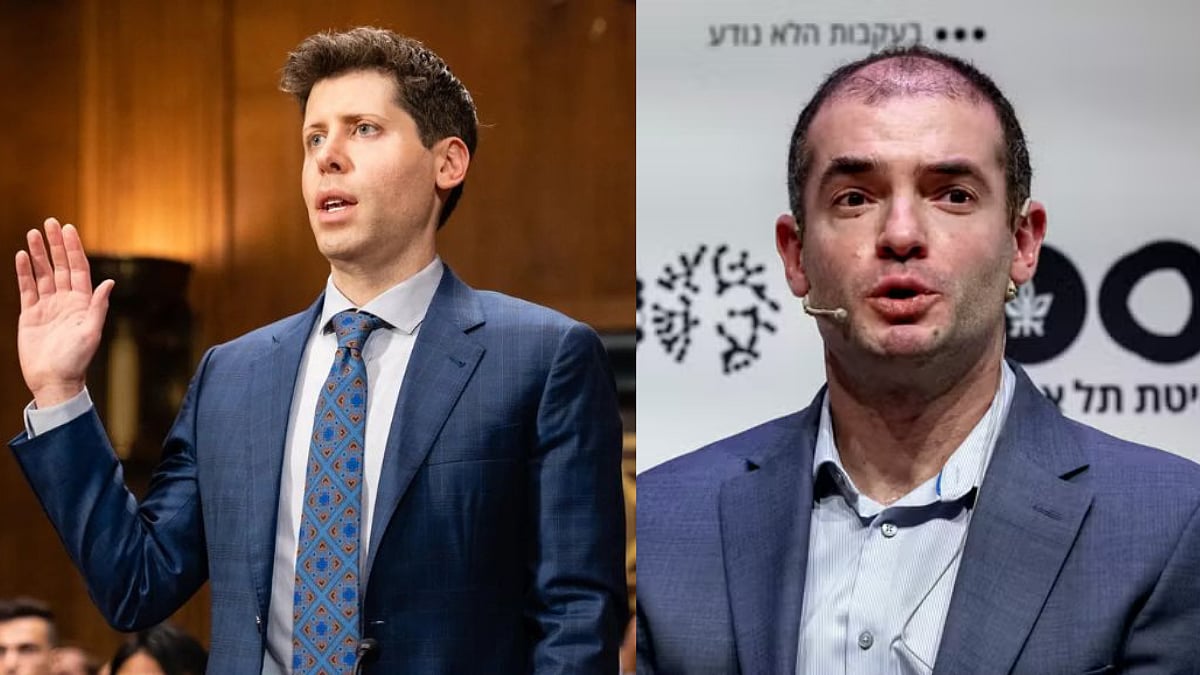
Former OpenAI chief scientist Ilya Sutskever testified that he spent around a year collecting evidence that he believed showed a “consistent pattern of lying” by Sam Altman.
Sutskever made the remarks during testimony in the legal battle involving OpenAI and Elon Musk. He said he had been considering action against Altman for at least a year before voting to remove him as CEO in November 2023.
According to Sutskever, he prepared a document for OpenAI’s board that gathered evidence of Altman’s alleged dishonesty. He also claimed that Altman’s behaviour included “undermining and pitting executives against one another.”

Sutskever said he had discussed removing Altman with former OpenAI chief technology officer Mira Murati after the two had talked about Altman’s behaviour for a long time. Altman is expected to testify in the case soon.
The report said Sutskever had earlier stated in a deposition that the document he prepared was 52 pages long. He testified in court that Altman’s conduct was “not conducive to any grand goal,” including the goal of creating safe artificial general intelligence (AGI).
Sutskever played a major role in Altman’s removal and return in November 2023. At that time, he was a member of OpenAI’s board and helped organise Altman’s firing.
However, after concerns grew that OpenAI could collapse, Sutskever later expressed regret over his involvement in the board’s actions and supported Altman’s return as CEO.
The testimony came during the third week of a trial that could affect OpenAI’s future as the company continues raising billions of dollars to expand its AI computing infrastructure ahead of a possible IPO.
Elon Musk, one of OpenAI’s co-founders, has accused the company and Altman of moving away from OpenAI’s original non-profit mission and focusing on commercial interests. Musk is seeking major damages and wants Altman and OpenAI President Greg Brockman removed from their positions.
The report also said Sutskever disclosed that his ownership stake in OpenAI was worth about $5 billion in November 2025 and has now increased to around $7 billion.
