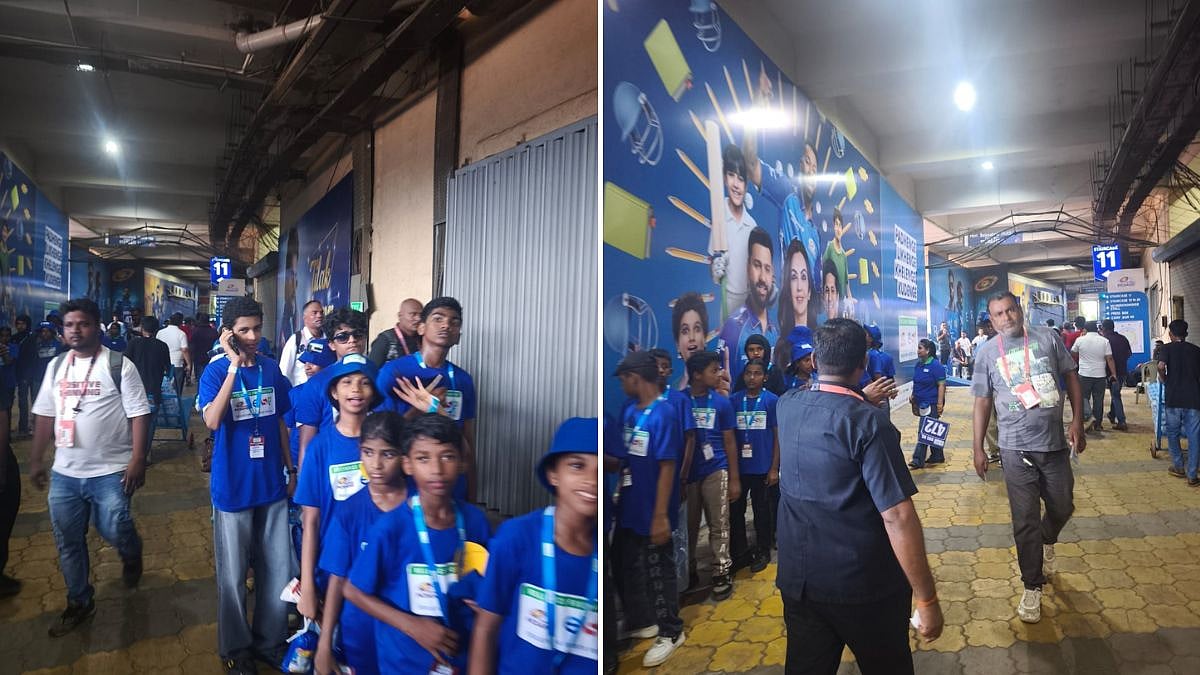
The noise inside Wankhede Stadium will be deafening. More than 20,000 children will fill the stands as Mumbai Indians host Rajasthan Royals in their annual Education and Sports for All (ESA) fixture — one of the most celebrated community initiatives in Indian sport.
But among the sea of young fans waving flags and chanting for their heroes will be a group of children experiencing the IPL in a way few ever have before.
For the first time, children and young adults from the National Association for the Blind will attend the ESA game live, with volunteers helping narrate every boundary, wicket and roar around them. For many visually impaired attendees, this will be their first experience inside a cricket stadium — not merely as spectators, but as participants in the emotion and spectacle of Indian cricket.
“This live experience will increase their confidence and give them exposure to mainstream sporting events. Sports inclusion is an essential part of life for every individual, whether visually impaired or sighted,” said Dr. Vimal Kumar Dengla, Hon’ble General Secretary of NAB India.
A Lifetime of Support Beyond Disability
As one of India’s largest organisations working for visually impaired individuals, the National Association for the Blind has spent decades creating opportunities for inclusion, education and independence.
Dr. Dengla explained that NAB India works with visually impaired individuals across every stage of life — from infancy to old age.
“We have programmes starting from birth till old age for visually impaired persons,” he said. “We provide education, vocational training, rehabilitation, Braille books, talking books, employment support and sports activities as well.”
Its association with the Reliance Foundation began years ago through collaborative initiatives involving Braille magazines and blindness prevention campaigns. But this year’s ESA partnership represents something far more experiential.
“When Mrs. Nita Ambani visited NAB India, we came to know more about the ESA initiative through the Reliance Foundation team,” Dr. Dengla said. “We applied for the programme, and this is the first time visually impaired persons have got the opportunity to connect with ESA.”
Experiencing Cricket Beyond Sight
For most fans, cricket is visual theatre — the swing of a bat, the flight of the ball, the eruption after a wicket. For visually impaired fans, the game is often experienced through voice, atmosphere and imagination. That is why detailed storytelling and commentary become central to accessibility.
“Audio commentary and storytelling are very important for accessibility for the visually impaired. It gives us more information about the match — how things are happening on the ground, what happened in the pavilion and around the stadium,” Dr. Dengla explained.
“For visually impaired persons, detailed ball-by-ball and event-by-event commentary is important. If we are trying to include visually impaired persons in mainstream sports, either playing or enjoying live matches, they need support through technology or human intervention,” he said.
The ESA initiative’s volunteer-led live narration is therefore more than assistance — it is an attempt to make cricket emotionally and socially accessible.
“The Children Are Extremely Excited”
The anticipation among the children, according to Dr. Dengla, has been overwhelming. Many already follow cricket passionately through radio commentary and blind cricket competitions. Some are preparing for their first-ever visit to a stadium of this scale.
The excitement extends beyond the children themselves. Parents, too, see the experience as an opportunity rarely available to visually impaired individuals in India.
“They are very excited to be part of this live event. A lot of them are fond of listening to cricket commentary and also play cricket for the blind. Their parents are also very happy and excited. They are preparing very well for the event,” Dr. Dengla added.
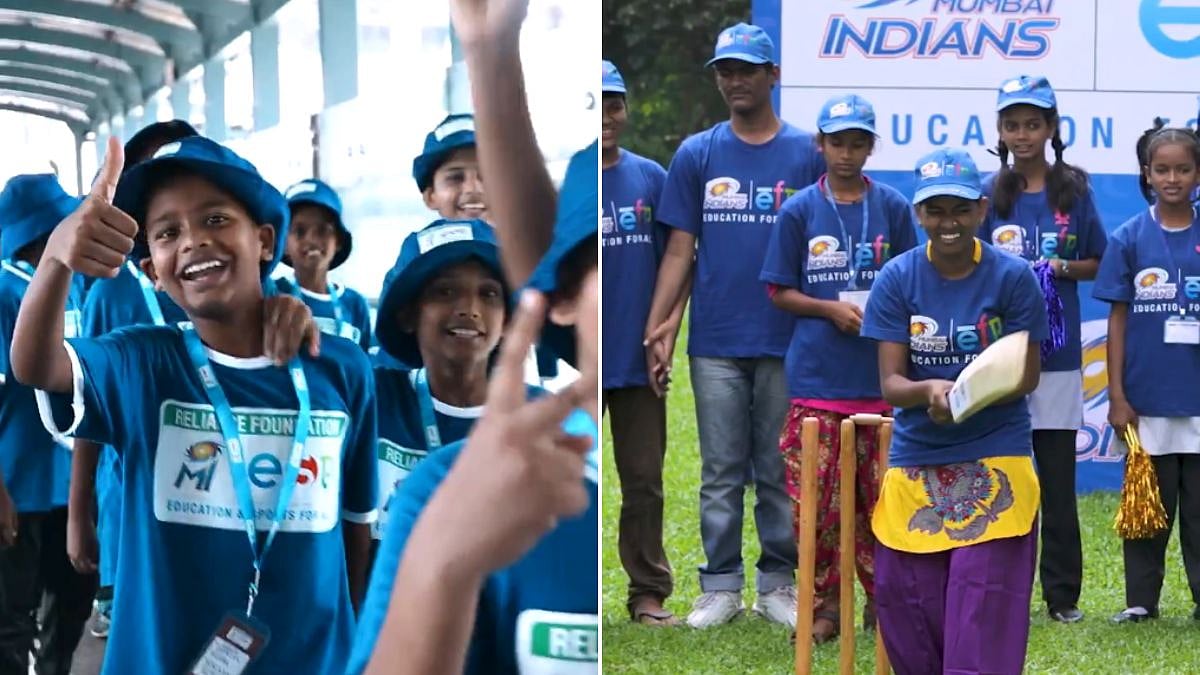
As the lights come on at Wankhede and the noise builds around the annual ESA fixture, the scoreboard will eventually fade into memory.
But for the visually impaired children attending their first IPL game, the experience may leave something far more lasting — the feeling of belonging inside one of India’s grandest sporting stages.
And in that moment, cricket becomes more than a game. It becomes access, inclusion and possibility.

