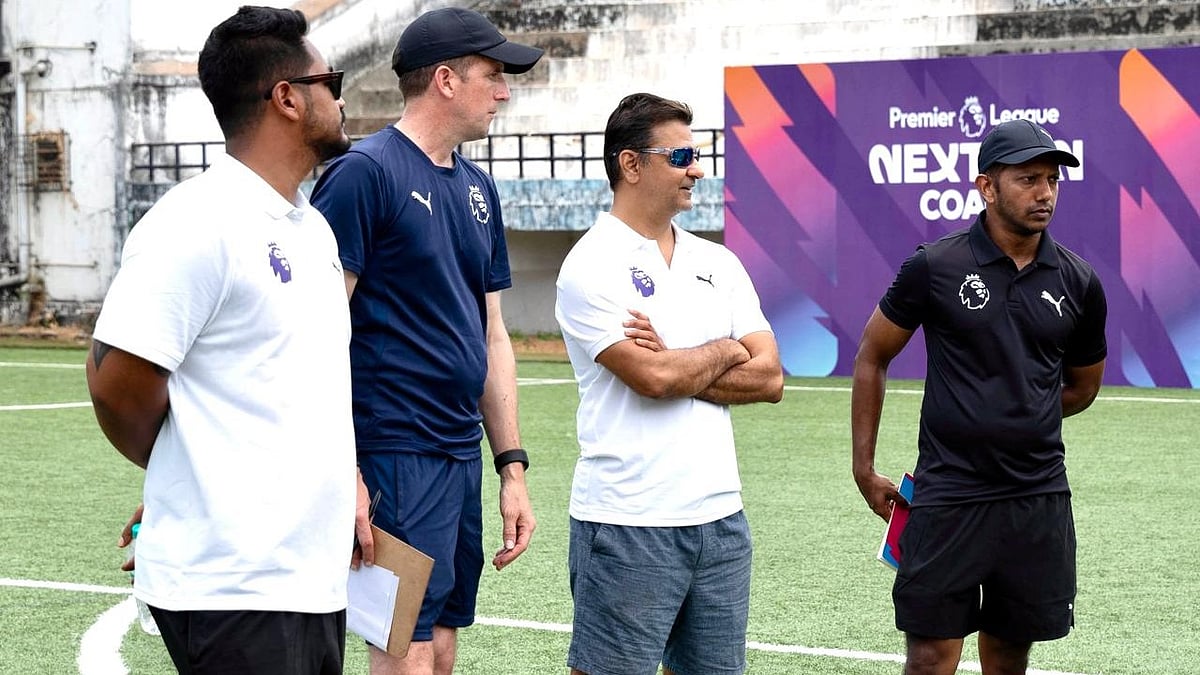
As the Premier League deepens its footprint in India, the focus is shifting beyond fandom and viewership to long-term grassroots development. With more than 144 million followers in the country, the League is increasingly investing in coaching infrastructure, youth development and community-led football initiatives through programmes such as Premier Skills and NEXTGEN Coach. In an exclusive interaction with The Free Press Journal, Hrishikesh Shende, Managing Director, Premier League India, speaks about the League’s evolving vision for India, the importance of empowering grassroots coaches, and how football can become a catalyst for social change across communities.
Excerpts
Q: Over the past 18 years, the Premier League has maintained a sustained presence in India. How has the League’s vision for football development in the country evolved during this period?
A: When you look back at the last 18 years, what stands out is the consistency of our commitment to India. We have always seen India as a strategically important market, and our focus from the very beginning has been on supporting grassroots football and creating long-term community impact through the game. What has evolved over time is the depth of that engagement. We started with programmes like Premier Skills in partnership with the British Council back in 2007, which has since benefited over 124,000 young people across the country, and more than 7,300 coaches, referees and educators.
Over the years, we recognised that sustainable development will require long-term investments in coaching infrastructure and stronger local partnerships. The opening of our Mumbai office last year was an important step in that direction. It gives us a stronger platform to work more closely with partners across the football ecosystem, while continuing to deepen our community impact. That includes our collaboration with Dream Sports Foundation, where the focus is on sharing global best practices and our technical expertise in coaching and youth player development. Through our work around the Dream Sports Championship and the AIFF Under-16 Junior League, we are engaging directly with coaches and support staff through mentorship and knowledge-exchange initiatives that can help strengthen the wider football landscape over the long term.
Q: The Premier League often speaks about long-term investment rather than one-off interventions. Why is India considered such a strategically important market in the League’s global plans?
A: For us, it starts with the sheer scale of passion for football here. India today has more than 144 million Premier League followers, and those numbers only continue to grow with the popularity of football in the country. But beyond that, the country represents a huge opportunity where the potential of the sport is still largely untapped, and where sustained investment at the grassroots level can genuinely move the needle- not just for the League, but for the game itself. We have been working in India for almost two decades now, and our commitment has always been built around long-term engagement rather than one-off interventions.
Q: The NEXTGEN Programme has now expanded beyond youth tournaments to focus heavily on coach development. What prompted this shift towards strengthening India’s coaching infrastructure?
A: The NEXTGEN Programme originally began as a youth tournament, where Premier League Academy sides competed against Indian youth teams, providing young Indian players here with exposure to world-class football. That was genuinely valuable. But over time, what became very clear to us was that long-term football development depends heavily on investing in coaches, because they shape the game at a foundational level. That thinking is really at the centre of the shift towards coach development. The NEXTGEN Coach Programme builds on the work we have already done over the past two decades. Football has always had the power to bring communities together, and by investing in coaches, we want to create safer environments that enable more young people to benefit from football socially and personally.
Q: You have emphasised that empowering local coaches is key to sustainable football growth. How can one well-trained grassroots coach influence an entire community?
A: For us, it really comes down to the multiplier effect. One well-trained grassroots coach can positively influence hundreds of young people within their community over time, and that impact keeps increasing. Coaches shape how young people experience the game- whether the environment feels safe, inclusive and enjoyable, and whether it's something they want to come back to. When coaches are given the right skills, knowledge and confidence, that impact carries into every session they deliver and every young person they work with. By investing in people at the grassroots level, programmes such as NEXTGEN Coach create stronger community environments and help ensure more young people can benefit from football, not just as a sport, but also from a social and personal development perspective. It is something we have consistently seen through our programmes in India and globally over nearly two decades.
Q: Through NEXTGEN Coach, the Premier League is bringing nearly two decades of global expertise to India. What are the most important skills and values the programme aims to instil in grassroots coaches here?
A: Three primary principles- safety, inclusivity and enjoyment. These are the tenets we want every coach coming through this Programme to carry with them, essentially ensuring more young people, particularly those from disadvantaged backgrounds, can access good-quality football and benefit from the game both personally and socially. Beyond the technical aspects of coaching, we also want to build confidence in coaches and empower them to create positive environments within their communities.
Q: Football is often described as a tool for social change. In what ways can programmes like NEXTGEN Coach help create safer, more inclusive environments for young people in local communities?
A: I genuinely believe that football has the power to bring communities together. And when you invest in coaches the way we are trying to do through the NEXTGEN Coach Programme, the impact extends well beyond the pitch. A big focus for us is creating environments where young people feel safe, included and that the game belongs to them too. For many children, especially those from disadvantaged backgrounds, a well-run football session can provide structure, confidence, a sense of belonging and something to look forward to. When coaches are trained to prioritise those values, the ripple effect across a community can be really significant. That is what makes grassroots football such a powerful tool for social change, and why, for us, investing in coaches is ultimately investing in communities.

Q: Looking ahead, what does success for the Premier League in India’s grassroots football ecosystem look like over the next five to 10 years?
A: Grassroots football is fundamental to the Premier League’s presence in India, because ultimately it is about creating greater access to the game. For us, success would mean getting more Indian kids to play football, improving access to football infrastructure, and ensuring that the coaches training these kids are able to impart the Premier League methodology at scale. But a major focus will also be on upskilling Indian coaches so they can create a much wider impact locally than the Premier League can on its own. So, success for us is not only about expanding our geographic footprint, but also about creating impact at scale across the wider ecosystem- across clubs, players, coaches and coach educators. A big part of that will come through strong local partnerships, where we can transfer the knowledge and expertise of the Premier League with key stakeholders across Indian football.

