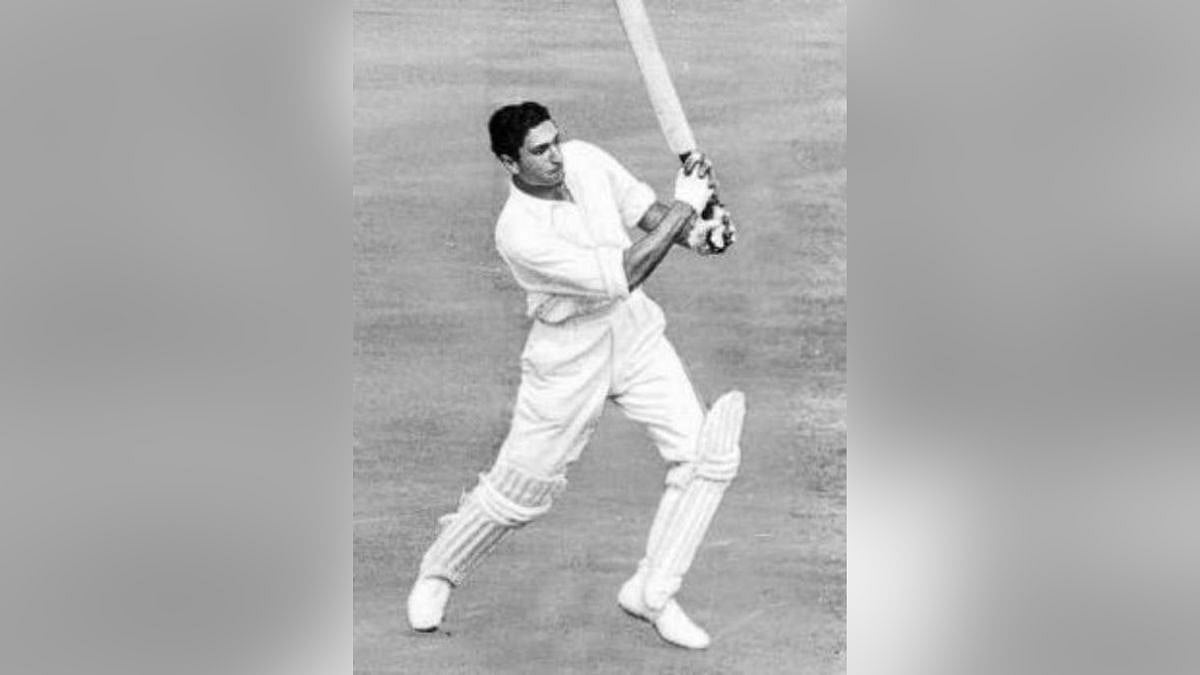
Dicky Rutnagur’s tribute says it all. Writing after Polly Umrigar retired from Test cricket in 1962 the well-known cricket journalist wrote: ``Even when he did not get runs Umrigar’s presence in the side was always a source of confidence and inspiration to the younger players.’’
That just about summed up Umrigar’s immense contribution to Indian cricket.
The first Indian to get a double century in Tests. The first Indian to score 3000 runs and figure in 50 Tests. The highest first class score (252 not out) by an Indian abroad – a record that stood for 30 years. Such achievements sat lightly on the broad shoulders of Umrigar whose enthusiasm for the game was infectious and whose tactical knowledge of various aspects of cricket was second to none.
Umrigar came on the scene in the formative years of Indian cricket. The first Test he played against John Goddard’s West Indian side of 1948-49 was only the fifth to be played in India and the 17th overall. Like any country in its formative years India too suffered successive setbacks against England, Australia and West Indies. It was Umrigar who provided the stability and the heroism. Like the boy on the burning deck he stood amidst the ruins. In a losing cause it was Umrigar’s batting that was frequently the only silver lining. And while bowlers ripped through the Indian batting repeatedly they knew they had a fight on their hands whenever Umrigar was at the crease.
When Umrigar retired all the major Indian batting records were in his name. In fact his tally of 3631 runs and 12 centuries stood for more than 16 years and were broken only by a certain Sunil Gavaskar. There was never any doubt as to his stature as the country’s premier batsman in the 50s and early 60s.
It was not just the runs that attracted attention when Umrigar was at the crease. It was the manner of his play. Umrigar altered the face of Indian batsmanship which had been nurtured under the Merchant-Hazare school of building an innings based on technical excellence and an insatiable appetite for runs. Hailing from the Bombay school of batting Umrigar had all this - and something more. The manner in which he jumped out to the slow bowlers and lifted the ball to the untenanted parts of the field was something that endeared him to the crowds. In time Umrigar earned the sobriquet `palm tree hitter.’ Umrigar was at his best against spin bowling even if it was of the highest class. But his accent on attack did not mean that he was going to neglect the basic principles. His batting was based on sound technical aspects but his uncommon gifts, his broad shoulders and arms, his sturdy build and his considerable height saw him at his attacking best. He was essentially a powerful driver though he could cut and pull vigorously.

This is not to say that Umrigar could not play fast bowling. Too much has been made of his failures in England in 1952 and too little has been written about his success there seven years later, the gradual progress he made in combating fast bowling and his excellent record against the West Indian speedsters. After his nightmarish experiences against Freddie Trueman in 1952 he faced Frank King the leading Caribbean fast bowler of the time with ease in the West Indies in 1953 and throughout the 50s and early 60s was the one Indian who had a splendid record against the West Indian pacemen. He did reasonably well against Lindwall in the 1956 series against Australia. That is why there is no truth in the theory that Umrigar could not play fast bowling. In two successive contests he was India’s highest run-getter against Hall and Gilchrist, Stayers and Watson. After all he did hit Hall for four boundaries in one over in the Port of Spain Test in 1962. And he did take a century off the same Trueman at Old Trafford in 1959.
Umrigar could never sever his ties with the game after his playing career was finally over. He loved it too deeply. He managed Indian teams to New Zealand and West Indies in 1976 and to Australia in 1977-78, bringing all his expertise into another field. In 1978 he took over as chairman of the selection committee a post he held for five successive terms before becoming executive secretary of the Indian Cricket Board. He was closely associated with the construction of the Wankhede stadium and tended the pitch and outfield with loving care. To a later generation he was `Polly Kaka’ a revered figure and very much involved with the National Cricket Academy and sundry cricketing matters. Long did Indian cricket benefit from his pearls of wisdom!

