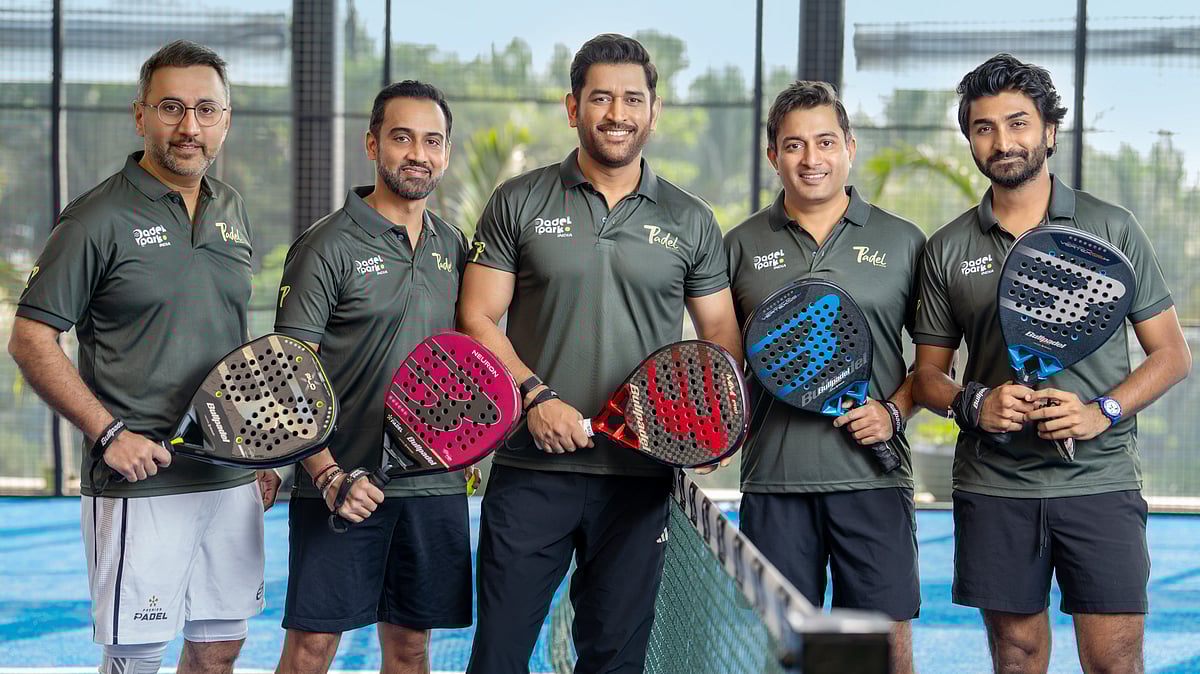
Mumbai: Padel is witnessing a sharp rise in popularity across urban India, driven by changing fitness habits, expanding infrastructure and growing corporate interest, according to Nikhil Sachdev, co-founder of PadelPark India.
Sachdev said the number of padel courts in India has increased from over 70 in 2023 to more than 300 in early 2026, reflecting strong momentum for the sport in metropolitan centres.
He attributed this growth primarily to a shift in how younger Indians view health and fitness.
“Fitness has become a key part of people’s lifestyles, especially among those in their 20s and late teens. That mindset shift is driving participation across sports, including padel,” he said.
Sachdev noted that amateur participation in sports such as football, cricket, pickleball and padel has risen significantly, supported by local leagues, tournaments and improved infrastructure. However, padel’s unique appeal lies in its accessibility.
“It is not a very complex sport to start playing. Within one or two sessions, players can get comfortable enough to enjoy a game recreationally. Unlike tennis or golf, it is not highly technical at the entry level,” he said.
This ease of adoption allows even those with limited mobility or sporting background to participate, making it particularly attractive in urban settings.
On affordability, Sachdev acknowledged that padel currently leans towards the expensive side, especially in premium locations such as Bandra and south Mumbai, where real estate costs are high.
“The pricing is largely a function of location. Operating in prime areas increases costs,” he said.
However, he added that prices are relatively more affordable in cities such as Bengaluru, particularly in areas like HSR Layout, where operational costs are lower. PadelPark India has also introduced price corrections where feasible.
“As more courts come up and competition increases, prices will stabilise. In residential societies, private clubs and sports facilities, padel is being added to existing infrastructure, which will make it more accessible,” he said.
Sachdev pointed out that playing at established clubs can be inexpensive, though membership costs remain a barrier. He expects affordability to improve over the next one to one-and-a-half years as the sport matures.
To expand access, PadelPark India has partnered with McDonald’s for academy programmes aimed at grassroots development. “We are offering introductory courses, including free sessions, and exploring locations beyond prime areas to make the sport more accessible,” he said.
He also highlighted the role of former India cricket captain MS Dhoni, an investor in the company, in expanding the sport’s reach. “Through school networks and state infrastructure, padel can become far more affordable and widespread,” Sachdev said.
Sachdev emphasised the importance of building a strong ecosystem comprising courts, academies and tournaments. PadelPark India has organised over 25 tournaments in the past year, with participation growing rapidly.
“Our first tournament had about 10 to 12 teams. A recent event in Mumbai saw 160 teams and around 300 players over three days,” he said.
He added that tournaments are now being held frequently, with increasing participation and sponsorship from major brands, including automobile companies, banks and financial institutions. “Corporate interest is rising because padel offers access to a wider and more engaged audience compared to traditional sports like golf and tennis,” he said.
Academies have also seen strong uptake, with over 2,000 individuals trained in the past one-and-a-half years. Sachdev noted a significant proportion of participants are returning to sport after long breaks, particularly those in their 30s and 40s.
He also highlighted growing female participation. “About 40% of our community comprises women players, which is very encouraging and not common across many sports,” he said.
Looking ahead, Sachdev said the formation of an official, government-recognised federation is expected soon, which could further accelerate growth. “Once a federation is in place, states will be able to invest and develop the sport in a structured manner,” he said.
Padel’s inclusion in the 2026 Asian Games in Japan is also expected to boost its profile. Sachdev said India is working towards fielding a team, with federation formation being fast-tracked.
“Racket sports have always been strong in India. Padel presents an opportunity for the country to emerge as a competitive force at least at the Asian level,” he said, citing a recent bronze medal won by an Indian team at an international tournament in Bali.

