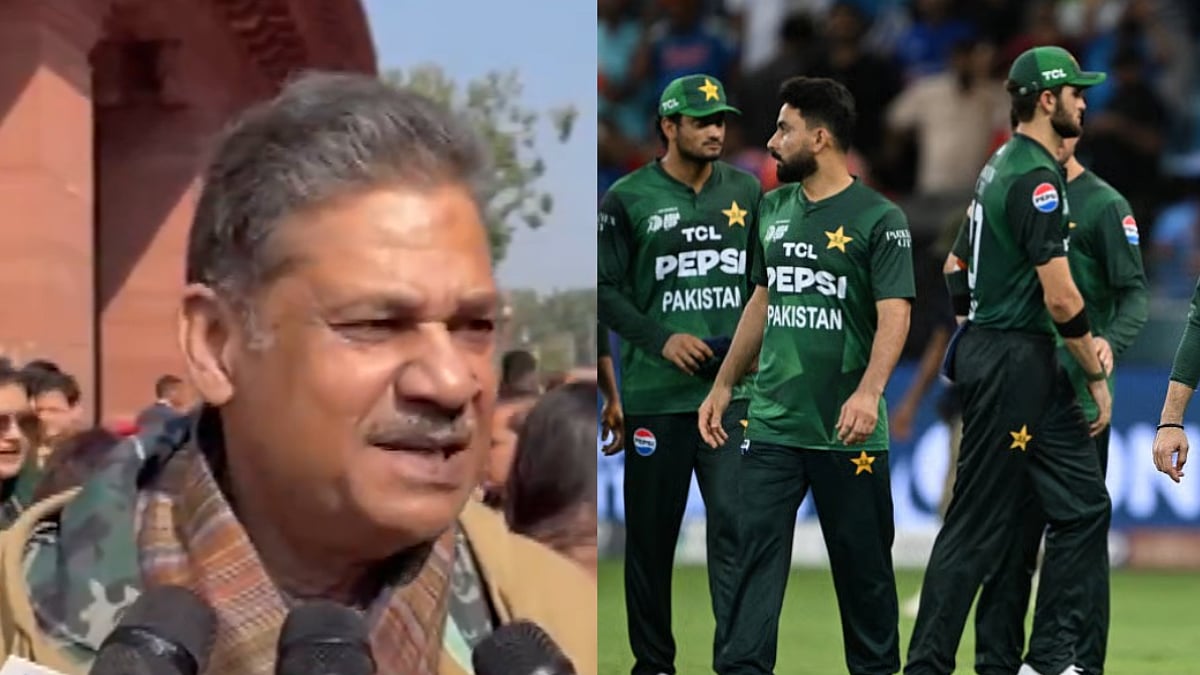
Trinamool Congress MP and former Indian cricketer Kirti Azad has criticised Pakistan’s controversial decision to boycott its ICC Men’s T20 World Cup 2026 group match against India, claiming the move stems from a belief that Pakistan “can’t win” against the Indian team. Azad’s comments come amid a growing debate over Pakistan’s refusal to take the field in the February 15 fixture scheduled in Colombo.
Speaking to the media, Azad suggested Pakistan’s leadership, including Prime Minister Shehbaz Sharif, opted to avoid the match as a way to “save face” rather than confront a strong Indian side. He argued that the decision reflects a lack of confidence in Pakistan’s ability to compete with India on cricket’s biggest stage, implying the boycott was a tactical choice rather than a principled one.
Pakistan’s government has framed its boycott as solidarity with Bangladesh after that team’s removal from the tournament schedule, an explanation that Pakistan officials describe as a “considered stance.” This, however, has done little to quell criticism from voices like Azad’s, who view the decision through a competitive and political lens.
Pakistan PM Shehbaz Sharif Reaffirms Boycott Stance, Confirms PAK Team Will Not Play Against India At ICC T20 World Cup 2026
In a significant development just days before the ICC Men’s T20 World Cup 2026 gets underway, Pakistan Prime Minister Shehbaz Sharif has reiterated that his country will not play its scheduled group-stage match against India, maintaining a firm boycott stance that has stirred controversy within the global cricket community.
Speaking to his federal cabinet in Islamabad, Sharif confirmed that Pakistan’s senior men’s cricket team, while participating in the tournament overall, will not take the field against India in their Group A fixture set for February 15 in Colombo. The prime minister described the position as a “clear stand,” underscoring that the decision was made after careful consideration and was aimed at upholding what he described as ‘principles’, even though he paradoxically insisted that “politics should have no place in sports.”
Sharif also framed the boycott as an act of solidarity with Bangladesh, which was earlier removed from the tournament schedule and replaced by Scotland after the Bangladesh Cricket Board refused to play matches in India citing security concerns. Pakistan, he said, felt compelled to take a stand after perceiving what it sees as inconsistency in the International Cricket Council’s (ICC) handling of the issue.
The T20 World Cup, co-hosted by India and Sri Lanka from February 7 to March 8, features 20 teams in a tightly contested competition. India and Pakistan, two of the sport’s biggest rivals, were slated to renew their historic rivalry in one of the tournament’s most anticipated fixtures. The boycott, however, now puts that clash in jeopardy and marks a rare instance where geopolitical tensions have overtly intersected with the sport at a global ICC event.
