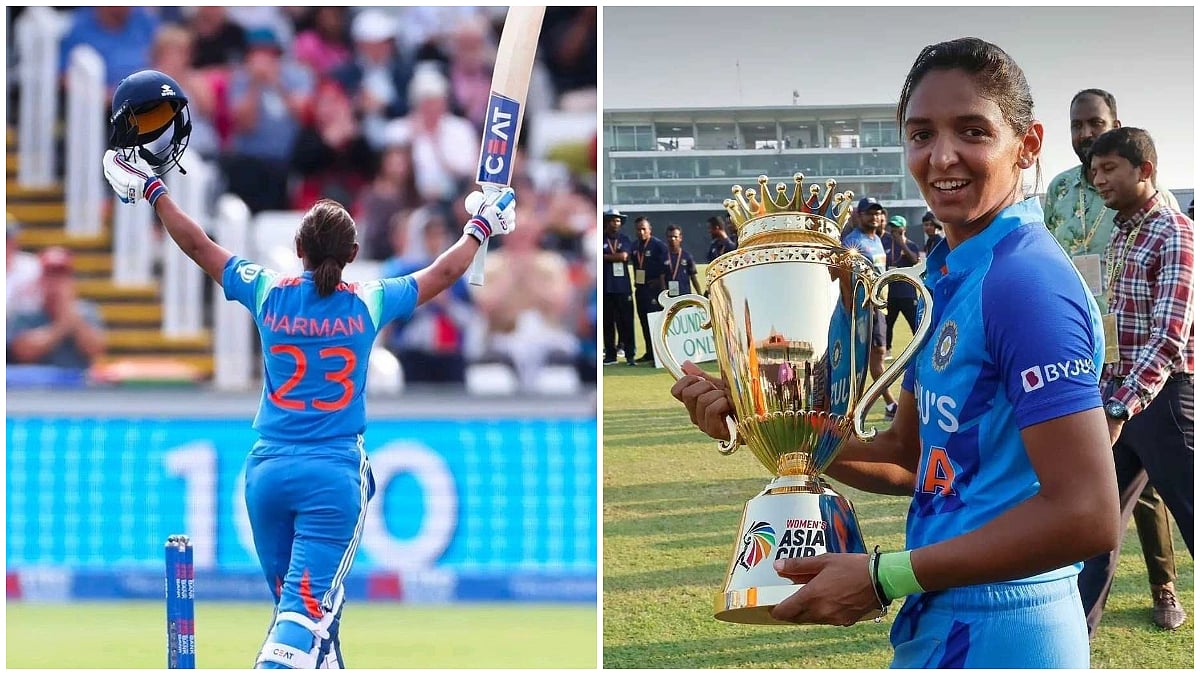
Mumbai: There are captains remembered for numbers, captains remembered for trophies and captains remembered for changing how a team sees itself. Harmanpreet Kaur will be remembered for all three.
Kaur on Tuesday stepped down as captain of the Indian women's cricket team across Tests, One-Day Internationals (ODIs) and Twenty20 Internationals (T20Is), bringing to an end a leadership journey that stretched across a decade and culminated in Indian women's cricket's greatest prize: a maiden ODI World Cup title.
The 37-year-old, however, is not walking away from international cricket. She will continue to represent India as a player, closing the captaincy chapter while leaving the larger story of her career unfinished.
A decade of leadership
Kaur first took charge of the T20I team in 2016 before becoming the full-time ODI and Test captain in 2022 following Mithali Raj's retirement. She went on to captain India in five Tests, 51 ODIs and 155 T20Is.
Those numbers underline her longevity. Her legacy lies in what happened around them.
Kaur inherited an Indian team capable of challenging the world's best but still searching for the defining title that would turn promise into history. There were agonising setbacks along the way, including India's defeat in the 2020 T20 World Cup final and the silver medal at the 2022 Commonwealth Games.
Setbacks give way to breakthroughs
Yet, the disappointments gradually gave way to breakthroughs.
India won Asian Games gold under Kaur and registered landmark bilateral successes, including an ODI series victory in England in 2022. In 2023, her side defeated Australia in a Test for the first time.
But one trophy towered above everything else.
World Cup glory at home
In 2025, Kaur led India to their maiden Women's ODI World Cup crown on home soil, ending decades of waiting and giving the women's game in the country its most significant team achievement. She joined Kapil Dev and MS Dhoni among the Indian captains to have lifted a 50-over World Cup.
It was an appropriate reward for a cricketer whose career had often been defined by challenging convention.
Long before women's cricket in India commanded packed stadiums and prime-time attention, Kaur was pushing boundaries. Her unbeaten 171 against Australia in the 2017 World Cup semi-final became one of the defining innings in Indian women's cricket. She was also among the first Indian women to embrace opportunities in overseas franchise cricket.
Fearlessness shapes India's ambitions
As captain, she brought the same fearlessness to the team.
India became more aggressive, more ambitious and increasingly unwilling to regard reaching the latter stages of major tournaments as an achievement in itself. Expectations changed. Losing finals began to hurt precisely because winning them no longer seemed beyond India's reach.
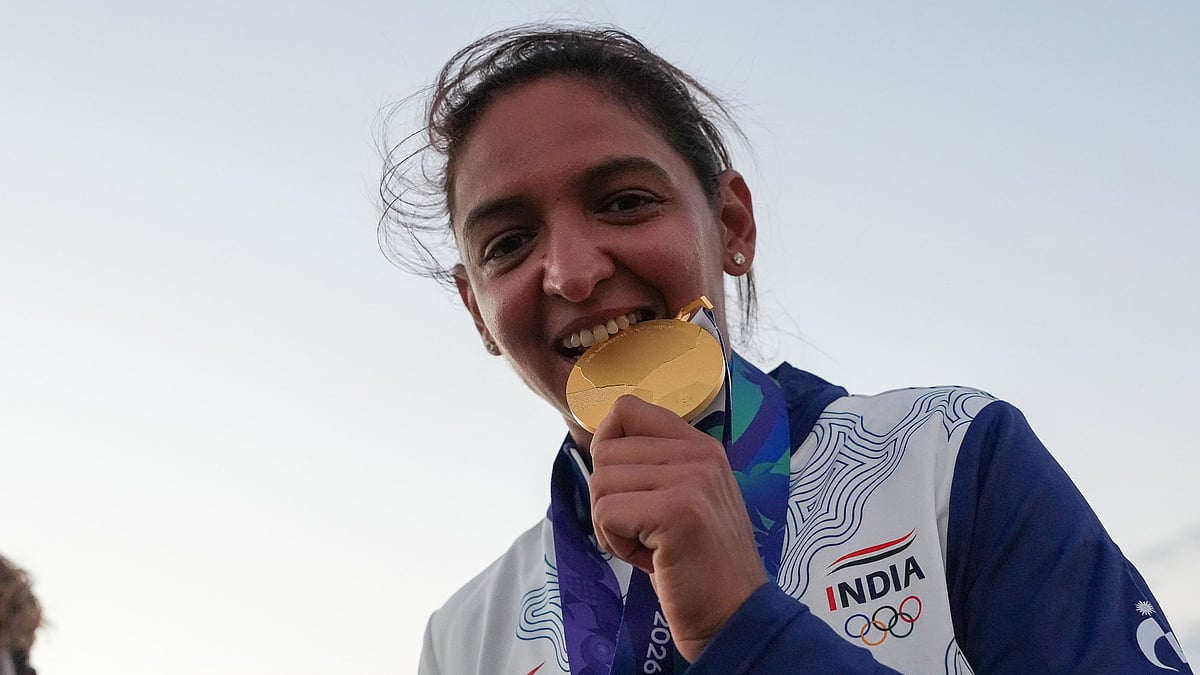
The culmination arrived with the World Cup triumph in 2025. Less than a year later, Kaur led India to another Asian Games gold at Aichi-Nagoya before deciding that the time had come for somebody else to take charge.
Her tenure was not without criticism. Tactical decisions, her own form and India's failures in major tournaments were scrutinised intensely. Captaincy at the highest level rarely offers immunity from either judgement or disappointment.
A legacy beyond statistics
Yet the measure of Kaur's legacy is the team she leaves behind.
The next captain will inherit an Indian side that expects to win world titles, not merely compete for them. That shift in expectation may ultimately be as important as any statistic attached to Kaur's name.
Also Watch:
She leaves the captaincy as India's first Women's ODI World Cup-winning skipper, a two-time Asian Games gold medal-winning captain and one of the most experienced leaders international cricket has seen.
The captaincy has ended. Harmanpreet Kaur's influence on Indian cricket has not.
To get details on exclusive and budget-friendly property deals in Mumbai & surrounding regions, do visit: https://budgetproperties.in/

