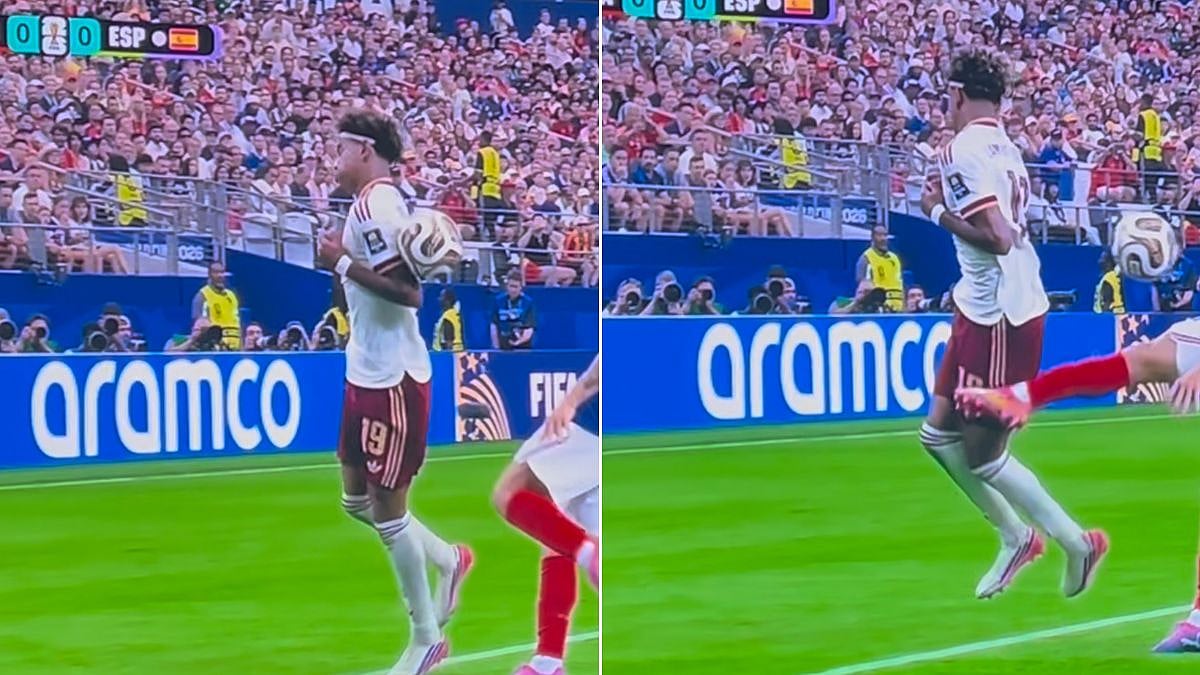
Spain's penalty against France in the FIFA World Cup 2026 semi-final sparked immediate controversy among fans and pundits. Television replays appeared to show the ball making contact with Lamine Yamal's arm moments before Lucas Digne fouled him inside the penalty area. The incident raised questions over whether VAR should have ruled out the penalty for an earlier handball offence.
Replays also showed the ball striking the back of Yamal's bicep moments before the collision, leading many to question whether the penalty should have been overturned. However, under the IFAB Laws of the Game, not every ball-to-arm contact is considered a handball offence. Officials must determine whether the contact was deliberate, whether the arm was in an unnatural position, and whether the player gained an unfair advantage.
France would only have been awarded a free kick if VAR concluded that Yamal committed a punishable handball before Digne's challenge. Had that been the case, play should have been stopped immediately, preventing the penalty from being awarded. Since the referee allowed play to continue after the arm contact, the officials effectively ruled that Yamal's touch did not breach the handball law.
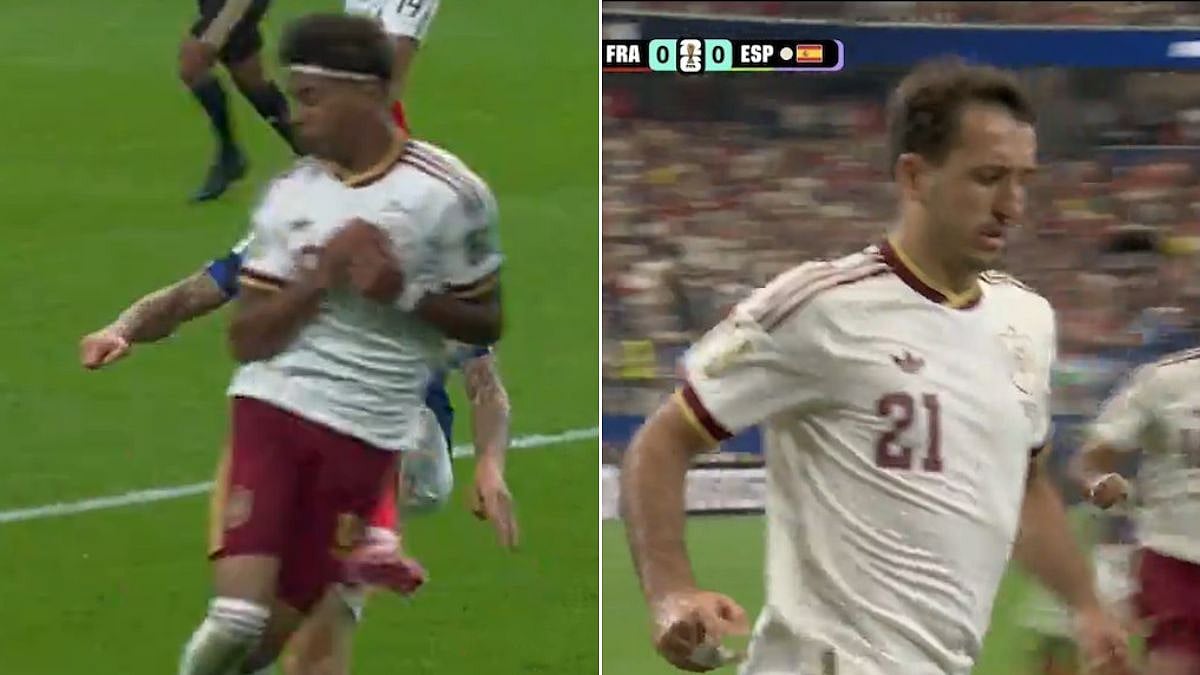
Oyarzabal stepped up under immense pressure and confidently slotted the ball past the French goalkeeper to make it 1-0. The goal rewarded Spain's bright start and put Luis de la Fuente's side firmly in control of the semi-final. France, meanwhile, were left with an early setback and the task of finding a way back into the contest.

