
Amid rising panic over repeated claims of leopard sightings across Pune neighbourhoods, a senior wildlife expert has stated that much of the fear is being fueled by unnecessary propaganda rather than verified incidents.
Over the past few weeks, residents from Aundh and nearby areas have reported frequent leopard sightings, which has led to multiple calls to the Forest Department. The officials confirm that most of these alerts have not been genuine.
'People are forwarding every rumour'
Speaking on the issue, Aditya Paranjpe, Honorary Wildlife Warden, Pune Forest Department, said that exaggerated messages circulating in housing groups and social circles are creating an atmosphere of fear. “People are forwarding every rumour, every shadow, every moving object as a leopard case. This is causing panic and wasting time and resources," he said.
'Leopards entering urban fringes is not uncommon'
“The honorary wildlife warden plays a crucial role in managing wildlife conflict situations. The leopard spotted in Aundh's RBI Colony in the early hours of Sunday may have walked along the Mula river from forested defence land to reach the spot. The animal most likely followed a narrow but continuous ecological corridor that links the College of Military Engineering (CME)–Bopkhel defence forests to the Mula river defence forests and the Mula river stretch cutting across Pune. The leopard which was spotted at Aundh, is calm and is aware of his territory, and that’s why it’s difficult to catch him. The leopard has been living in that area for the past four years, and for him, it’s a home-grown territory. The buzz around the big cat is just propaganda. Leopards entering urban fringes is not uncommon, especially in districts like Pune where human settlement closely borders natural forested terrain," added Paranjpe.
'Leopards follow natural pathways'
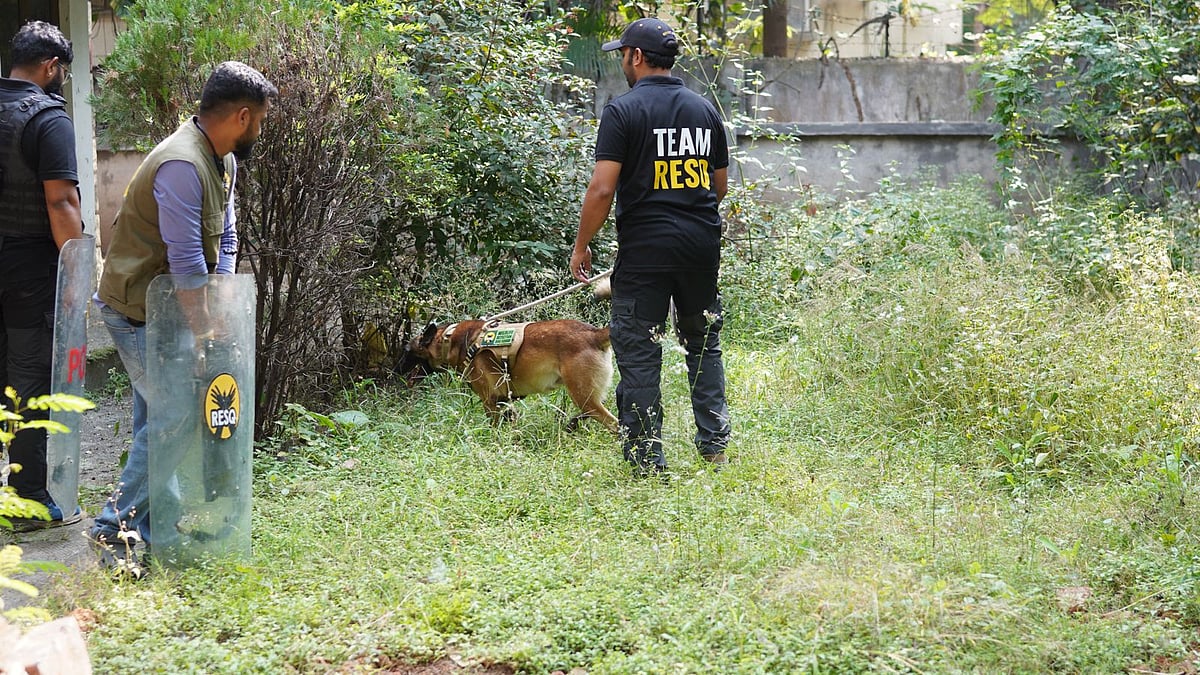
RESQ Charitable Trust founder Neha Panchamiya said, “Leopards follow natural pathways such as nullahs, thick vegetation patches, hill slopes, and water channels. These corridors act like highways for them. The whole CME side is fully connected through water bodies and the Mula channel. It is very likely the animal simply followed this corridor. The two places where there is proper evidence, like pugmarks, are RBI Colony and Sindh Society. The presence of stray dogs, pigs, and small livestock often attracts leopards toward human settlements. Urban edges provide easy prey. This is a typical behavioural pattern."

'Leopard is more scared of humans than humans are of it'
Paranjpe further said that a leopard generally prefers to avoid human contact. "When it enters a populated area, its instinct is to find an escape route. Its movement so far suggests it is trying to return to a safer forested patch,” he added.
He stressed that leopards are shy, solitary, and territorial animals. “Their basic nature is to stay hidden and avoid unnecessary confrontation. The leopard is more scared of humans than humans are of it,” said Paranjpe.
'Many areas have recorded leopard activity in the past'
Meanwhile, Deputy Conservator of Forests, Pune, Mahadev Mohite, told FPJ, “Leopard sightings in urban areas are a common practice and have occurred in the past. Areas including Wagholi, Wadgaon Shinde, Hinjawadi, Uruli, Hadapsar and Katraj have recorded leopard activity in the past. As the city population is swelling, the wild cat is coming to smaller patches and into city areas, as dogs and pigs are easily available for them to prey on.”
