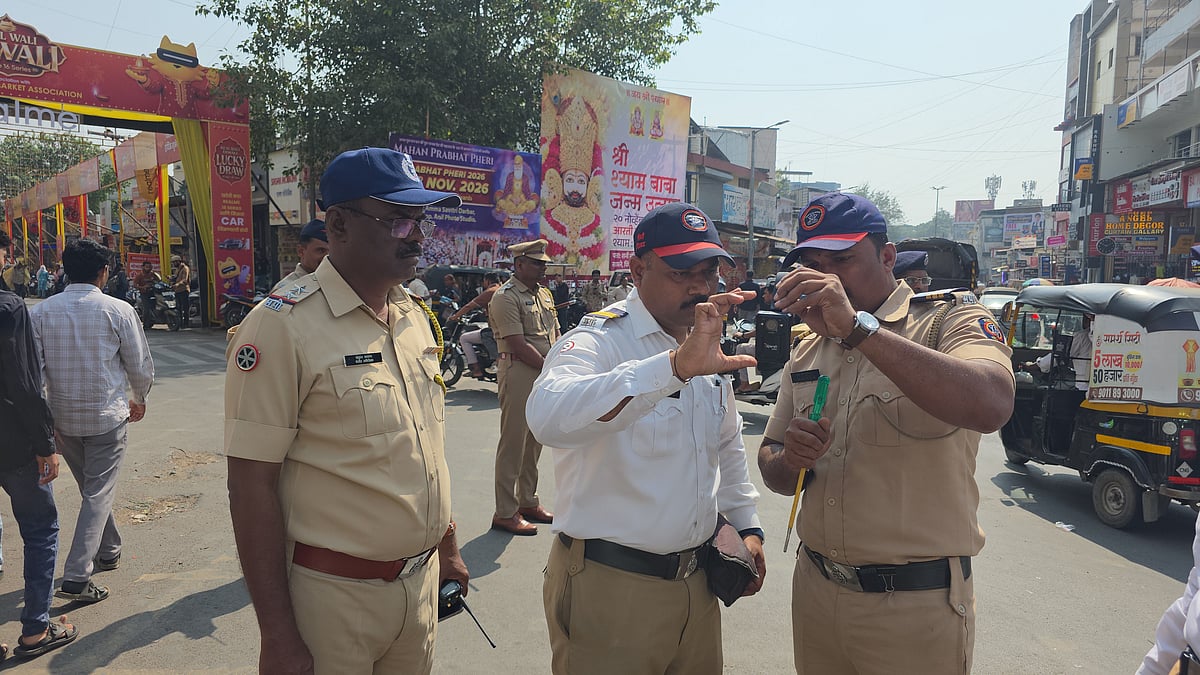
Pimpri-Chinchwad: Traffic police personnel in Pimpri-Chinchwad have started using 350 body-worn cameras to record their interactions with motorists during enforcement action.
The cameras will capture both audio and video, including conversations between police personnel and citizens.
Watch Video:
The move is aimed at improving transparency and accountability during traffic enforcement. It will also help the police establish what happened during disputes or incidents involving traffic personnel and motorists.
Assistant Commissioner of Police (Traffic 1) Nilesh Deshmukh said the cameras had been distributed to traffic police head constables and personnel above that rank across the Pimpri-Chinchwad Police Commissionerate. Their use has now begun.
The cameras were provided through the District Planning and Development (DPD) fund at an estimated cost of ₹1 crore. Maharashtra Chief Minister Devendra Fadnavis had made them available to the commissionerate as part of a police modernisation initiative.
Audio And Video Recordings During Enforcement
Deshmukh said the cameras have inbuilt memory cards, audio-video recording facilities and a six-hour battery backup. He said personnel would keep the cameras switched on while taking enforcement action.
"Whenever traffic police take action, they will keep these cameras switched on. All incidents during the action will be recorded. This will help maintain transparency and ensure accountability among personnel," Deshmukh said.
He added that the cameras would also record conversations between police personnel and motorists. This could help establish what was said and what happened during an interaction if a complaint or dispute arises.
The footage will also help the department identify responsibility if an untoward incident occurs. Police said appropriate action would be taken against the person found responsible.
Questions Remain Over Footage Access And Storage
While the cameras are now in use, the police have not yet publicly specified how long the recordings will be stored or how motorists can access them if they want to challenge alleged misconduct or wrongful action.
The six-hour backup mentioned by Deshmukh refers to battery capacity. The department has not clarified the footage retention period, whether recordings will be uploaded to a central server or who will be authorised to access them.
The police have also not disclosed whether the cameras will be monitored live or whether senior officers will review the footage later.
The rollout comes amid growing emphasis on the use of technology in policing. The Supreme Court has also previously issued directions on the use of body-worn cameras by law enforcement personnel during traffic management and enforcement.
What Are The Supreme Court's Guidelines On Bodycams?
The Supreme Court, in its Sept 2, 2024, order in the S Rajaseekaran vs Union of India road safety case, issued directions on the use of body-worn cameras by traffic enforcement personnel.
The court directed police and transport officials to use body-worn cameras while managing traffic and conducting enforcement drives. Both audio and video recording functions must be activated when officials are on duty.
Officials must also inform motorists and others that they are being recorded. The court said the footage could be used as evidence against traffic offenders in court. It could also help establish whether enforcement officials had acted according to the law.
The directions also require electronic enforcement systems to maintain records of violations, including photographic evidence, date, time and location details. These measures are intended to improve transparency and ensure accountability in traffic enforcement.

