
Pune: Pune’s special POCSO court delivered a verdict on Monday that was loudly hailed as a landmark triumph for the Indian judicial system.
In less than 60 days from the date of the crime, 65-year-old Bhimrao Kamble was investigated, tried, convicted, and sentenced to death for the brutal rape and murder of a three-and-a-half-year-old girl in Nasrapur.
The timeline is dazzling. It is proof of what the state machinery can achieve when it operates at maximum velocity. A 1,200-page chargesheet was filed in 15 days, with daily in-camera hearings and a swift punishment ruling under the “rarest of the rare" category.
But cross the district lines into Maval, and a different, far more agonising clock is ticking. There, the mother of a five-year-old girl who was lured, sexually assaulted, and strangled to death by her neighbour on 13th December 2025 is still waiting for court proceedings to meaningfully begin.
More than six months have passed. The grief is identical; the law is identical. The institutional urgency, however, is worlds apart.
A Tale Of Two Timelines
When we look at the two cases side by side, the discrepancy in speed exposes a deeply flawed reality: under the Protection of Children from Sexual Offences (POCSO) Act, all cases are mandated to be fast-tracked, but some are clearly tracked faster than others.
The Nasrapur case is a rare exception of rapid judicial efficiency following a horrific crime committed. In stark contrast, the Maval case reflects the agonising reality of standard legal delays. The tragedies were remarkably similar.
However, unlike the rapid turnaround in Nasrapur, the investigation by the Pimpri-Chinchwad police has followed a standard, slow-moving procedural timeline. As a result, more than six months have passed since the crime, and the formal court trial proceedings are still waiting to effectively begin, leaving the victim's family in limbo.
Giving the latest updates about the case, senior police inspector Vishal Patil, who is in charge of the Shirgaon Police Station and also the investigation officer (IO) of the case, told The Free Press Journal, “This case has come onto the board. The court has prepared the schedule. In coordination with the court, this case will also be conducted in a fast-track court. It is expected to take another one to two months for this.”
Why Did Nasrapur Move & Maval Stall?
Legal experts and systemic observers point out that the extraordinary speed of the Nasrapur verdict was not a spontaneous evolution of efficiency, but it was driven by three hard and operational realities that the Maval case simply lacked.
1) The Leverage of Public Disruption (The Highway Factor)
While Maval observed a localised bandh and quiet village protests, the reaction in Nasrapur was immediate and volatile. Hours after the crime, angry local residents physically blocked the major Pune-Satara highway at Navale Bridge.
A choked national highway drew immediate, top-tier political distress calls. The state’s Home Department intervened directly, and it applied intense downward pressure on the Pune Rural Police. Speaking to The Free Press Journal, a practising attorney in Pune requesting anonymity said, “When a case threatens regional law and order, administrative red tape evaporates overnight. The Maval case lacked that level of high-profile economic and physical disruption. That's why it fell back into the standard bureaucratic queue.”
2) Investigation Dynamics
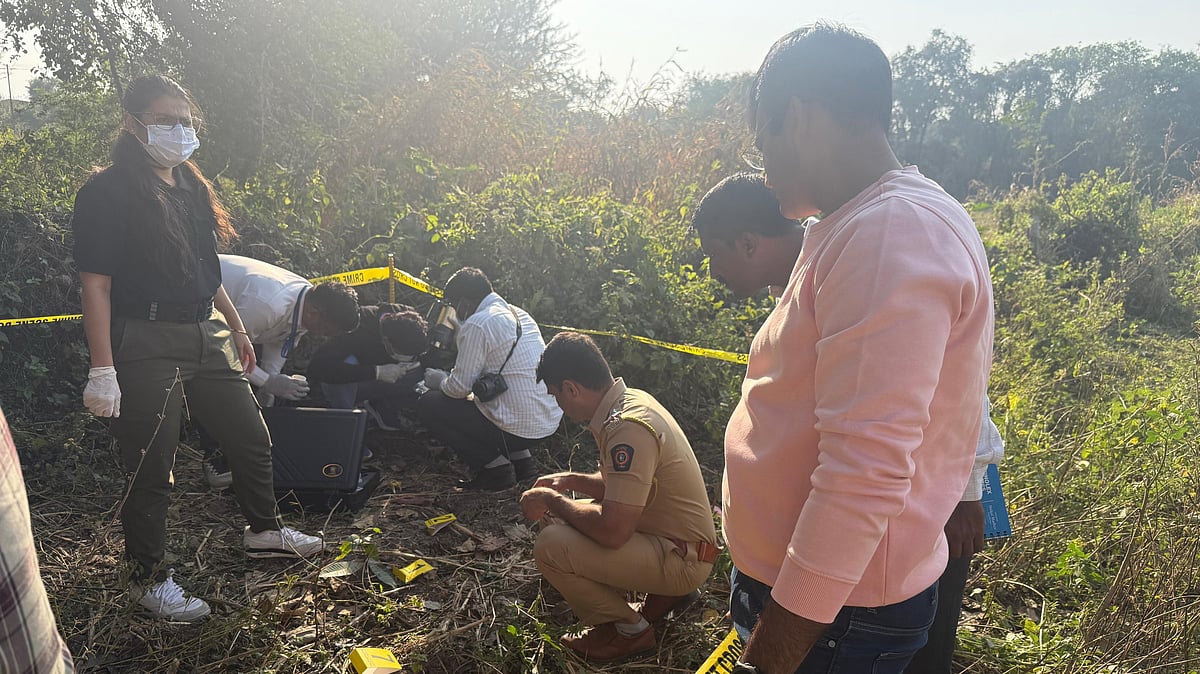
According to a senior journalist based in Pune, in the Nasrapur case, a Special Investigation Team (SIT) was formed, and it secured an open-and-shut evidentiary loop almost immediately. Multiple pieces of evidence, including CCTV footage, clearly showed the accused leading the toddler by the hand toward the cattle shed and were made public almost immediately. This digital evidence, along with rapid DNA profiling and a clear forensic trail of 18 distinct injuries, allowed the prosecution to build an “unbroken chain” during court summer vacations.
In Maval tehsil, while the suspect confessed to the Pimpri-Chinchwad police, the gathering of technical and forensic verification has faced standard laboratory backlogs. That's why it slowed down the formal framing of charges. Sr PI Vishal Patil told The FPJ that a chargesheet for the case was filed in February 2026 for the Maval case.
3) An Irreformable Past
Special Public Prosecutor Ajay Misar was able to decimate the defence in Nasrapur by presenting a terrifying prior criminal record of the 65-year-old accused Bhimrao Kamble. It included offences against a teenager, an elderly woman, and an animal. This eliminated any judicial hesitation regarding rehabilitation. Legal experts say that this allowed special judge SR Salunkhe to instantly classify it as “rarest of the rare".
The Darker Pattern
The delay in the Maval case is not an isolated incident. It is part of a historical backlog of child-centric crimes across the Pune and Pimpri-Chinchwad cities, where justice frequently goes cold.
Unresolved & Delayed Tragedies
- Wakad (2024): An eight-year-old boy was lured with sugarcane juice, assaulted, and murdered. The accused was arrested, but the trial crawls.
- Pimpri (2018): A four-year-old girl was kidnapped, assaulted, and killed. The accused remains at large. Broken by trauma, both her parents passed away within months of the tragedy.
- Nigdi (2012) & Kasarwadi (2012): Two separate cases involving 4 and 5-year-old girls assaulted and murdered (one thrown onto railway tracks). Over a decade later, the files remain open, the perpetrators unpunished.

The Ultimate Takeaway
The Pune-based practising attorney said, “The Nasrapur verdict proves that when the Indian state wants to deliver swift, airtight justice, the machinery is fully capable of doing so. However, urgency on all fronts is required for this to happen.”
“The Nasrapur case is an example, and the verdict is historic. If every case of this serious nature is treated this way, our society will go a long way. The procedures in the Nasrapur case must become a norm, or else they will always remain an exception. And until they become a norm, a swift verdict is not a systemic victory; it is merely an exception that highlights the rule of delay,” said the attorney.
