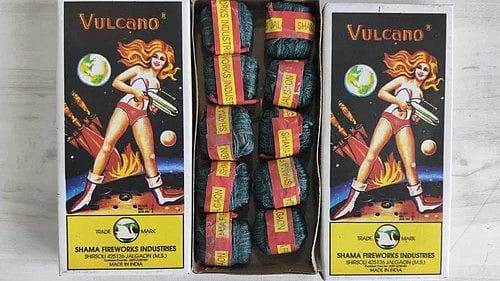
Shama Fire Works, established in 1950 after the Khandesh Mill, remains one of Jalgaon’s oldest surviving industrial ventures and a source of pride for the city. Its fireworks, once the heart of Diwali celebrations across India, are still in great demand today in Africa and the Middle East.
Older generations in Jalgaon fondly recall the sparkle of Shama Fire’s products every Diwali. The company’s crackers once lit up festivals, weddings, and even political celebrations across the country. From the burning of Ravana effigies during Dussehra to Lakshmi Puja fireworks contests, the brand became synonymous with festive joy.
While India’s history of fireworks dates back to royal festivities centuries ago, commercial manufacturing began much later. China first introduced the large-scale production model, which India adopted around 1950. In that same year, Shama Fire Works was founded in Jalgaon, producing fireworks for Diwali and other occasions.
Soon, Shama Fire became a household name not only in Maharashtra but also in states such as Madhya Pradesh, Rajasthan, and Punjab. Its most popular products included Phuljadi, Apat Bar, Chidi Bhuichakra, and “atom bombs” with playful brand names like Volcano, Tufan Mail, and Indian Cannon. Children eagerly awaited these crackers, and families proudly stocked boxes of Shama Fire fireworks before every Diwali.
According to official gazette records, the factory employed 110 workers in 1953–54, increasing to 140 by 1957–58. Skilled labourers then earned between one rupee eight annas and two rupees a day — a detail that today reads like a glimpse into history.
The Milwani family, which owns Shama Fire, originally ran a liquor business in pre-Partition India, in what is now Pakistan. After migrating post-1947, they briefly worked in Ferozepur before settling in Jalgaon and starting the firecracker business. “Today, the seventh generation of our family continues in this trade,” said Harish Milwani, director of Shama Fire.
In the early years, Shama Fire’s products were sold exclusively through their shop near Rajkamal Talkies. Each box, priced at Rs5, Rs7, or Rs10, contained a mix of fireworks and drew long queues before Diwali. Buyers often experienced childlike excitement upon securing a box — though latecomers were often disappointed to find them sold out, especially the Volcano brand, which was in high demand.
Despite occasional injuries caused by misfired crackers, their popularity never waned. Eventually, the government banned Apat Bar and Chidi Bhuichakra for safety reasons.
Even today, while several vendors and temporary stalls operate across Jalgaon — especially near GS Maidan — the name Shama Fire continues to evoke nostalgia and pride among the city’s residents, a glowing reminder of Jalgaon’s industrial and festive heritage.

