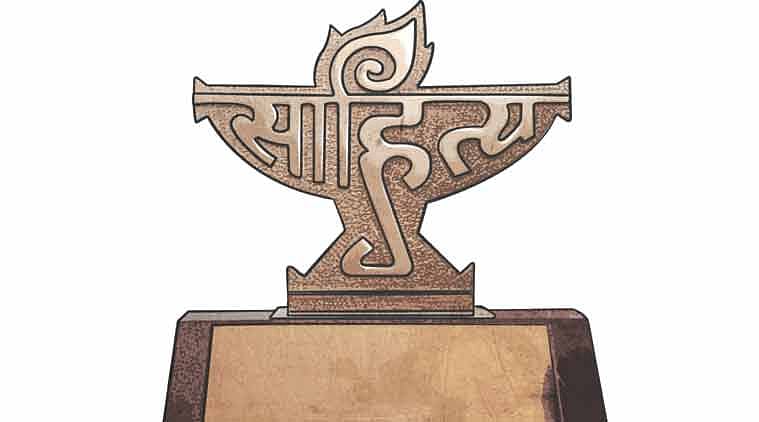
Jalgaon: Reflecting on his journey after receiving the prestigious Sahitya Akademi Award 2025 for his autobiographical work Kalya-Nilya Resha (Black and Blue Lines), artist and writer Raju Baviskar said that the characters in his memoir have deeply shaped and enriched his life.
“Just as I met people in childhood who nurtured me, I also encountered individuals in adulthood who guided me in the world of art. Holding their hands, I was able to reach this far,” Baviskar shared. He added that the people, places, and experiences, from his village and the Satpura ranges to the stories of local women, have all found expression in his book.
A retired art teacher from P. M. Mundada High School in Jalgaon, Baviskar’s memoir vividly portrays the lives of those living on the fringes of rural society. The book brings out the struggles, neglect, and social humiliation faced by marginalized communities, particularly the Matang community, with honesty and depth.

Before turning to writing, Baviskar made his mark as an artist, creating illustrations for periodicals and painting subjects rooted in village life, farm labourers, beggars, and daily wage workers. Often focusing on the “faceless” sections of society, these visual narratives later evolved into powerful written expression. “Whatever I experienced accumulated in my mind first appeared in my paintings, and eventually in my writing,” he said.
He noted that while some aspects of society remain unchanged, platforms like Parivartan have helped expand the reach of such voices in literature.
The announcement of the Sahitya Akademi Award sparked celebration across Jalgaon’s literary and cultural circles. The honour places Baviskar among noted names from the region such as Bhalchandra Nemade, N.D. Mahanor, and Shrikant Deshmukh.
Writers and poets have lauded the memoir for its cultural and social significance. Poet Jitendra Kuwar described the book as one where “images are painted through words,” expressing hope that it would become a milestone in Marathi literature. Veteran poet Sanjeevkumar Sonawane called it not just a personal narrative but a powerful reflection of marginalized rural communities in Khandesh, highlighting the dignity and struggles of the Matang community.
Senior litterateur Ashok Kotwal observed that the human figures central to Baviskar’s paintings seamlessly reappear in his writing. He praised the narrative for being intense yet restrained, avoiding victimhood while offering a sharp, insightful exploration of social realities.
Kalyanilaya Resha, he added, stands out for bringing together the folk life, dialect, and cultural nuances of Khandesh, elements that have largely remained underrepresented in mainstream Marathi literature.
