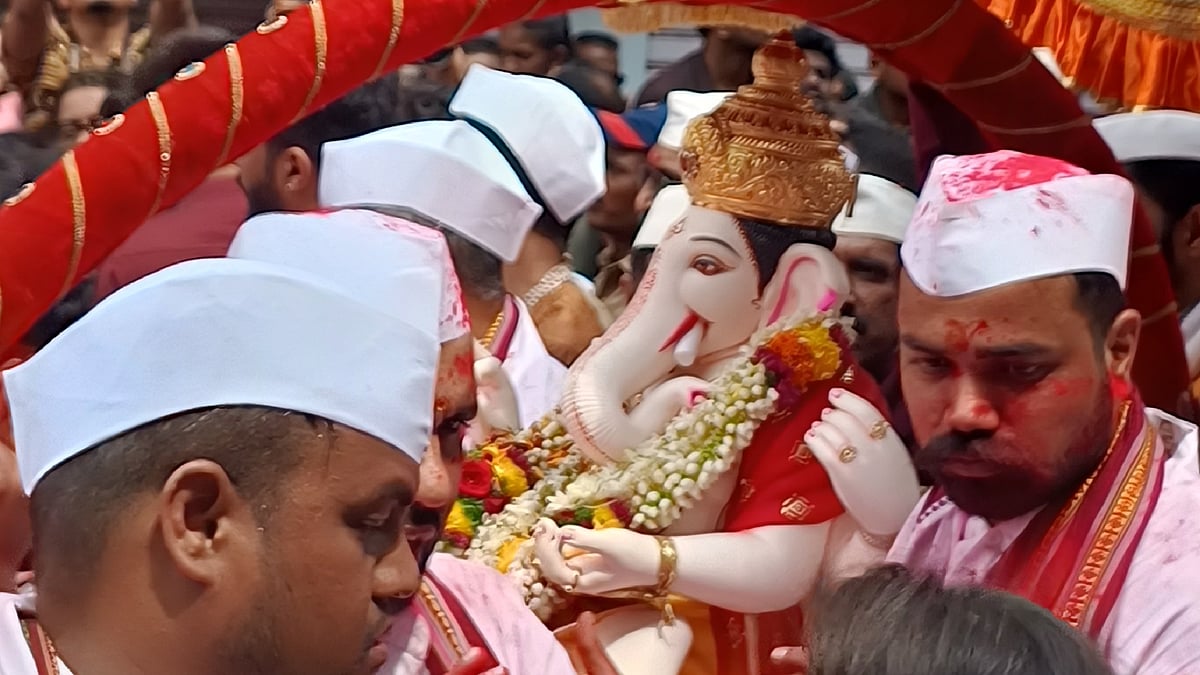
Pune: Pune's grand Ganesh Visarjan procession began on Friday as the city celebrated Anant Chaturdashi. The first of the Manache Paach Ganpati, Kasba Ganpati, started its ceremonial procession around 9:30 am. The procession began after the traditional puja at the Lokmanya Tilak statue in Mandai.
The remaining four Manache Ganpati are following the traditional sequence. Central Pune witnessed heavy police deployment and major traffic restrictions as hundreds of Ganesh mandals prepared to join the immersion procession.
Kasba Ganpati leads Manache Paach
Kasba Ganpati is leading the Manache Paach, followed by Tambdi Jogeshwari, Guruji Talim, Tulshibaug and Kesariwada Ganpatis. More than 600 public Ganesh mandals are expected to participate in the major procession routes.
The four main routes are Laxmi Road, Tilak Road, Kelkar Road and Kumthekar Road. These routes converge towards Alka Talkies Chowk, one of the key points of the immersion procession. With more mandals expected to enter the central routes as the day progresses, the procession movement is likely to slow down.
Pune Police has made extensive security arrangements for the procession. Around 10,000 police personnel have been deployed across the city. More than 3,500 cameras are also being used for security and crowd monitoring. Police have also introduced restrictions on dhol-tasha performances at major chowks. Each dhol-tasha group will be allowed to perform for a maximum of 15 minutes at these junctions.
Each mandal can have a maximum of two dhol-tasha groups. The move aims to prevent long stoppages and keep the procession moving.
17 major roads closed
Traffic restrictions have come into force across central Pune as the procession moves through the city. As many as 17 major roads are being closed in phases. These include Laxmi Road, Tilak Road, Kelkar Road, Kumthekar Road, Bajirao Road, Shivaji Road, Shastri Road, JM Road, Karve Road and Fergusson College Road.
A 48-hour ban on heavy vehicles has also been imposed in the city. The restriction started at 12:01 am on Friday and will remain in force until midnight on September 26. Motorists travelling towards central Pune are expected to face diversions and delays.
Pune Police has also introduced a GPS-based tracking system for 40 Ganesh mandals. The system is intended to help authorities monitor the movement of processions and manage traffic and crowds. A dedicated online system is also providing information about procession routes, diversions, road closures and parking arrangements.
The arrangements are particularly important as hundreds of mandals are expected to enter the main procession routes during the day.
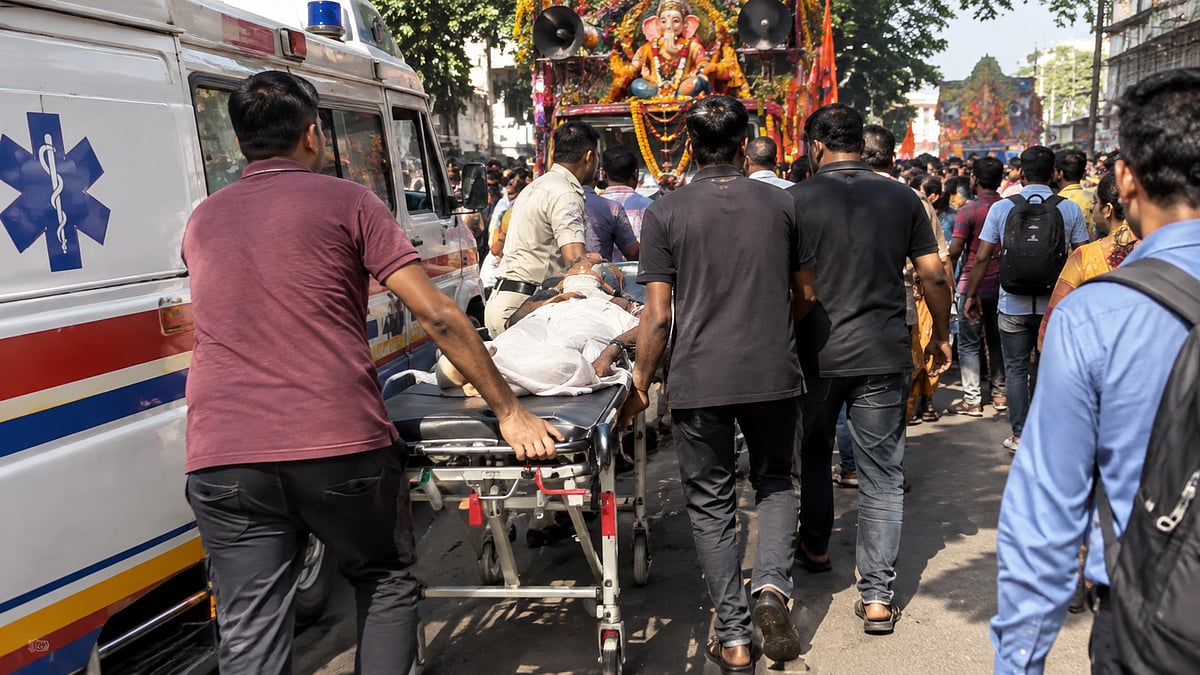
PMC steps up immersion arrangements
The Pune Municipal Corporation has deployed personnel at major immersion points.
Around 120 lifeguards and 37 fire brigade personnel have been deployed at 15 major immersion ghats. Emergency and safety arrangements have also been made at other immersion locations across the city.
The arrangements aim to manage the large number of devotees expected to gather at the ghats during the immersion process.
With the Manache Paach entering the traditional procession and more mandals expected to follow, the focus in Pune has shifted to keeping the procession moving while managing crowds and traffic across central areas.

