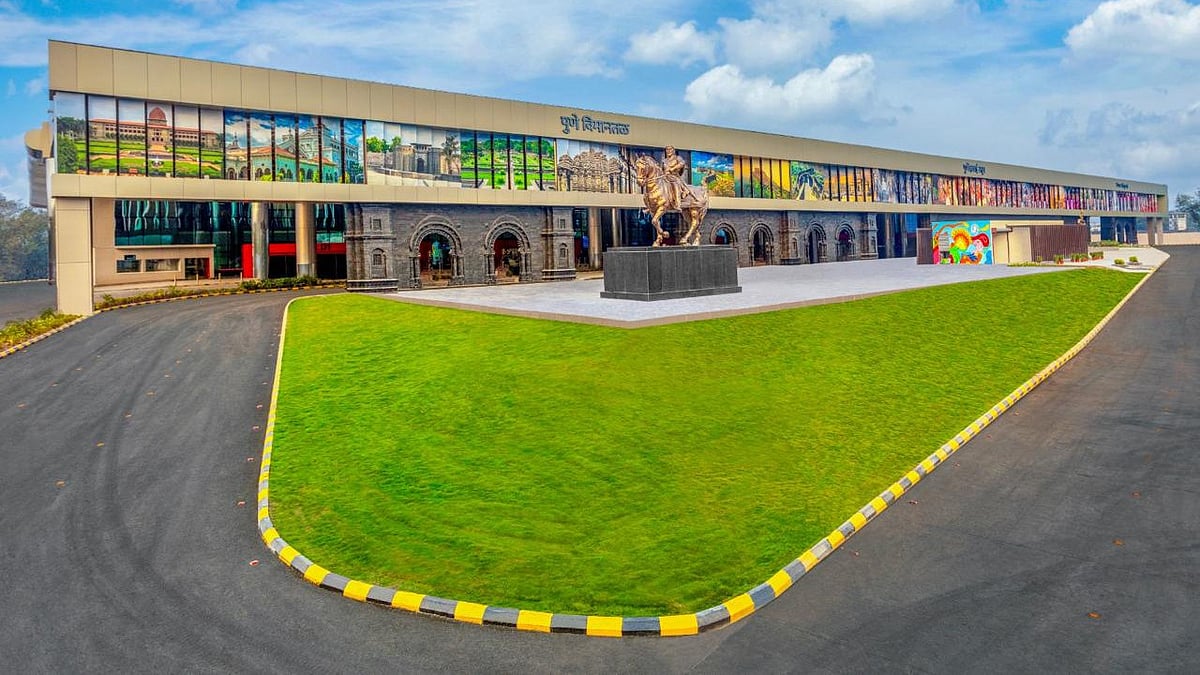
Pune: The year 2025 has been a watershed moment for Pune International Airport, which closed the year with what officials describe as the most ‘decisive transformation’ in its history. Under the leadership of Union Minister of State for Civil Aviation and Cooperation Murlidhar Mohol, the airport completed a full-scale shift in operations, infrastructure, and passenger services. Officials from the aviation call Pune Airport, which has positioned itself as one of India’s fastest-improving airports.
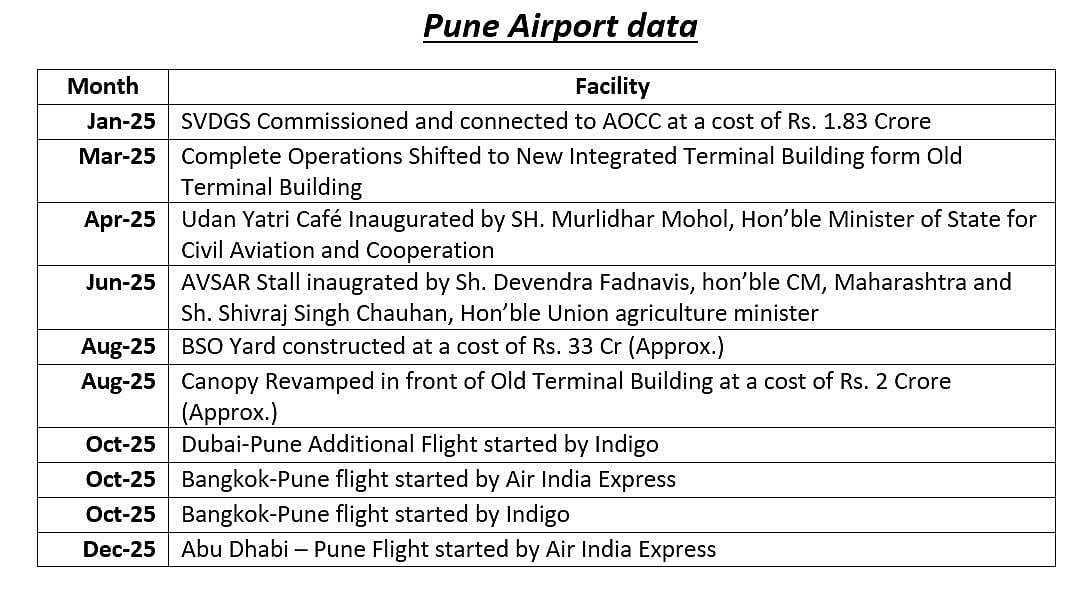
According to a press release by the Pune Airport authorities, the biggest milestone has been the complete transition from the Old Terminal Building (OTB) to the new Integrated Terminal Building (NITB). The OTB’s 22,300 sq. m layout and peak-hour capacity of 2,340 passengers have been replaced by a 52,000 sq. m terminal designed to handle 3,000 peak-hour passengers. Passengers are now welcomed by wider concourses, clearer pathways, expanded seating zones, and a fully separated arrivals-departures layout that has noticeably reduced congestion.
The NITB also brings a green upgrade, carrying a GRIHA 4-star sustainability rating. Features include a 567 KL rainwater harvesting system, a 1,130 KLD sewage treatment plant, heat-resistant roofing, LED and sensor-based lighting, and high-efficiency HVAC systems. A new power backbone, including 11 kV substations, dual MSEDCL connections, and SCADA monitoring, has been installed to weather operational disruptions.
Passenger movement systems have grown in parallel. The airport now operates 34 check-in counters, 10 passenger boarding bridges, 15 elevators, eight escalators, and an inline baggage system integrated with security scanners. DigiYatra has become fully operational with an increased number of e-gates, while 106 digital flight information screens support smoother navigation.

Traffic numbers underline the scale of change. Aircraft movements rose from 67,484 in 2024 to 70,992 in 2025, a 5.1% increase. Passenger traffic crossed 10.86 million, up 6.1% from 2024. Cargo operations surged by nearly 23.8%, handling 49,718 metric tonnes, driven largely by domestic movement of auto components, pharmaceuticals, perishables, and e-commerce consignments. Auto parts and medical cargo alone accounted for 60% of domestic freight.
Improvements have been reflected in public feedback. Through 2025, Airport Service Quality (ASQ) scores climbed quarter-on-quarter: 4.92 in Q1, 4.94 in Q2, and 4.96 in Q3, pushing Pune’s global ranking from 59 to 56 and earning it recognition as the highest-rated AAI-operated airport worldwide.
Commercial services have also undergone a dramatic expansion. The new terminal hosts 83 outlets, compared to 28 earlier, including 32 food and beverage points and 40 retail stores across varied price ranges. Executive lounges have doubled, smoking rooms have increased, and wellness and duty-free facilities are incoming. Employment at commercial counters has risen fourfold to 675 personnel, resulting in shorter queues and faster service.

The airport also reported stronger community engagement through Yatri Sewa Diwas, cultural activities, blood donation camps, environmental drives, and educational outreach events that continued without operational impact.
As the year ends, authorities say the transformation reflects a shift not only in physical capacity but also in the airport’s identity. With higher sustainability benchmarks, digital integration, expanded capacity, and improved passenger satisfaction, Pune Airport now positions itself as a future-ready aviation hub prepared for continued growth in 2026 and beyond.

