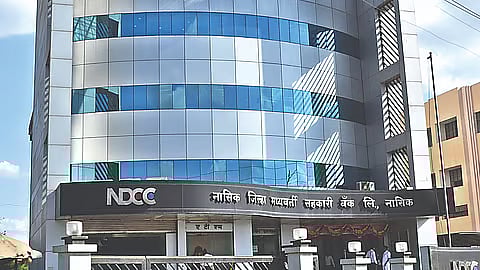
Nashik: The Reserve Bank of India (RBI) has imposed restrictions on the Nashik District Central Cooperative Bank (NDCC Bank) after serious irregularities were detected during an inspection conducted by the National Bank for Agriculture and Rural Development (NABARD). As a result of the action, the bank will face limitations on dividend distribution, donations, and major expenditures.
The move has also triggered discussions regarding the impact on the bank’s expected financial boost from the government’s farm loan waiver scheme. The bank is slated to receive around ₹500 crore under the scheme, raising questions about whether the RBI’s restrictions could affect the inflow or utilisation of these funds.
According to sources, NABARD’s inspection revealed significant shortcomings in the bank’s operations, prompting the RBI to initiate corrective action. Restrictions have also been imposed on the utilisation of large deposits exceeding ₹15 lakh. The bank has been directed to submit a revival plan within six months.

Additionally, the RBI has instructed the bank to merge or shut down loss-making branches. The directive has created concern among employees, as several branches across Nashik district are reportedly operating at a loss. Closure or merger of such branches could lead to staff transfers, potentially increasing their financial and personal burdens.
Along with the restrictions, the RBI has made it mandatory for the bank to submit progress reports to NABARD every three months. This will enable regulators to monitor the corrective measures undertaken by the bank following the action.
The RBI and NABARD are expected to closely monitor the bank’s operations during the revival period. The bank has been given a specific timeframe to rectify deficiencies and implement reforms aimed at protecting depositors’ interests. The development has once again brought the bank’s financial challenges into the spotlight.
