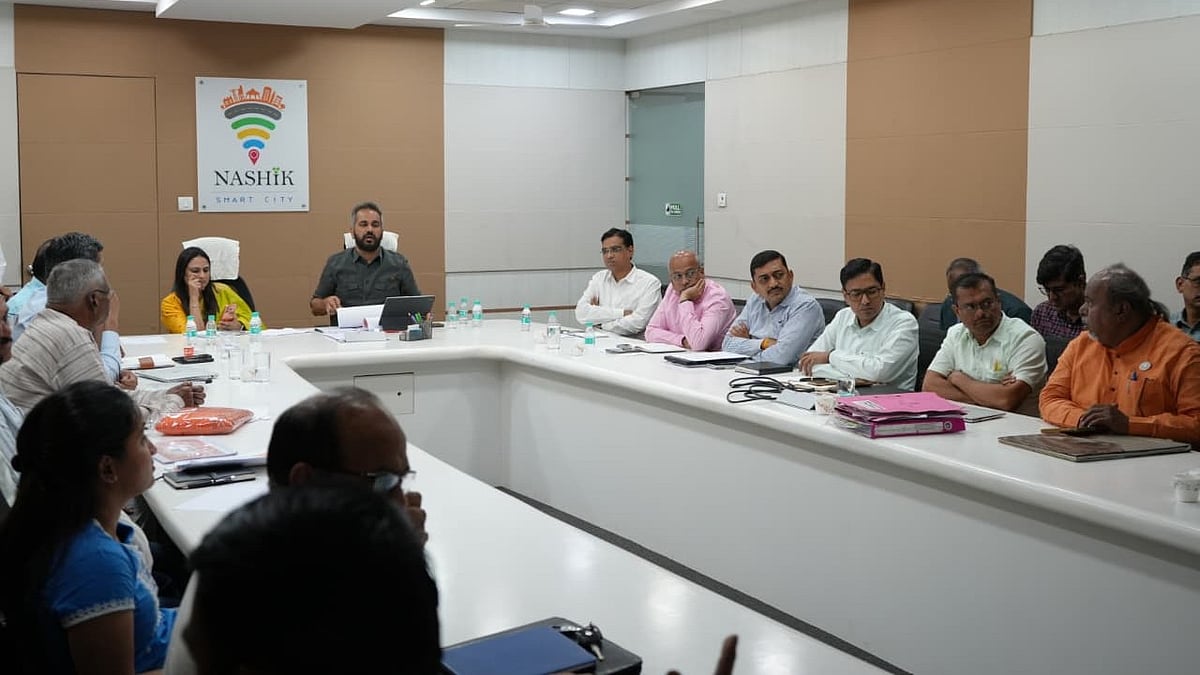
Nashik: Taking a significant step towards ensuring an environment-friendly Simhastha Kumbh Mela 2027, the Nashik-Trimbakeshwar Kumbh Mela Authority (NTKMA) has convened a joint meeting with trustees and representatives of major temples from Nashik and Trimbakeshwar to develop a sustainable framework for nirmalya management.
The meeting will be held on June 18, where representatives from prominent temples and religious institutions are expected to participate in the discussion.
The initiative aims to create a structured mechanism for the collection and processing of nirmalya, including flowers and other ritual offerings generated at temple premises. Through coordinated efforts with temple trusts, NTKMA intends to promote scientific disposal practices, protect the Godavari River and encourage sustainable solutions ahead of the upcoming Kumbh Mela.
.avif)
“Simhastha Kumbh Mela 2027 provides us with an opportunity to create systems that combine our spiritual traditions with environmental responsibility. Nirmalya offered with devotion should be managed with the same sense of respect and care. Through the collective participation of temple trusts, citizens and institutions, we aim to develop a sustainable model that protects our rivers, promotes cleanliness and creates long-term value for Nashik and Trimbakeshwar,” said NTKMA Commissioner Shekhar Singh.
The meeting will focus on preparing a temple-level nirmalya management framework, identifying necessary collection mechanisms, discussing logistical requirements and exploring collaboration between temple trusts and agencies involved in sustainable waste processing.
A key aspect of the proposed initiative is the Waste to Wealth approach, where collected nirmalya can be converted into value-added products. The model also aims to explore opportunities for generating livelihood avenues for women from economically weaker sections by involving them in sustainable processing activities.
NTKMA officials stated that the suggestions and participation of religious institutions will play an important role in shaping a sustainable and replicable nirmalya management model.

