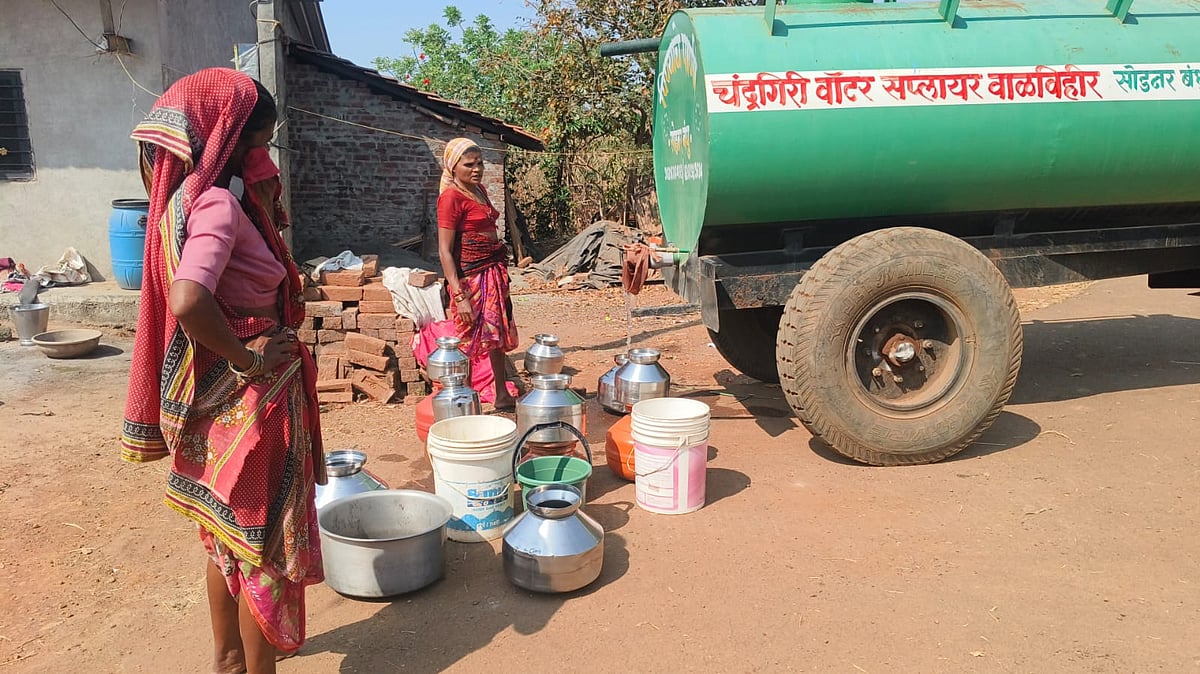
Nashik: Even before the middle of April, the shortage of drinking water in Nashik district is assuming alarming proportions, compounded by the scorching heat of summer. The total water stock remaining in the district's 26 major dams stands at a mere 44.30 per cent. The dams are rapidly depleting due to increased evaporation rates and a surge in water consumption. In rural areas, daily life has now become entirely dependent on water tankers.
Water levels in many of the district's medium and small-scale water projects have dropped below the 20 per cent mark. With wells and borewells running dry, water is currently being supplied to 97,841 citizens across the district through a fleet of 55 water tankers. This relief operation covers 162 villages and hamlets.
Major dams such as Gangapur, Darna, and Girna currently hold 5 to 10 per cent less water stock compared to the previous year. This situation has raised concerns regarding a potential adverse impact on the water supply to urban areas as well.
Taking into account that the situation could become even direr if the monsoon is delayed, the district administration has appealed to citizens to use every drop of water with utmost care. Directives have been issued to strictly plan the utilisation of available water reserves and to avoid any unnecessary consumption.
Currently, the severity of the summer heat combined with water scarcity has created significant difficulties in rural areas. The prevailing sentiment suggests that the administration needs to implement water conservation measures on a war footing, including increasing the supply of water tankers, to address this crisis effectively.
