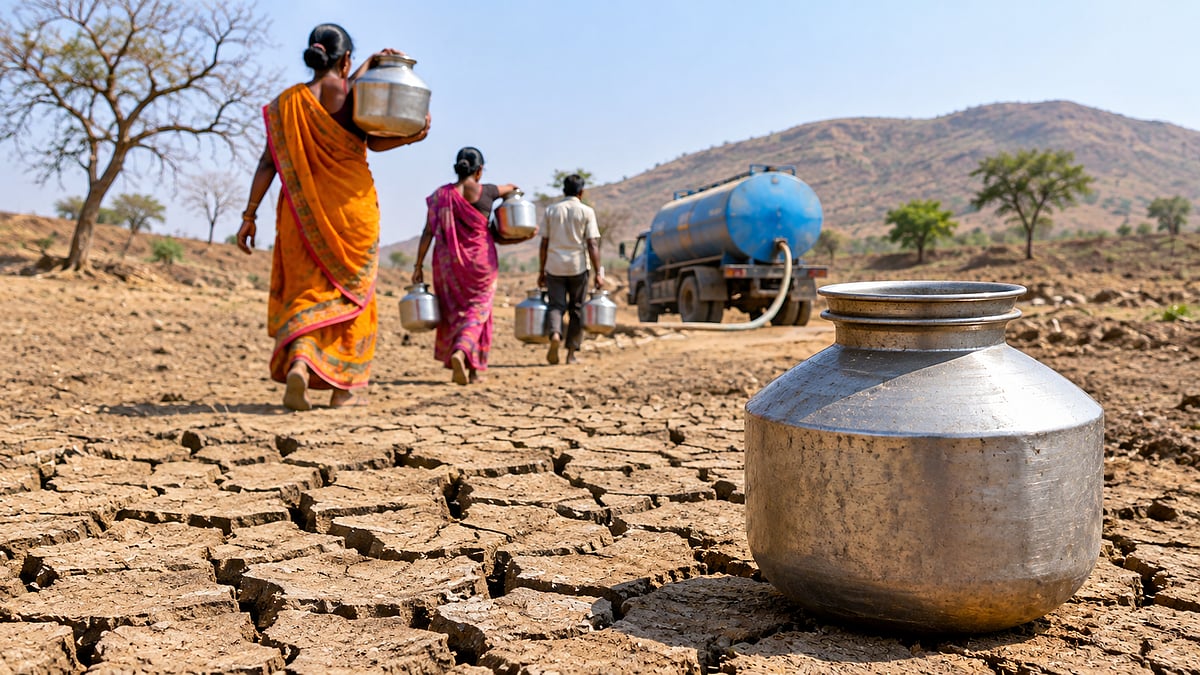
Nashik: Nashik district is witnessing growing concerns over water scarcity at the start of winter, with the State Government declaring 13 of its 15 talukas drought-affected. The decision covers Malegaon, Baglan, Kalwan, Nandgaon, Surgana, Igatpuri, Peth, Sinnar, Yeola, Deola, Trimbakeshwar, Chandwad and Niphad. Nashik and Dindori talukas have been excluded from the drought-affected list. Irregular rainfall, inadequate precipitation in several areas and declining groundwater levels have raised concerns over drinking water availability in rural areas.
The district administration has prepared a comprehensive water scarcity mitigation plan covering 777 villages and 1,280 hamlets for the period from October 2026 to June 2027. The plan includes 2,906 measures to address water shortages in three phases. These include repairing existing water supply schemes, deepening wells, restoring borewells and developing alternative water sources. The administration has also proposed acquiring 375 private wells and supplying water through tankers to 1,672 habitations across 555 locations.
An estimated ₹13.8 crore has been earmarked for implementing the water scarcity mitigation plan. Of this, ₹11.2 crore is proposed for tanker water supply and ₹1.9 crore for acquiring private wells.

The drought has also severely affected agriculture, with nearly 6.4 lakh hectares of farmland reportedly suffering crop losses, affecting around 6.9 lakh farmers. The district administration has sought financial assistance of approximately ₹658.6 crore for affected farmers. Crops such as maize, cotton, soybean and pulses have suffered due to prolonged dry spells.
The drought declaration is expected to bring several relief measures, including land revenue concessions, restructuring of crop loans, electricity bill concessions for agricultural pumps, examination fee waivers for eligible students and increased employment guarantee works.
Arrangements for drinking water supply and cattle fodder will also be prioritised. With water resources under pressure and summer still several months away, ensuring adequate drinking water for rural communities has emerged as a major challenge for the district administration.

