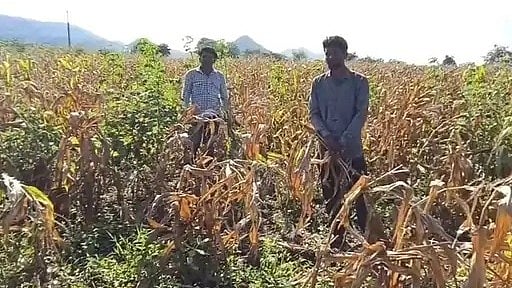
Nashik: Nashik district has recorded a rainfall deficit of around 184 mm against its average rainfall this monsoon, raising concerns over agriculture and water availability. The district receives an average annual rainfall of around 934 mm. However, rainfall this year has remained below normal, with several parts of the district experiencing prolonged dry spells despite occasional heavy showers.
The distribution of rainfall has also remained uneven. After a relatively weak start to the monsoon, some areas received satisfactory rainfall during July and August. However, rainfall declined sharply in September. Between September 1 and 27, the district received only around 50.3 mm of rainfall against the expected 165.2 mm for the period, resulting in a substantial deficit. The prolonged dry spell has affected soil moisture and increased stress on standing crops.
The impact has been particularly visible on Kharif crops such as soybean, maize, bajra, cotton, moong and urad. In several areas, inadequate moisture has affected crop growth, flowering and yield prospects. Farmers in rain-dependent areas are facing greater difficulties, while concerns are also being raised over water availability for the upcoming Rabi season.

Experts and officials point out that total rainfall alone does not reflect the actual agricultural situation, as the timing and distribution of rainfall are equally important. In some areas, heavy rainfall was recorded over a short period, followed by dry spells lasting several days. As a result, soil moisture could not be maintained for a sustained period.
The rainfall deficit has also increased concerns over groundwater levels and future water availability. The district administration is monitoring rainfall, reservoir storage and groundwater conditions and assessing requirements related to drinking water, livestock and fodder in rural areas.
The situation will be particularly important for the upcoming Rabi season. Adequate soil moisture and water storage will determine the area available for Rabi sowing and the choice of crops. If dry conditions continue, farmers may face difficulties in planning irrigation and sowing.
The 184-mm rainfall deficit, therefore, represents not merely a statistical shortfall but a significant challenge for agriculture, groundwater resources and water management in Nashik district.

