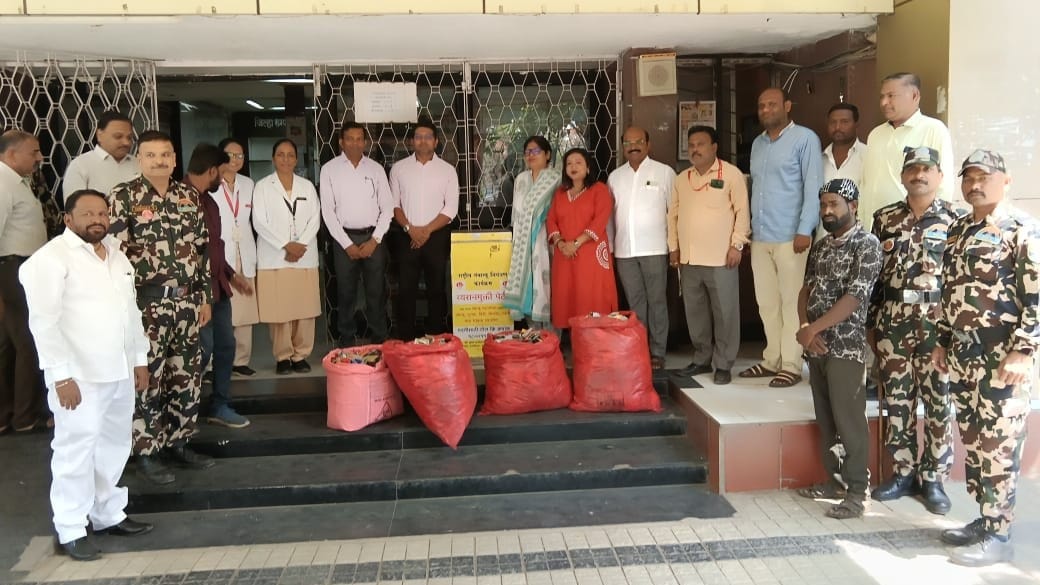
Nashik: With the objective of maintaining cleanliness, promoting public health, and creating a tobacco-free environment, the Nashik District Hospital has launched an innovative initiative called the “Tobacco Quitting Box.” Under this initiative, nearly 44 kilograms of tobacco and tobacco-related products have been confiscated over the past three months and disposed of as per standard solid waste management norms, informed District Civil Surgeon Dr Satish Shimpi.
The hospital administration observed that a large number of patients and their relatives visiting the hospital consume tobacco products. Lack of awareness, inadequate health education, traditional habits, and addiction were identified as major reasons behind the widespread use of tobacco-related substances. In response, the hospital introduced this preventive initiative.
Every day, around 1,000 to 1,500 patients and their relatives visit the hospital’s Outpatient Department (OPD). As part of the “Tobacco-Free Health Institution” concept, all visitors are screened at the entry point. Trained security personnel have been deployed at the hospital entrance to conduct inspections. If tobacco or tobacco products are found during checking, visitors are asked to voluntarily deposit them into the “Tobacco Quitting Box.” Those found consuming tobacco are instructed to rinse and clean their mouths before entering the premises. This process has helped curb tobacco consumption within the hospital campus.

The initiative has significantly contributed to maintaining cleanliness in the hospital premises. Incidents of spitting on walls and public areas have reduced considerably, leading to a decrease in foul smell and lowering the risk of infectious diseases. The campaign has also helped raise awareness about the harmful effects of tobacco and encouraged a more positive attitude toward health among citizens visiting the hospital.
Dr Shimpi, who also serves as Secretary of the National Tobacco Control Programme, stated that the “Tobacco Quitting Box” initiative should not remain limited to hospitals alone. He emphasised the need to implement it across government, semi-government, and private offices and establishments. According to him, such measures would help maintain cleaner workplaces, control tobacco use, and protect citizens from diseases spread through spitting. If adopted widely, the initiative could play a major role in building a tobacco-free society.

