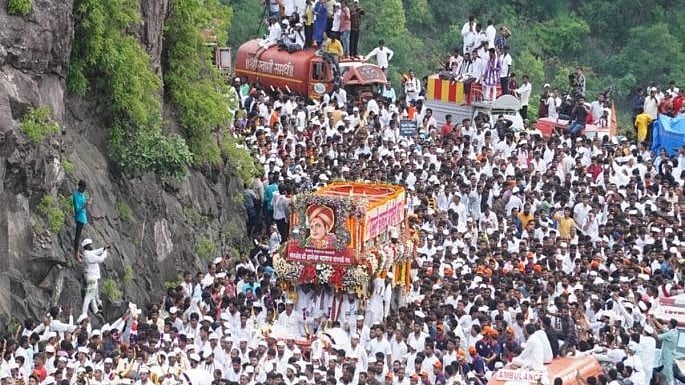
Pune: The National Highways Authority of India (NHAI) has completed one of the most significant phases of the Shri Sant Dnyaneshwar Maharaj Palkhi Route project by expanding the 54.5-kilometre stretch between Dive Ghat and Lonand into a six-lane highway. The upgraded road is expected to greatly reduce traffic congestion, improve safety and cut travel time by nearly half, bringing considerable relief to both daily commuters and the thousands of Warkaris who travel along this route every year.
The project required an investment of around ₹580 crore for construction work, while nearly ₹1,700 crore was spent on land acquisition. Over the past three years, the once-congested corridor has undergone a major transformation. Earlier, the four-lane road frequently experienced heavy traffic, particularly at key bottlenecks such as Saswad and Jejuri, along with the ghat section at Dive Ghat.
Commuters travelling between Dive Ghat and Lonand earlier needed about one-and-a-half to two hours to complete the journey. With the widening now completed, officials say the same distance can be covered in just 40 to 50 minutes.
The expansion has also significantly improved the average speed of vehicles on the route. Earlier, traffic moved at around 30 to 50 kilometres per hour due to congestion and limited road capacity. The new six-lane highway now allows vehicles to maintain speeds between 60 and 100 kilometres per hour. Additionally, the traffic-handling capacity of the road has increased substantially, rising from about 15,000–20,000 vehicles per day earlier to nearly 50,000–60,000 vehicles daily.
Authorities also expect the improved infrastructure to bring down accident rates on this stretch. Previously, the corridor recorded around 30 to 40 accidents each year, both minor and major. With better road design, improved alignment and wider lanes, officials believe accident numbers could decrease by nearly 40 per cent.
The road plays an important role in connecting Pune and Satara district and is widely used by passenger vehicles, state transport buses and trucks carrying agricultural produce. The smoother traffic flow is also expected to reduce fuel consumption, as vehicles will no longer face long delays caused by frequent traffic bottlenecks.
Sanjay Kadam, project director of NHAI Pune, described the completion of this phase as a significant milestone. “The NHAI has completed this crucial phase within three years, despite challenges related to land acquisition and terrain. This stretch is extremely important, especially during the annual Palkhi procession, when lakhs of Warkaris travel along this route. The 6-lane expansion will provide them with safer and more convenient passage,” he said.
Highlighting the wider benefits of the project, Kadam added, “Earlier, the narrow road and frequent congestion at Dive Ghat, Saswad and Jejuri would result in long delays, causing inconvenience to commuters and transporters. Now, with a wide six-lane carriageway, traffic movement will be faster and more disciplined. The journey time between Dive Ghat and Lonand has come down drastically, and the improved road geometry will significantly enhance safety standards.”

