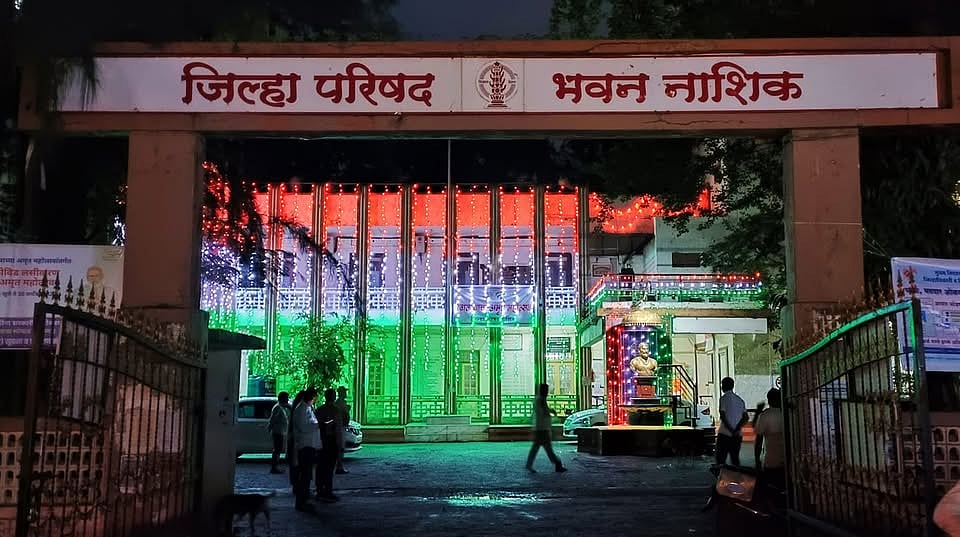
Nashik: Following the expected success in municipal council and municipal corporation elections, the morale of BJP and Shiv Sena workers has risen significantly. Considering the rout of the opposition in the district, there is a strong insistence among cadres of both parties to contest the upcoming Zilla Parishad and Panchayat Samiti elections independently.
In fact, district-level leaders also appear to share the same mindset, and clear indications suggest that instead of coming together, both parties may test their strength on their own. Given the influence of the third MahaYuti partner, the Nationalist Congress Party (NCP), in rural areas, its stance is also likely to prove decisive.
Within a span of two months, elections to 11 municipal councils and two municipal corporations were held in Nashik district. In these, the BJP and Shiv Sena achieved major success. In comparison, the NCP failed to secure the expected results. Except for the Shiv Sena (UBT), which showed a marginal presence in the Nashik Municipal Corporation, the NCP (SP) and the Congress were virtually wiped out. Consequently, their workers have given up hope of any miracle in the forthcoming elections.
The Zilla Parishad is often referred to as a “mini Assembly.” Many view this election as a benchmark and nurture ambitions of entering state-level politics. Accordingly, both the BJP and Shiv Sena are taking these elections very seriously.



The Nashik Zilla Parishad has around 73 groups, and there are 15 Panchayat Samitis in the district. To maintain dominance in rural politics, control over these power centres is essential—something both the BJP and Shiv Sena are well aware of. Due to a weakened opposition, expectations within both parties have risen.
Excluding Nashik and Malegaon cities, the district has ten MLAs—two from the BJP, seven from the NCP, and one from the Shiv Sena. Naturally, these MLAs will find it imperative to maintain their individual influence. In such a scenario, if the MahaYuti contests the upcoming elections together, rebellion within the three parties would be inevitable. For this very reason, the picture emerging suggests that all three parties may enter the fray independently.
Focus on the Leadership’s Decision
Meanwhile, although at the local level all three Mahayuti partners seem inclined towards contesting independently, fighting separate elections inevitably leads to mutual criticism. During the campaigning for municipal councils and municipal corporations, it became evident to the public that even the Chief Minister and both Deputy Chief Ministers openly criticised each other.
As a result, parties that came together for Lok Sabha and Assembly elections were seen confronting each other in comparatively smaller elections. To prevent a repetition of this in future polls, it will be important to see whether the state-level leadership formulates a clear strategy.