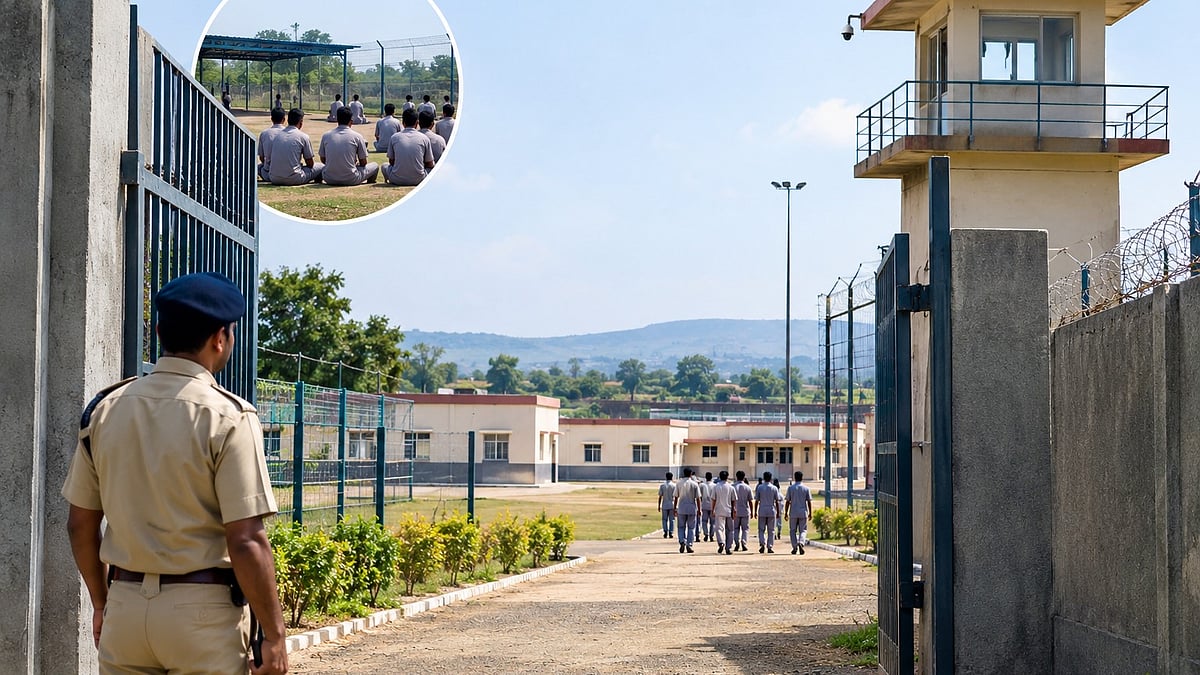
Jalgaon: The State Government has approved the establishment of a new, fully equipped open prison with a capacity of 300 inmates in Chalisgaon. The open district prison will be located in the Bilakhed area near Chalisgaon city and will be one of the few open prisons in the state.
A district prison with a capacity of 274 inmates has existed in Jalgaon city since 1962. However, according to a government resolution, the prison housed 474 inmates as of July 31, 2026. Consequently, the Jalgaon district prison is under immense strain, with the number of inmates significantly exceeding its designated capacity. The overcrowding has also posed challenges for the prison administration in ensuring inmate security.
The decision to construct a new open prison was taken to ease overcrowding in the state’s prisons. Superintendent of Police Shrikant Dhivare said the new facility would reduce the burden on the Jalgaon district prison.

The Director General of Prisons and Correctional Services inspected the proposed site in the Bilakhed area of Chalisgaon. A report was subsequently submitted to the government, stating that the required land was available in Chalisgaon and that government hospital and judicial facilities were accessible in the vicinity. It also noted that adequate transportation facilities were available to reach the location.
Based on these findings, the Director General of Prisons and Correctional Services advised the government that establishing a new prison at the site was technically feasible and appropriate.
The open prison being established in Chalisgaon will have barracks for inmates, residences for officers and staff, and other necessary amenities, with a capacity to house 300 inmates. It will be the district’s second prison, after the existing District Prison in Jalgaon city.
The construction of the facility will be undertaken by the Maharashtra State Infrastructure Development Corporation (MSIDC). The proximity of the proposed open prison to the site of the proposed Additional District and Sessions Court building is expected to facilitate better coordination between the prison administration and the judicial system, while also saving time in management operations.

