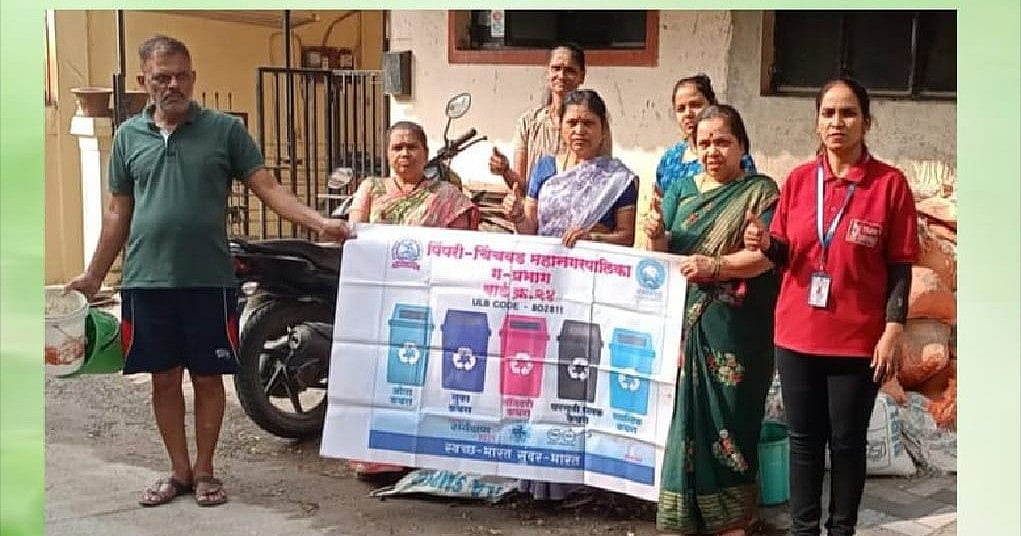
Pimpri-Chinchwad: In a major step towards scientific and sustainable waste management, the Pimpri-Chinchwad Municipal Corporation (PCMC) has introduced a four-way waste segregation system for households, replacing the earlier two-bin practice. Residents must now separate their daily waste into dry, wet, sanitary, and hazardous categories to avoid fines.
The directive, issued on Friday, January 30, is being implemented across all city wards under the leadership of PCMC’s Health Department. Officials said the initiative is being supported by large-scale awareness drives through social media, banners, door-to-door campaigns, public programmes, and pamphlet distribution with the help of non-governmental organisations.

Under the new system, citizens must hand over segregated waste to door-to-door collection vehicles using four colour-coded bins:
Blue bin – Dry waste: Paper, plastic, glass, metal, rubber, wood and other non-biodegradable, non-soiled items.
Green bin – Wet waste: Kitchen and garden waste such as food leftovers, tea and coffee waste, eggshells, and plant matter.
Red bin – Sanitary waste: Items contaminated with bodily fluids, including used sanitary pads, nappies, tampons, and medical disposables.
Black bin – Hazardous household waste: Toxic, ignitable, corrosive or reactive materials such as paints, cleaning chemicals, batteries, motor oil, pesticides and electronic waste.
Explaining the purpose of the move, Dr Pradeep Thengal, Deputy Commissioner, Health Department, PCMC, said the four-category system would make waste processing more efficient.
“Segregation at source reduces the burden on landfills, promotes recycling, controls garbage accumulation, prevents environmental pollution and reduces foul odour. It also makes further processing, such as waste-to-energy and bio-composting, easier,” he said.
Thengal also highlighted that mixing biomedical or electronic waste with regular household garbage poses serious health risks to sanitation workers and complicates disposal.
“We urge all residents to cooperate by segregating waste properly before handing it to municipal collection vehicles. Non-compliance will attract penalties,” he added.
The initiative is being implemented under the guidance of Municipal Commissioner Shravan Hardikar and Additional Commissioner Vijaykumar Khorate and supervised by Deputy Commissioner Dr Pradeep Thengal and Assistant Commissioner Amit Pandit, with the goal of making Pimpri-Chinchwad cleaner, safer and more environmentally responsible.

