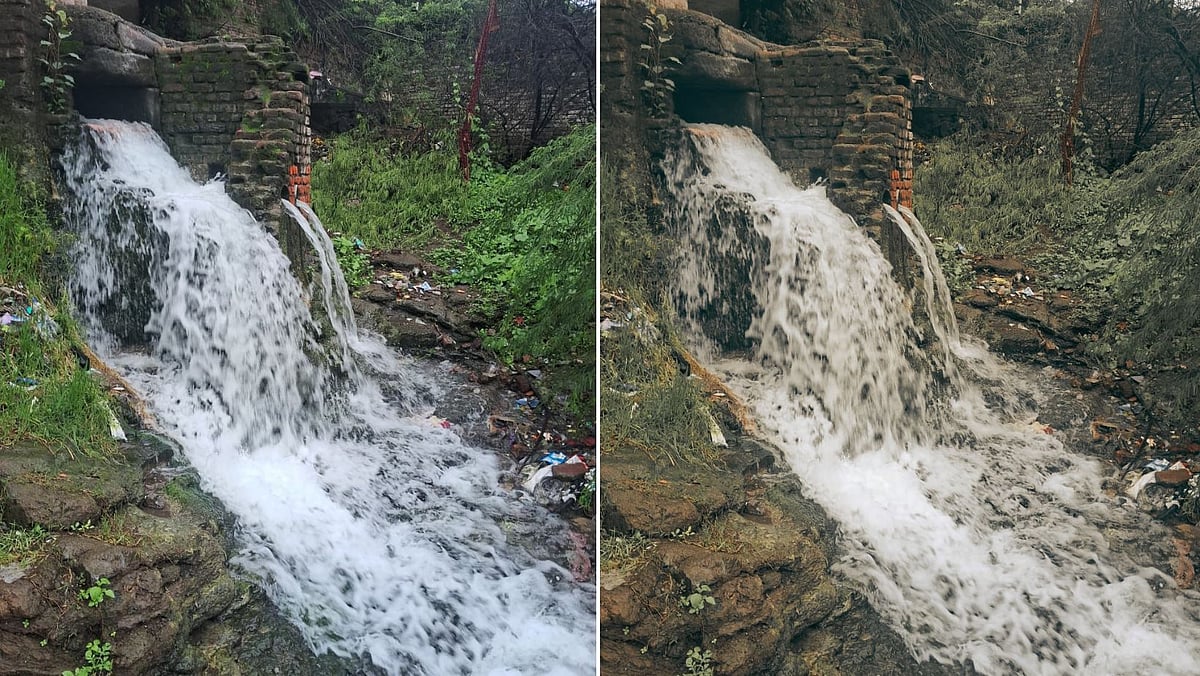
Chhatrapati Sambhajinagar: The historic Panchakki (water mill) and its associated Nahar (canal) in Chhatrapati Sambhajinagar, the state's tourism capital, have suffered inexcusable neglect over the past few years. With the Nahar breached at multiple points, millions of litres of water are being lost, resulting in a significant reduction in the water reaching the Panchakki. Neither the Waqf Board nor the Archaeology Department has addressed this critical issue. If the situation persists, the Panchakki could eventually run dry, and even traces of the historic water channel may disappear.
Panchakki was constructed in 1714. Saint Baba Shah Musafir, who had arrived from Russia, ran a residential ashram school at the site to impart religious education. His devoted disciple and civil engineer, Baba Shah Mahemud, arranged the mill's water supply by excavating a canal from a source eight miles north of the city, following the principles of Malik Ambar's Nahar-e-Ambari system. The canal feeding the water mill originates from the Over River near Jatwada.

Historical records show that the water brought through the canal was used to power the flour mill, which provided food for students at the ashram school. The canal was routed underground from Jatwada to Makai Gate, and from there the water was conveyed through earthen pipes across the Kham River to Panchakki. However, despite the canal now facing imminent ruin, neither the Waqf Board nor the Archaeology Department has taken steps to preserve it.
Malik Ambar designed the underground Nahar-e-Ambari canal system to supply water to the city's residents. These canals continue to add to the city's historical grandeur. Although 17 canals originally supplied water to the city, remnants of only five survive today. Over the years, citizens have constructed buildings over several canals and incorporated canal cisterns into their homes, where the water continues to be used throughout the year.

Renowned historian Dr Ramzan Shaikh dedicated his life to the conservation of these canals. He repeatedly urged the Archaeology Department and the Municipal Corporation to protect them and submitted several representations to the government, but his appeals went unheeded. Dr Shaikh has once again called upon the government to take immediate conservation measures.

