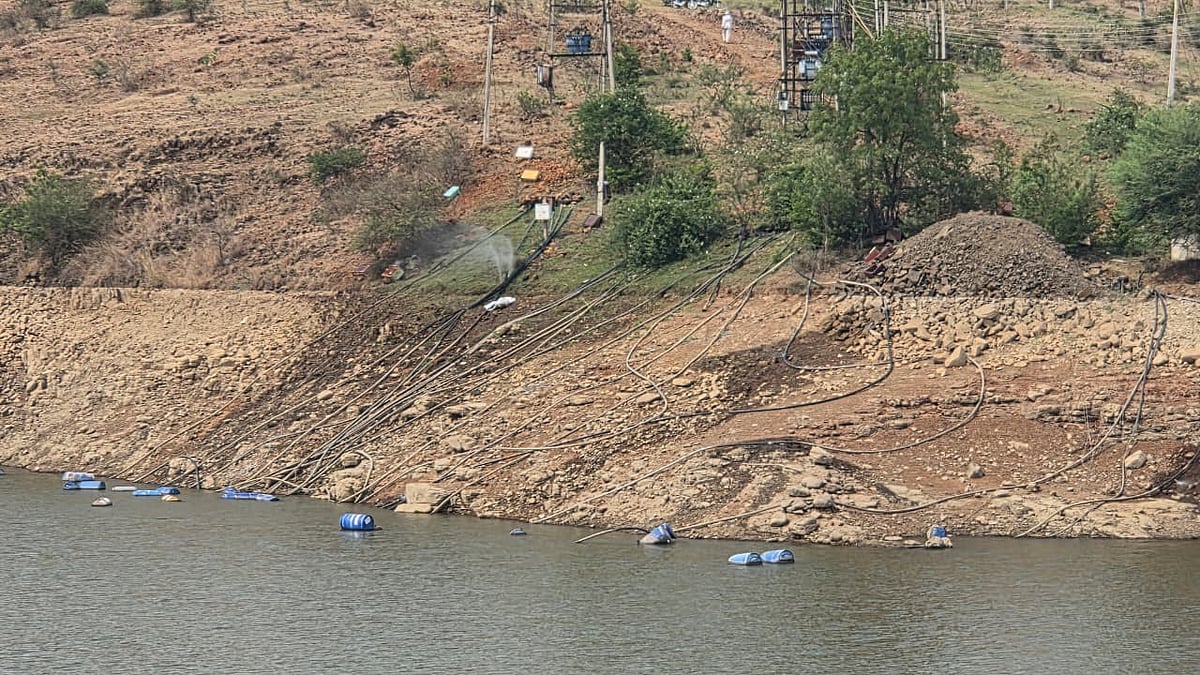
Beed: Beed District is heading towards a serious water crisis as illegal water lifting continues from the Bhayala storage tank in Patoda tehsil, despite clear orders from the administration to stop such activities.
District Collector Vivek Johnson had recently directed the Revenue and Irrigation Departments to immediately halt all unauthorised water extraction from small and medium irrigation projects. The aim was to save water for drinking purposes. However, these orders are not being followed on the ground, and illegal pumping continues without strict action.
The situation has become alarming as water levels in the Bhayala tank are dropping quickly. Several villages are likely to be affected, including Bhayala, Waghira, Mengdewadi, Limbaganesh, Pokhari (Ghat), Pimparnai, and Belgaon (Somnathwadi) in Beed and Patoda tehsils. Residents say wells and borewells in these areas are drying up, putting the drinking water supply for people and livestock at risk.
Social activist Dr Ganesh Dhawale has raised concerns over the failure of authorities to control the situation. He said that flying squads formed to stop water theft are not doing their job properly. According to him, officials are ignoring the issue while illegal pumps continue to drain reservoirs. He warned that this negligence could lead to a major crisis in the coming months.
As per government rules, only 67% of reservoir water can be used for irrigation, while the remaining 33% must be reserved for drinking and other essential needs. Activists claim that this rule is being violated in many places.
Government data highlights the seriousness of the situation. Out of 16 medium irrigation projects in the district, three have water levels below 25%. Among 126 minor projects, 12 have reached dead storage, and 21 are at only 50% capacity. Overall, out of 143 dams in Beed, 30 have less than 10% water left.
The problem may worsen due to the El Niño effect, which is expected to increase heat and accelerate water evaporation. Beed, which already faces frequent droughts, is now dealing with both natural and administrative challenges.
Dr Dhawale has submitted a memorandum to the District Collector, demanding strict action against illegal water lifting and against officials who are not performing their duties. He has also urged the administration to act quickly to protect the remaining water for drinking purposes.
