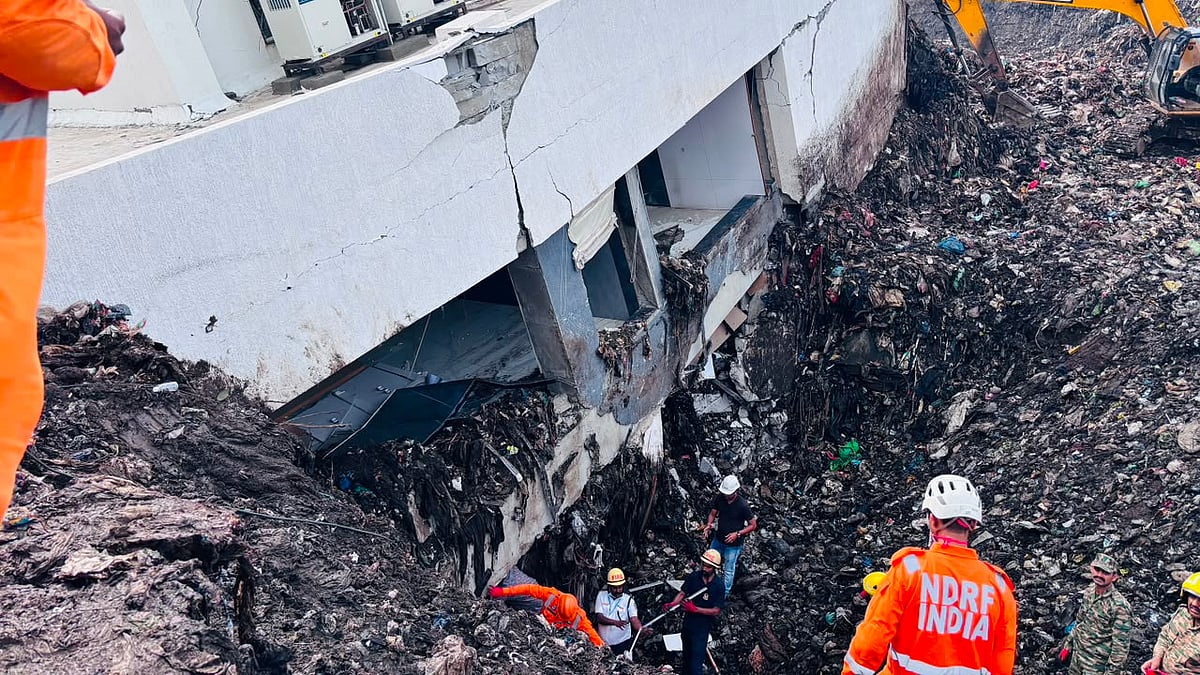
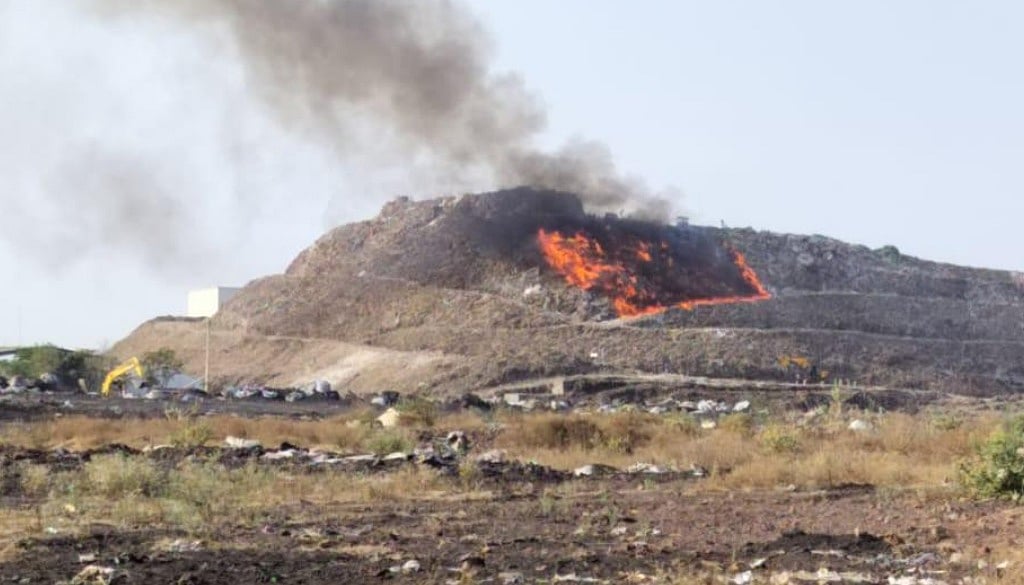
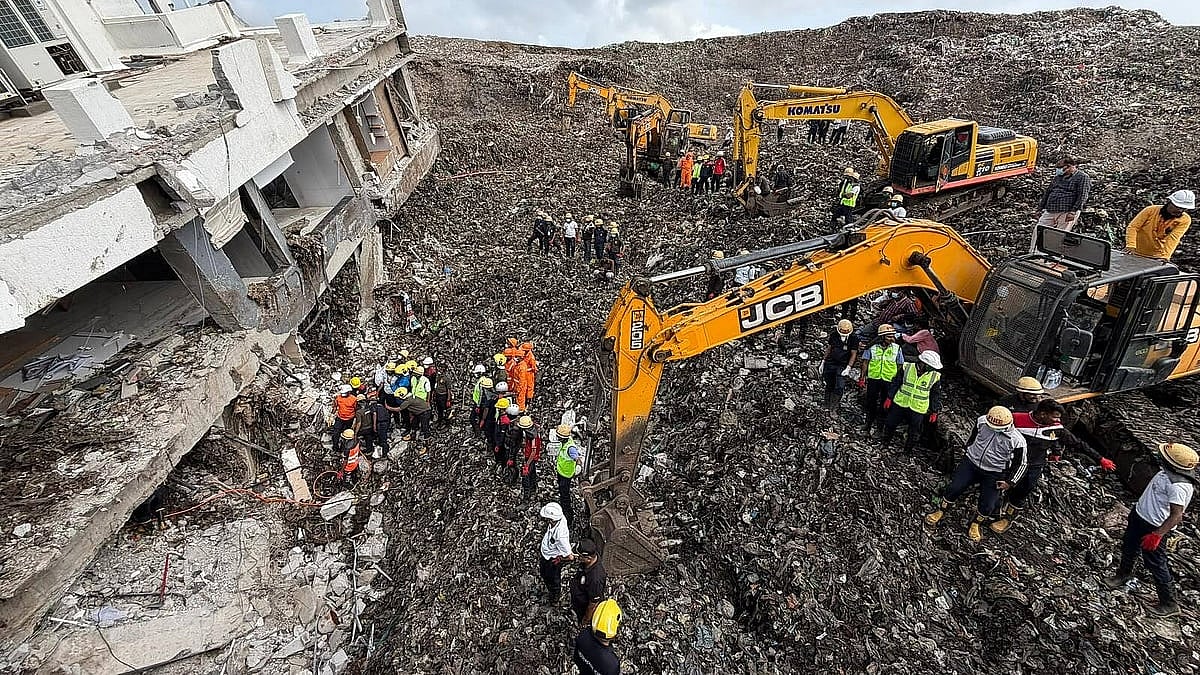
Pimpri-Chinchwad: Speaking about the recent Moshi tragedy, which killed nine people and injured 14 when a garbage hill collapsed on a Pimpri-Chinchwad Municipal Corporation (PCMC) building, Commissioner Dr Vijay Suryawanshi said that it is unfortunate for a rapidly growing city with a population of 40 lakh to have a garbage depot at only one location.
He added, “The garbage problem will turn extremely horrific in the future. To tackle this, measures must be undertaken starting now. 100% segregation of waste must be done in every ward. We will have to establish a policy stating that mixed waste will not be accepted. Ward-wise bio-CNG and dry waste projects will be started to dispose of wet and dry waste. For this, land will be identified, and a plan will be prepared.”
‘City’s Population Is Growing’
Following the Moshi garbage tragedy, corporators discussed the city’s waste problem during the general body meeting held on Wednesday. Clarifying the matter, Commissioner Dr Suryawanshi said, “The city’s population is growing at a rate of 8% every year, and as of today, the population stands at 40 lakh. Along with the growing population, waste is also increasing. Every person who comes to live in the city generates waste. Disposing of 1,500 tonnes of waste is proving to be an uphill task.”
The Commissioner added, “In a few years, 5,000 tonnes of waste will be collected. Out of the 1,500 tonnes, only 700 tonnes of waste is being processed. 800 tonnes of waste has to be dumped. Therefore, the formation of mountains of garbage cannot be stopped. A single depot cannot handle the responsibility of the city’s entire waste. To dispose of the waste, five to 10 acres of land will have to be identified in every ward. Land will have to be acquired from PMRDA. Corporators must cooperate in identifying land. The land will have to be finalised within the next month.”
‘Not Possible to Collect Wet Waste’
The Supreme Court has made it mandatory for establishments generating more than 100 kilograms of daily waste to dispose of the waste within their own premises.
Therefore, it is not possible to collect their waste. If a stay is granted on this decision, it will not be possible to solve the city’s garbage issue. Hence, large establishments will have to implement the decision of disposing of their own waste, clarified the commissioner.
‘Otherwise, Moshi Residents Will Not Allow Garbage Dumping’
Dr Suryawanshi said that many companies are ready to dispose of dry waste. For wet waste disposal, the Bio-CNG option is highly suitable. This CNG can be given to the MNGL company. The municipal corporation will only have to bear the cost of waste collection and transportation. In the future, 5,000 tonnes of waste will be generated daily in the city, for which decisions must be taken immediately.
Bio-CNG and dry waste projects will have to be set up. These projects will not emit any foul odour. Corporators need to bring about a mindset shift among the people for this. A strict policy will have to be framed; otherwise, the residents of Moshi will not allow garbage to be dumped at the depot there, the commissioner added.
The commissioner added that several kilometres of nalas in the city have been blocked. To divert streams, an easy route of installing pipe culverts has been chosen at 350 locations in the city. As a result, these pipes get jammed, preventing the water from flowing away. Streams have been diverted at right angles, due to which water does not flow but stagnates instead. Therefore, pipe culverts and encroachments on the streams will be removed, he stated.
Dr Vijay Suryawanshi, the Commissioner of PCMC, said, “This is the first such massive and unfortunate incident in Moshi in the history of the municipal corporation, and it is heartbreaking. The company has been ordered to provide maximum financial assistance to the families of the deceased employees. A proposal to provide them jobs in the municipal corporation will be sent to the state government. Efforts will also be made to provide them houses under the Gharkul housing scheme.”
The Commissioner Said…
- We will have to establish a policy stating that mixed waste will not be accepted.
- If only segregated waste is accepted, producing Bio-CNG will become easier.
- The demand of Moshi residents that the city’s waste should not be dumped in Moshi is justified.
- The proportion of waste segregation in the city is extremely low.
- 100% waste segregation is essential in every ward.

