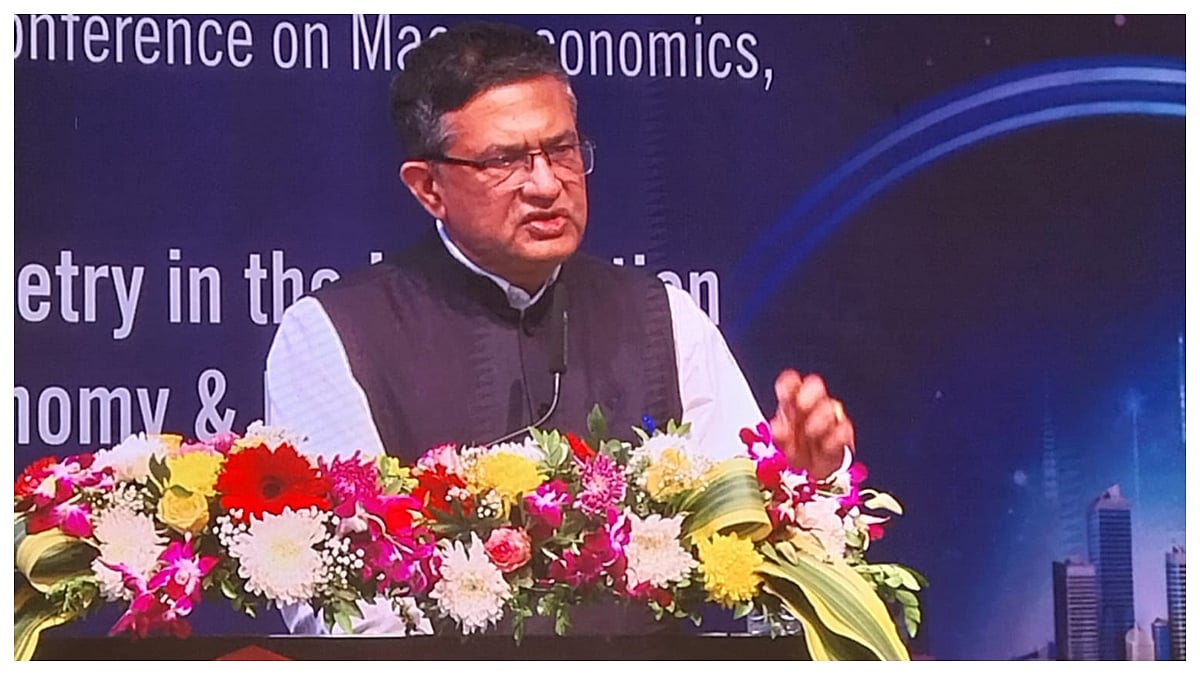
Mumbai: The National Stock Exchange (NSE) and the Indian Institute of Management Kozhikode (IIM Kozhikode) jointly organised the 3rd Annual Conference on Macroeconomics, Banking & Finance in Mumbai on February 23, 2026
The event was held at the NSE Corporate Office in BKC. The theme of the conference was “Information Asymmetry in the Information Age – Markets, Economy & People.”
Focus on Information Gaps
The main topic of discussion was information asymmetry. This means situations where some people in the market have more or better information than others.




Experts discussed how information gaps have changed in today’s digital world. They said that in modern markets, success depends not just on having information, but on how quickly and effectively it is analysed and used
Speakers stressed the need for strong and transparent information systems. They said this is important for market stability, investor confidence and long-term economic growth.
Key Speakers and Sessions
The conference began with a ceremonial lamp lighting. Shri Amarjeet Singh, Whole-Time Member of SEBI, delivered the keynote address. He spoke about information symmetry in capital markets and the role of regulators in ensuring fairness
Several panel discussions were held during the day. Policymakers, regulators, bankers, market participants and academicians shared their views. They discussed how digital technology and data are changing the financial system.
The conference ended with a valedictory session featuring Shri Injeti Srinivas, Chairperson of NSE, in a fireside chat with Smt. Latha Venkatesh of CNBC-TV18. The discussion focused on India’s economic transformation and the importance of well-regulated capital markets
Need for Inclusive Financial Systems
Speakers highlighted that as markets become more data-driven, it is important to make information accessible and fair for everyone. They emphasised that inclusive and transparent systems are necessary for sustainable economic growth.
The conference aimed to deepen understanding of these challenges and encourage stronger financial frameworks for the future.
