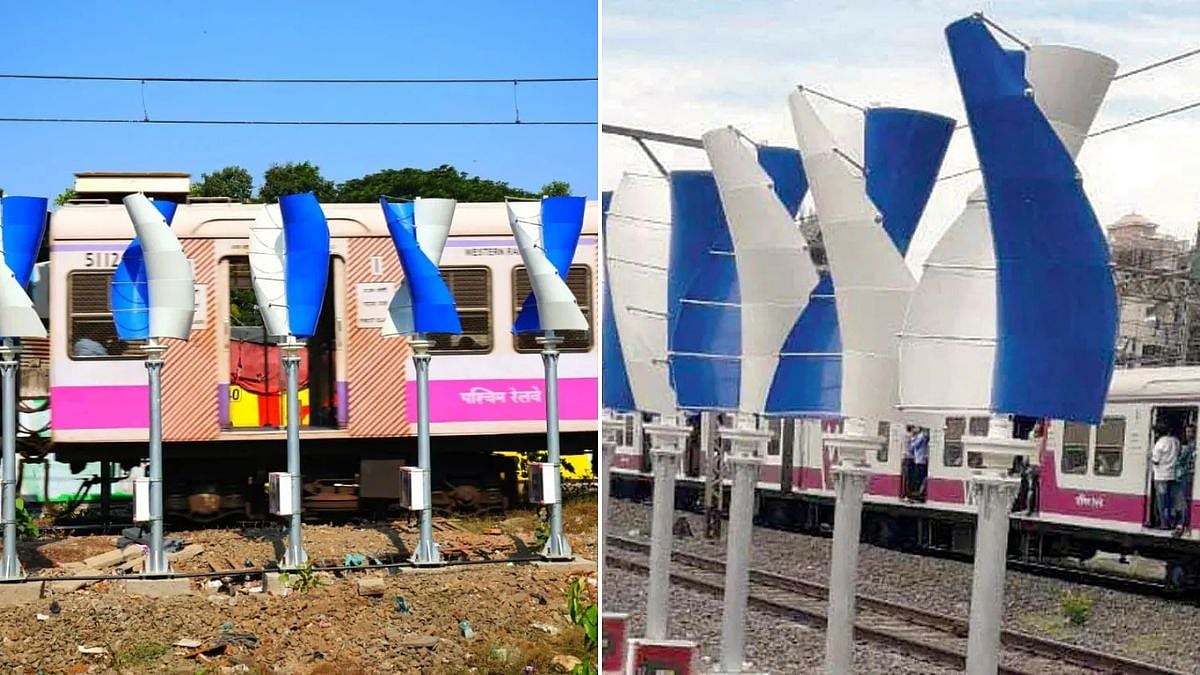
Mumbai, September 15, 2026: A Western Railways pilot project aimed at generating electricity through a combination of wind and solar power on Mumbai’s suburban network has been closed after failing to match the generation and cost-effectiveness of conventional solar systems.
Installed at the Bandra-Khar and Naigaon-Vasai Road sections, the hybrid systems generated 8,793 kWh between May 10, 2023 and January 15, 2025.
The assessment found that generation was 49.44 per cent lower than the solar benchmark cited in the report, while the installation cost was about 4.86 times higher than that of a conventional solar system.
The project was taken up under a total cost of Rs 19.47 lakh. M/s Research Centre for Sustainable Solution Pvt Ltd, Nashik, was appointed as the agency.
The two locations were each equipped with a 4 kWp wind-solar hybrid system, comprising 2 kWp of solar and 2 kWp of wind capacity, taking the combined installed capacity to 8 kWp. The systems were commissioned on May 10, 2023.
Performance Falls Below Benchmark
The performance assessment found that the installations generated a total of 8,793 kWh, equivalent to 1,099 kWh per kWp, during the assessment period. Generation was calculated at 1.78 kWh per kWp per hour, with a capacity utilisation factor (CUF) of 7.42 per cent.
In comparison, the report cited average generation of 3.6 kWh per kWp per hour and a CUF of 15 per cent for a conventional solar system. The hybrid system therefore failed to provide the expected advantage of combining two renewable sources.
Cost was another major setback. The report estimated the cost of a conventional solar installation at around Rs 50,000 per kWp, compared with approximately Rs 2.43 lakh per kWp for the wind-solar hybrid system. Despite the significantly higher investment, the hybrid system produced substantially less power.
Battery Storage Adds Burden
The project also required battery storage to manage fluctuations in renewable generation. Solar panels and wind turbines charged a 24V battery bank, with an inverter converting stored DC power into 230V AC supply for loads such as lights and fans.
When renewable generation was inadequate, the batteries supplied the load, with the system switching to grid power when the batteries were discharged. An AC charger was also used to prevent deep discharge.
The assessment flagged the additional maintenance burden associated with the battery system. Batteries required regular monitoring and replacement in accordance with codal provisions.
Also Watch:
Pilot Project Closed
The pilot was ultimately closed after the assessment found that its lower generation, high capital cost and battery-related maintenance requirements did not establish a viable advantage over conventional solar power.
The outcome could also influence how the Railways evaluates renewable-energy projects for its suburban infrastructure, particularly where installation costs and long-term maintenance are critical considerations.
To get details on exclusive and budget-friendly property deals in Mumbai & surrounding regions, do visit: https://budgetproperties.in/

