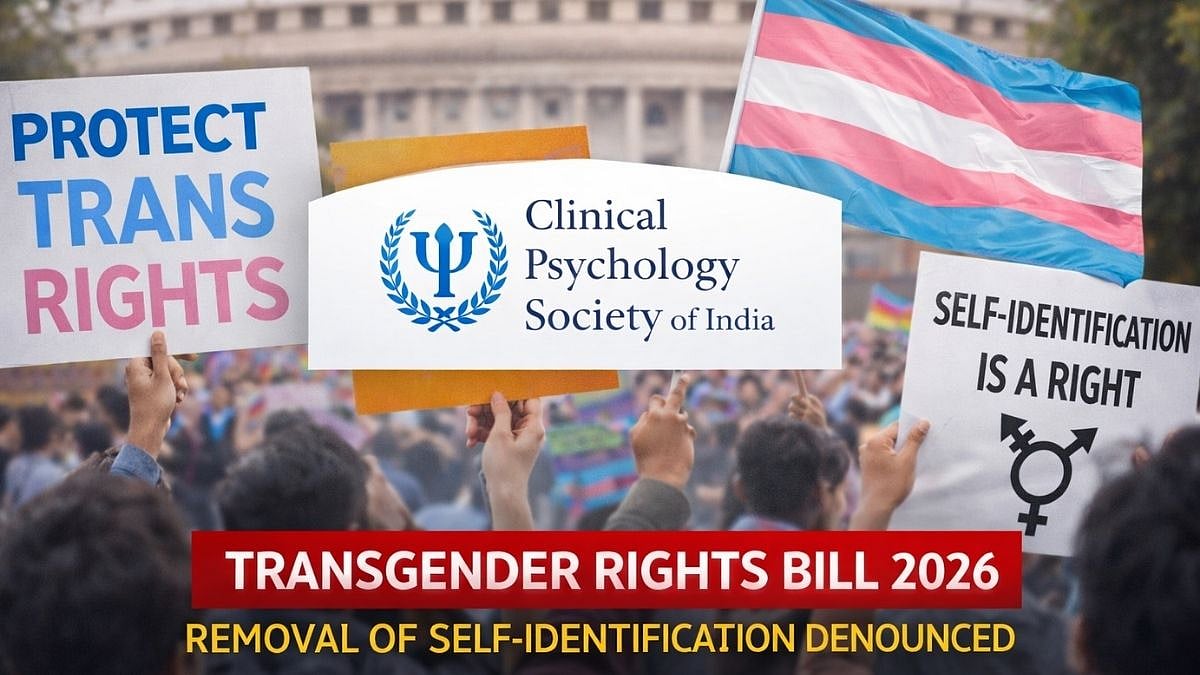
Mumbai, April 9: The Clinical Psychology Society of India (CPSI) has expressed concern over key provisions in the Transgender Persons (Protection of Rights) Amendment Bill, 2026, which received Presidential assent on 31 March.
In its statement issued on Wednesday, the CPSI—an organisation representing over 1,000 mental health experts nationwide—criticised the removal of the right to self-identification and what it described as the arbitrary introduction of recent amendments that redefine gender classification.
The body argued that such provisions run contrary to the landmark NALSA v. Union of India (2014) judgment, which recognised the right to self-identify one’s gender as a fundamental aspect of dignity, autonomy, and inclusion.
Allegations of lack of expert consultation
Psychologist Suraj Shah said that the fact that the CPSI has opposed the law proves that the government did not consult independent experts on the subject.
"The government should have gone to NIMHANS (National Institute of Mental Health and Neurosciences, Bengaluru), the country's apex centre for mental health education and neuroscience research. There are doctors there who have done gender studies all their lives. Gender dysphoria—the mismatch between biological sex and gender identity—is a clinically diagnosable condition; it does not develop overnight. There is no other perspective for those who have studied psychology," said Shah.
Dr Jamuna Rajeshwaran, professor and head of clinical psychology at NIMHANS and president of the CPSI, said that the bill was passed hastily. "I am not aware of NIMHANS being consulted when the bill was framed," said Rajeshwaran.
Reference to global health standards
Highlighting the World Health Organization’s International Classification of Diseases (ICD-11), which was adopted in 2019 and is widely followed in India, the CPSI noted that gender identity is acknowledged as a natural variation in human experience rather than a mental disorder.
Concerns over medical certification requirements
Raising additional concerns, the CPSI warned against processes mandating medical certification or review as prerequisites for recognising gender identity.
It stated that such measures could function as gatekeeping mechanisms, potentially creating further barriers for individuals already navigating systemic inequities and minority stress.
Psychologists also warned that individuals may be forced to opt for sex-reassignment surgeries to fulfil the requirements of the law, even if they are comfortable with the dichotomy in their sex and gender. Sex usually refers to a person's biological characteristics, whereas gender refers to socially constructed roles and norms.
Debate over misuse and safeguards
Regarding the government's fear that self-determination of gender will increase chances of the misuse of the law, Rajeshwaran asked, "Tell me, which law is not misused? Once a just law is brought in, the checks and balances can be brought in later."
Shah agreed that the argument against gender self-determination may be valid in fields such as sports. "In cases where an individual is accessing a service on the basis of gender identity, there can be clinical diagnosis. Self-determination cannot be allowed where there are loopholes, but the government should not use such tools to police people; it should be used only to prevent misuse," Shah said.
Call for broader discussion
However, there are mental health experts who advise more discussions on the bill. Psychiatrist Dr Harish Shetty said there "should be a debate on the subject and psychologists should arrive at a consensus. The bill has been passed, but the law can be debated and revisited. We should be sensitive to the LGBTQ community and also look at the issue scientifically and from a cultural and social point of view," Shetty said.
Key points of concern
Opposition to the Amendment: The CPSI argues the 2026 Amendment Bill violates the 2014 NALSA judgment by removing the fundamental right to gender self-identification.
Lack of Expert Consultation: Senior psychologists from NIMHANS claim the government bypassed the country’s apex mental health institutions during the drafting process.
WHO Standards: The CPSI cites the ICD-11 to clarify that gender identity is a natural human variation, not a clinical pathology or mental disorder.
Also Watch:
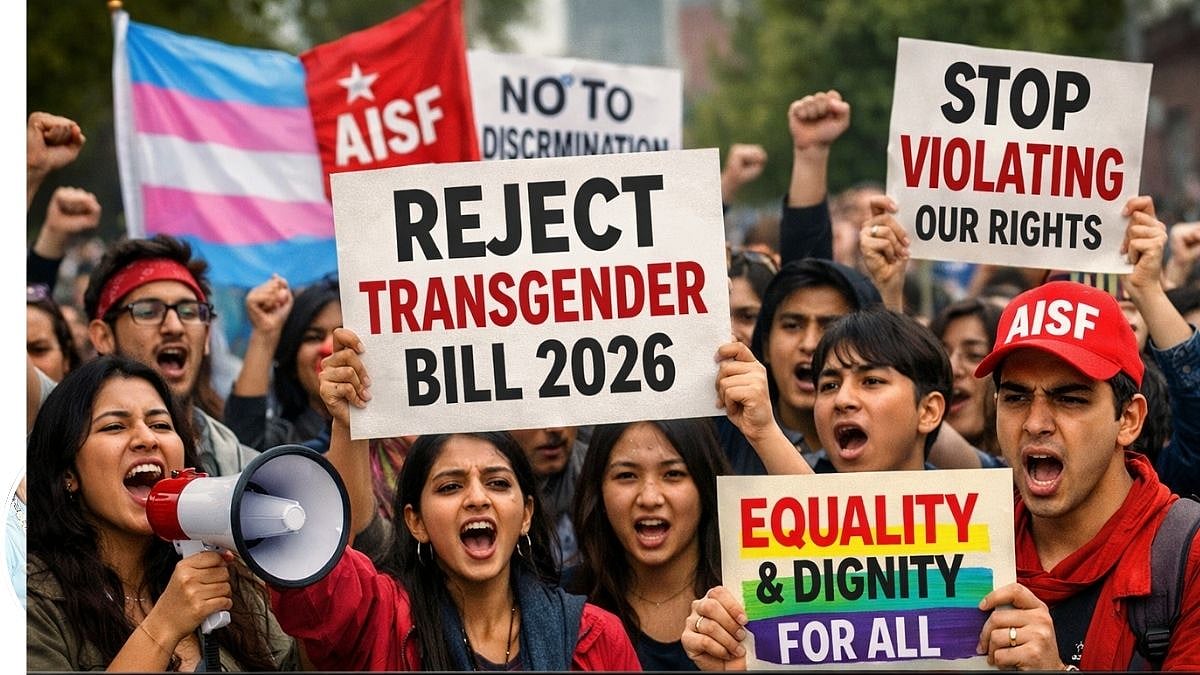
Risks of Medical Gatekeeping: Experts warn that requiring medical certification creates barriers to care and may inadvertently pressure individuals into unnecessary surgeries.
Call for Dialogue: While the bill has received Presidential assent, practitioners are calling for a scientific and social consensus to ensure the law protects rather than polices the community.
Your voice matters. If you have a community story, issue, or inspiring local experience to share, send it to community@fpj.co.in and be a part of the conversation.
To get details on exclusive and budget-friendly property deals in Mumbai & surrounding regions, do visit: https://budgetproperties.in/
