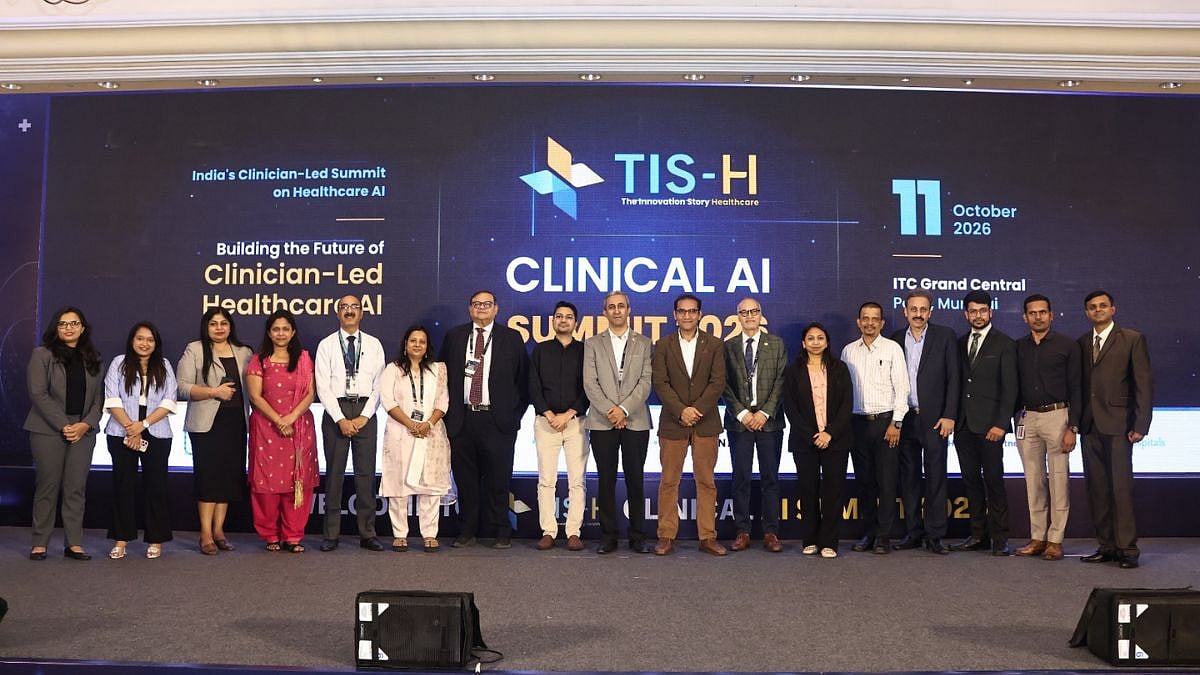
Mumbai, October 14, 2026: As artificial intelligence (AI) increasingly finds its way into healthcare, doctors and hospital leaders have stressed the need for clinical validation, patient-data privacy and safety checks before the technology is introduced into routine patient care.
Clinical Validation Before AI Adoption
The issue was discussed at the TIS-H Clinical AI Summit 2026, held early this week in Mumbai. TIS-H, the healthcare-focused initiative of The Innovation Story, brings together doctors, hospitals, technology companies and researchers to explore how new healthcare technologies can be tested and adopted in real-world settings.
The summit brought together clinicians, hospital administrators, healthcare AI startups and technology experts to discuss ways to ensure the safe and responsible use of AI in hospitals. Gleneagles Hospital Mumbai was the hospital and pre-summit workshop venue partner.
Experts highlighted that promising results during technology development do not necessarily guarantee reliable performance in real clinical settings. AI tools must be assessed for accuracy, safety and effectiveness across different patient conditions before being introduced into routine care.
Doctors Emphasise Patient Safety
Dr Meera Santosh, Convenor of the summit and Consultant Anaesthesiologist at Gleneagles Hospital Mumbai, said clinical validation must be an essential step before any AI solution is used in patient care.
She emphasised that doctors need to assess how accurately the technology performs in real clinical situations, whether its results remain consistent and whether it can be integrated into existing workflows without creating additional risks. Clinicians, she said, must be involved from the early stages of evaluation, with patient safety and outcomes remaining the priority.
Exploring AI Applications In Hospitals
The discussions also covered AI applications in radiology, pathology, critical care, perioperative care and hospital workflows. A Startup Deployment Forum examined how healthcare AI products could be prepared for use in hospitals, while an Innovation Roundtable explored how promising pilot projects could be expanded for wider implementation.
Dr Bipin Chevale, CEO of Gleneagles Hospital Mumbai, said AI could support doctors and strengthen healthcare delivery, but its adoption must be built around patient safety and trust.
He stressed that hospitals must ensure AI solutions are clinically relevant, properly validated and capable of operating safely in healthcare settings where sensitive patient information is handled.
Also Watch:

Meenal Majumder, Founder and CEO of The Innovation Story, said healthcare innovation must go beyond developing promising technology and establish a clear pathway for its adoption in real-world care.
To get details on exclusive and budget-friendly property deals in Mumbai & surrounding regions, do visit: https://budgetproperties.in/

