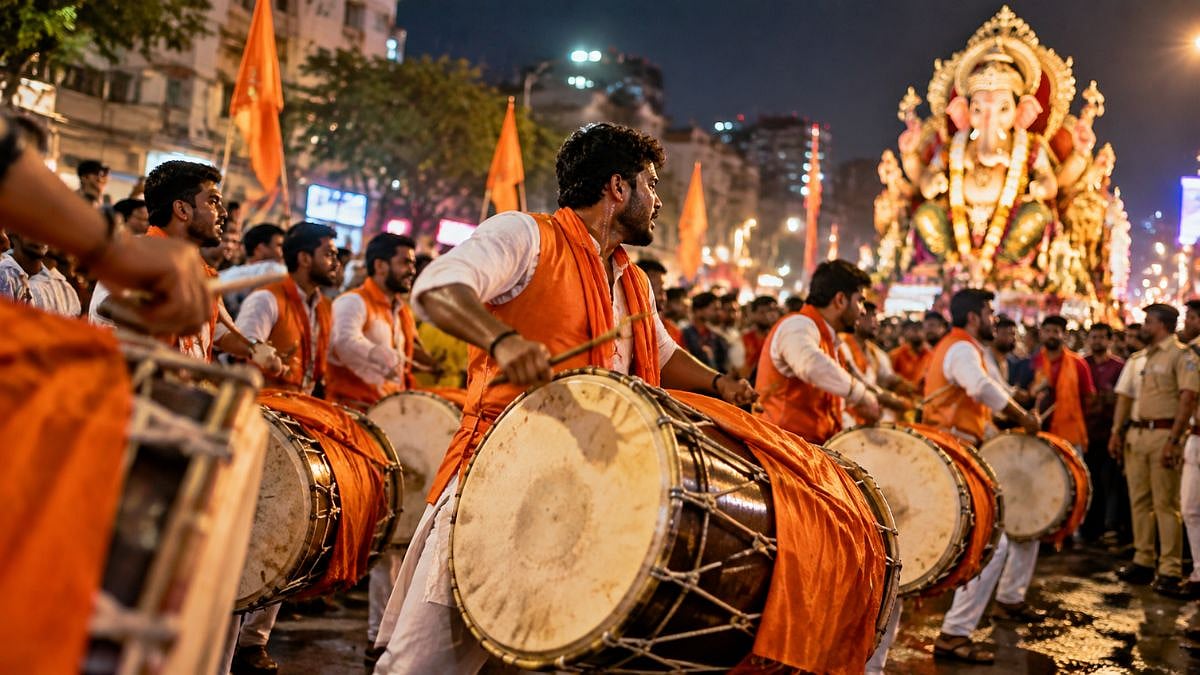
Thane, September 26, 2026: Despite a notable decline in the reliance on loud DJ systems and Dolby sound setups during this year's Anant Chaturdashi immersion processions, traditional dhol-tasha (drum ensembles) and brass bands continued to generate significant noise pollution across the city.
Noise monitoring assessments conducted along primary immersion routes revealed that average noise levels consistently ranged between 95 and 100 decibels (dB), far exceeding standard permissible limits. According to data recorded by local social activists and environmental experts, the highest sound spikes were registered in high-density areas such as Mulund Check Naka and Naupada.
Structural Shifts In Sound Sources
Observations along critical routes—including Ram Maruti Road, Panchpakhadi, and around the TMC headquarters—indicated that while organisers made a conscious effort to curb high-output sound systems and Hindi film music, the overall noise footprint remained largely unchanged.
Multiple dhol-tasha troupes performing simultaneously, combined with traditional instruments, banjos, and metallic percussion tools, generated combined acoustic outputs reaching 100 dB late into the evening.
Anti-noise activist Dr. Mahesh Bedekar, who led the field monitoring efforts, noted that the overall noise profile on Anant Chaturdashi was comparatively smoother than in previous years and featured better traffic management, yet collective percussive sound kept decibel levels high.
Enforcement And Environmental Concerns
While the local police and civic authorities maintained a visible presence to streamline traffic flow and process thousands of idol immersions at major water bodies like Masunda (Talaopali) Lake, effective decibel control remained a challenge.
Also Watch:

Civic activists emphasised that while a reduction in DJ culture marks a positive step towards community awareness, future regulatory policies must address the cumulative acoustic impact of large traditional drum ensembles to protect public health and mitigate urban noise pollution.
To get details on exclusive and budget-friendly property deals in Mumbai & surrounding regions, do visit: https://budgetproperties.in/

