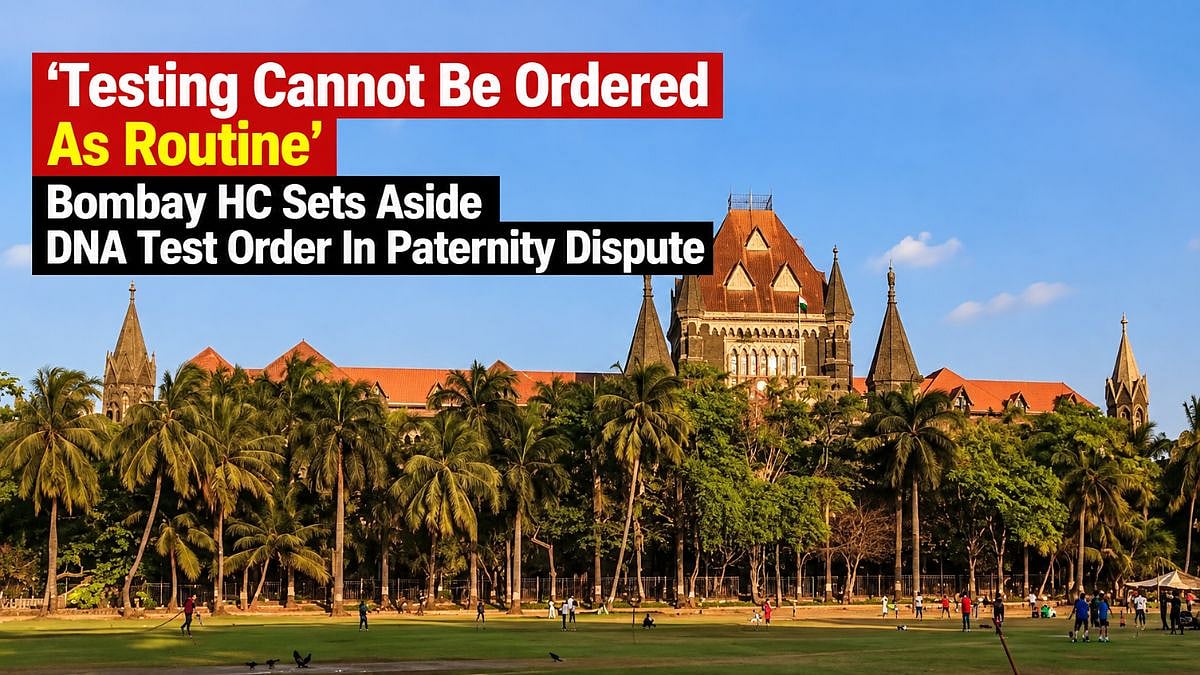
Mumbai, September 23, 2026: The Bombay High Court has held that a DNA test cannot be ordered merely because paternity is disputed, stressing that a claimant must first lead evidence to establish the basis of his claim before seeking scientific testing.
Justice Sandeep Marne set aside a 2018 order of a Nashik civil court directing a man claiming to be the illegitimate son of a deceased person to undergo a DNA test along with one of the deceased’s children.
The court, however, clarified that the claimant could seek a fresh DNA test after completion of evidence if it becomes impossible to decide the dispute without scientific evidence.
Paternity Claim Before Court
The case arose from a suit filed by A, who claimed that he was the biological son of late B and sought a one-fifth share in B’s properties. B’s wife and three children disputed the claim. A had sought a DNA test in 2018 without first leading evidence in support of his allegations.
The High Court noted that A would first have to establish several facts pleaded by him, including his mother’s business dealings with B and the alleged relationship between them.
It said that “mere assertion of the Plaintiff and denial thereof by Defendants cannot be a reason for the Court to undertake the exercise of collection of evidence by directing parties to DNA test.”
DNA Testing Not Routine
Referring to Supreme Court judgments, Justice Marne said DNA testing was not to be directed “as a matter of routine”. Courts must first consider the existing evidence and determine whether it is insufficient to resolve the dispute. Even then, the court must consider whether the test is in the best interests of the parties and whether it could cause undue harm.
The court observed that the claimant had “not made out any case for conduct of DNA test without even making any attempt to prove his pleaded case.” It added that parties must first lead evidence and only if the court finds it impossible to reach a conclusion can it consider directing a DNA test.
Justice Marne also said the claimant had not sought a declaration establishing his status as B’s son and had directly sought a share in the properties.
Also Watch:

Fresh DNA Plea Permitted
Setting aside the trial court’s order, the High Court allowed the petition and permitted the claimant to file a fresh application for DNA testing after completion of evidence.
To get details on exclusive and budget-friendly property deals in Mumbai & surrounding regions, do visit: https://budgetproperties.in/

