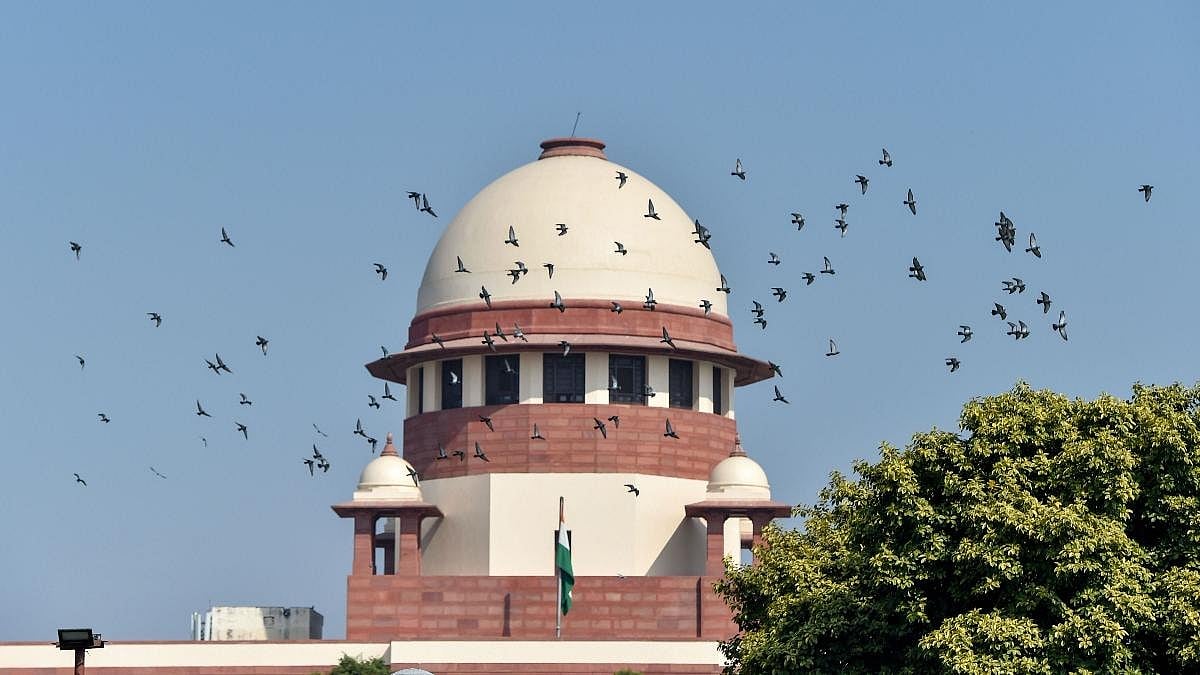
The Supreme Court's stay on certain provisions of the Waqf (Amendment) Act, 2025, on Monday, evoked mixed reactions among Muslims. While some leaders have called the apex court's order a 'partial victory, others said that the decision validates their stand that the law is an administrative tool to streamline the management of Muslim trusts.
The court stayed certain provisions of the Act, pending final adjudication of petitions challenging its constitutional validity. However, the judges declined to strike down the entire law, noting that legislation passed by the parliament is presumed to be constitutional. A bunch of petitions had challenged the law passed in April, described as an 'interference' in Muslim religious laws. The government defended the law as a tool to counter corruption and mismanagement of trusts.
AIMPLB Calls Order ‘Incomplete and Unsatisfactory’
The All India Muslim Personal Law Board said it was disappointed over the interim judgment, calling it 'incomplete and unsatisfactory'. The board's spokesperson, Syed Qasim Rasool Ilyas, said that although the Supreme Court has issued a stay on some provisions of the amendment, the Muslim community and the Muslim Personal Law Board had expected a stay order on all provisions that conflict with the fundamental provisions of the Constitution of India.
Ilyas said, "The court has given partial relief but has ignored major constitutional concerns, which has left us deeply disappointed."Explaining the court order, the board said that waqf properties cannot be evicted or any changes made to the government records until a final decision is made. The court issued a stay on the provision that made a report from a government officer mandatory for proof of waqf ownership, the organisation said.
The AIMPLB said the operation of section 30 of the law has been stayed by the court, which means that government officers cannot unilaterally decide who is eligible to establish a waqf. The board also welcomed the court's redressal of concerns of 'external interference' in religious affairs, by directing that the central Waqf council will have a maximum of four non-Muslim members out of 22, and the state Waqf Board can have a maximum of three non-Muslim members out of 11.
The court has stayed the requirement that the person establishing the endowment must prove that the individual has been practicing Islam for at least five years. This order will remain in effect until the government formulates rules in this regard, the board said.
However, the AIMPLB demanded the complete withdrawal of the amended law and restoration of the old act. and the old Waqf Act be restored, adding that the organisation will continue its public campaign against the law.
Muslim Leaders Divided Over Court’s Interim Order
MLA Rais Shaikh welcomed the court stay, but added that it is only a partial win. "Our fight will continue on other major concerns. The SC has stayed the powers of the Collector to decide disputes on whether a Waqf property has encroached upon government land, thereby preventing the ‘Collector Raj’. It has also stayed the provision requiring proof of being a Muslim for five years until rules are framed," said Shaikh.

Mansoor Khan, president of the Sufi Islamic Board, said that they endorsed the court order in its entirety. "We said this earlier that the law is a matter of administration and not religion. The attempt by some leaders to incite the Muslim community has been foiled. The Waqf Board is like any other government administrative authority, such as the collector," said Khan.
Maulana Yasoob Abbas, general secretary of the All India Shia Personal Law Board, said the haste with which the joint parliamentary committee was set up, the hurry with which the law was passed by parliament, and the rush for President's approval raised suspicions about the law's intent. "So the community knocked on the doors of the court. We believe we are getting justice and will get justice in the future," said Abbas.

