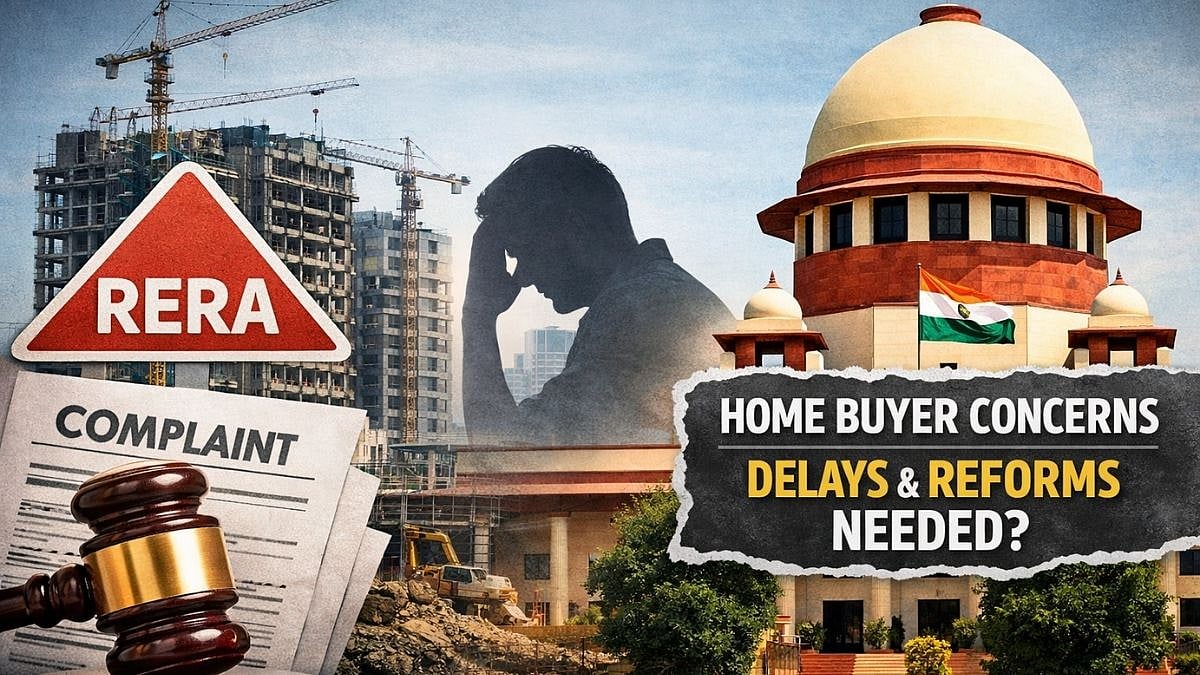
Mumbai, Feb 13: Real estate experts and stakeholders have expressed mixed reactions to recent Supreme Court observations on the functioning of the Real Estate (Regulation and Development) Act, 2016 (RERA), with some calling for urgent reforms while others caution against broad generalisations about the sector.
On February 12, 2026, the Supreme Court observed that RERA, in its current implementation, appears to benefit defaulting promoters more than homebuyers and warned that the law’s purpose could be diluted if consumer interests are not effectively safeguarded.
Concerns over implementation
Advocate Godfrey Pimenta, a housing activist, said the court’s observations underline the need for immediate corrective measures. He flagged delays in complaint disposal, despite a statutory mandate to resolve cases within 60 days, and pointed to staffing shortages in RERA authorities and appellate tribunals as key reasons for mounting backlogs. He also criticised the disparity in fee structures, noting that homebuyers pay Rs 5,000 per complaint per flat, while promoters pay registration fees capped at Rs 10 lakh irrespective of project size.
Jurisdictional gaps and rehabilitation issues
Pimenta further highlighted that disputes involving rehabilitation components of redevelopment projects—such as Slum Rehabilitation Authority (SRA) schemes and cooperative housing society redevelopments—fall outside RERA’s jurisdiction, leaving displaced occupants without an accessible grievance redressal mechanism.
He called for amendments to include rehabilitation allottees under the Act’s protection and suggested mandatory bank guarantees, stronger enforcement powers, fast-tracking stalled project takeovers, and mandatory litigation cost awards for successful homebuyers.
“The ambit of MahaRERA should be expanded and made more people-centric. At present, it seeks largely to protect homebuyers purchasing private projects worth crores of rupees, while original tenants affected by redevelopment—whether in ownership societies, MHADA colonies, old and dilapidated cessed buildings, SRA projects or any other redevelopment schemes—remain outside its regulatory protection. There are citizens who are displaced for years and left waiting for their homes, yet they cannot approach RERA for relief due to the absence of any enabling provision. Wealthy homebuyers can afford expensive legal representation, but most housing societies undergoing redevelopment—nearly 99% of them—cannot. They are left in the lurch,” said housing expert Chandrashekar Prabhu.
Developers call for balanced assessment
However, developer Rajesh Prajapati, a MahaRERA conciliator and member of MCHI-CREDAI, said the Supreme Court remarks were discouraging and not reflective of the overall progress made since RERA’s introduction.
He argued that accountability in the industry has improved significantly and that delays are often caused by regulatory approvals and competent authorities as well, for which developers cannot be solely blamed. He added that reforms should consider all stakeholders to strengthen the regulatory framework.
Also Watch:

Need for structural reforms
Experts broadly agreed that structural reforms, better staffing and enhanced enforcement mechanisms are needed to restore confidence in RERA and ensure the law fulfils its original intent of protecting homebuyers.
To get details on exclusive and budget-friendly property deals in Mumbai & surrounding regions, do visit: https://budgetproperties.in/

