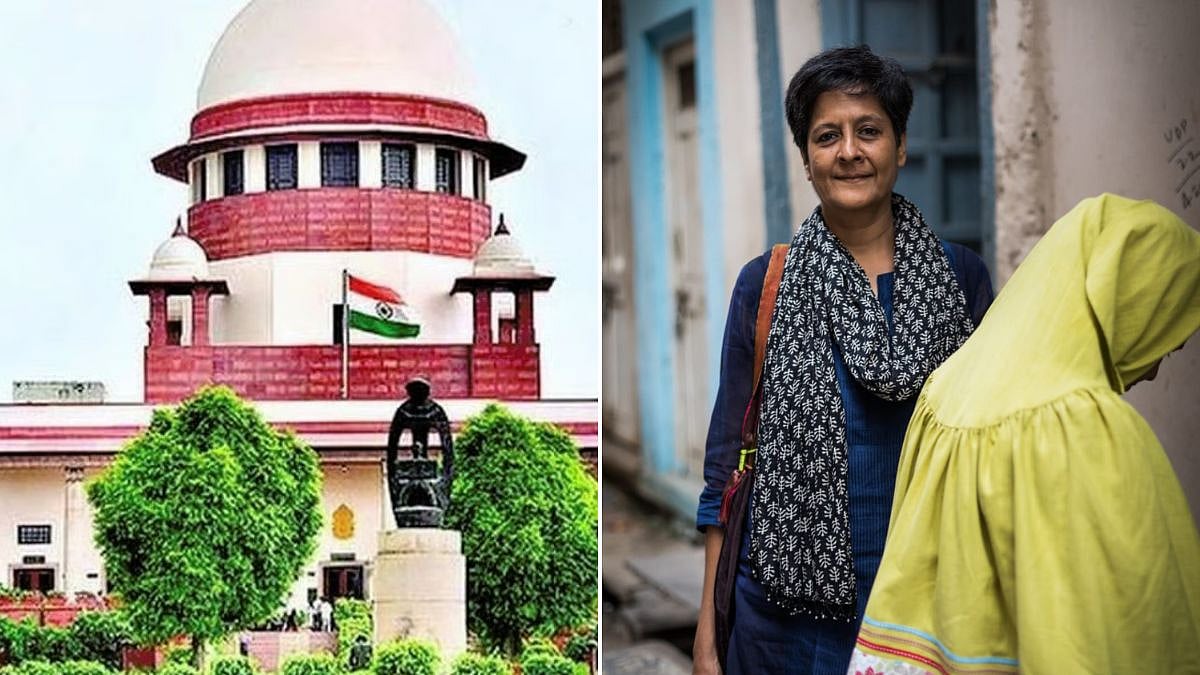
In the first week of April, a 9-judge Constitution Bench of the Supreme Court of India has commenced the final hearing on several petitions relating to discrimination against women in matters concerning religion, custom, and tradition.
From banning FGM to Sabarimala Temple entry, entry of Muslim women to mosques, and Parsi women into fire temple, all these will be viewed with the lens on religious freedom under Articles 25 and 26 of the Indian Constitution.
FGM case and its legal journey
The journey of how FGM got added to this bench has been an arduous one, to say the least. It started in 2017, when an independent lawyer, Sunita Tiwari, filed a Public Interest Litigation (PIL) before the Indian Supreme Court asking the court to ban the practice of FGM (known as khatna/khafz by the Bohra community).
Female Genital Mutilation (FGM) comprises all procedures involving partial or total removal of external female genitalia for non-medical reasons. It is a recognized violation of human rights, affecting over 230 million girls and women globally, primarily infants to girls aged 15.
Early resistance and survivor voices
At the time this case was filed, the movement against FGM in India was in its nascent stages. A handful of survivors had bared their hearts and publicly told the stories of the childhood trauma they underwent when they were subject to the cut.
Media had reported on these instances, and conversations were beginning to start within closed family homes. The pressure on the women and girls to not speak about this issue was so tremendous that very few women could do so publicly.
Wespeakout, the survivor-led anti-FGM organisation, decided to intervene in the matter so that survivor stories would be heard in the court. The three-judge bench, headed by the then CJI, Dipak Mishra, hearing the issue made several oral remarks during the hearing that FGM appeared to be a violation of the right to privacy and the bodily integrity of the child, and that there seemed to be no scientific or medical basis for FGM, a practice likely to cause significant trauma, pain, and bleeding.
Opposition framed as religious freedom
Soon thereafter, opposition to a ban on FGM came from a newly formed organisation called Dawoodi Bohra Women for Religious Freedom. They framed the PIL as an attack on religious freedom, stoking community perceptions of religious persecution, and weakening the human rights focus of the PIL.
Interestingly, the DBWRF was formed with the explicit purpose of opposing the PIL and supporting the practice of FGM in the Dawoodi Bohra community. The DBWRF claimed to represent the women from the Bohra community.
Related to this was the deeply entrenched social mores surrounding discussions of sex and one’s body for women and girls in the community. Coupled with the secrecy that surrounds the practice, FGM/Khatna/khafz was touted as a traditional religious practice.
Government stance and legal gaps
The role of the government in the case has also been surprising, to say the least. In its written submissions before the Court, the Government stated that, “...there was no official data or study (by the National Crime Records Bureau etc.) which supports the existence of female genital mutilation in India.”
This despite the fact that WeSpeakOut’s research study had clear evidence and indication that FGM/Khatna was alive and very much in practice in India.
It was a baffling and illogical statement given that there is no specific offence of FGM in Indian criminal law, making it an impossibility for the National Crime Records Bureau to collect specific data on something not yet criminalised.
Awaiting constitutional verdict
With the support of the Government, lawyers opposing the PIL on behalf of DBWRF successfully pushed for the case to be referred to a nine-judge Constitution Bench to consider whether any directions addressing FGM would violate the right to religious freedom protected by Articles 25 and 26 of the Indian Constitution.
Also Watch:
Currently, there is still no formal definition of FGM in Indian law, no mechanisms to report FGM, and no formal recognition from the Government that FGM is happening in India and that it needs to protect women and girls from an age-old practice that harms, is irreversible, and is meant to deny sexual pleasure to women. Girls in the Bohra community continue to be subjected to FGM without their consent, while we wait for the 9-judge bench to deliver its verdict.
(The author is an FGM survivor and founder of WeSpeakOut).
Your voice matters. If you have a community story, issue, or inspiring local experience to share, send it to community@fpj.co.in and be a part of the conversation.
To get details on exclusive and budget-friendly property deals in Mumbai & surrounding regions, do visit: https://budgetproperties.in/

