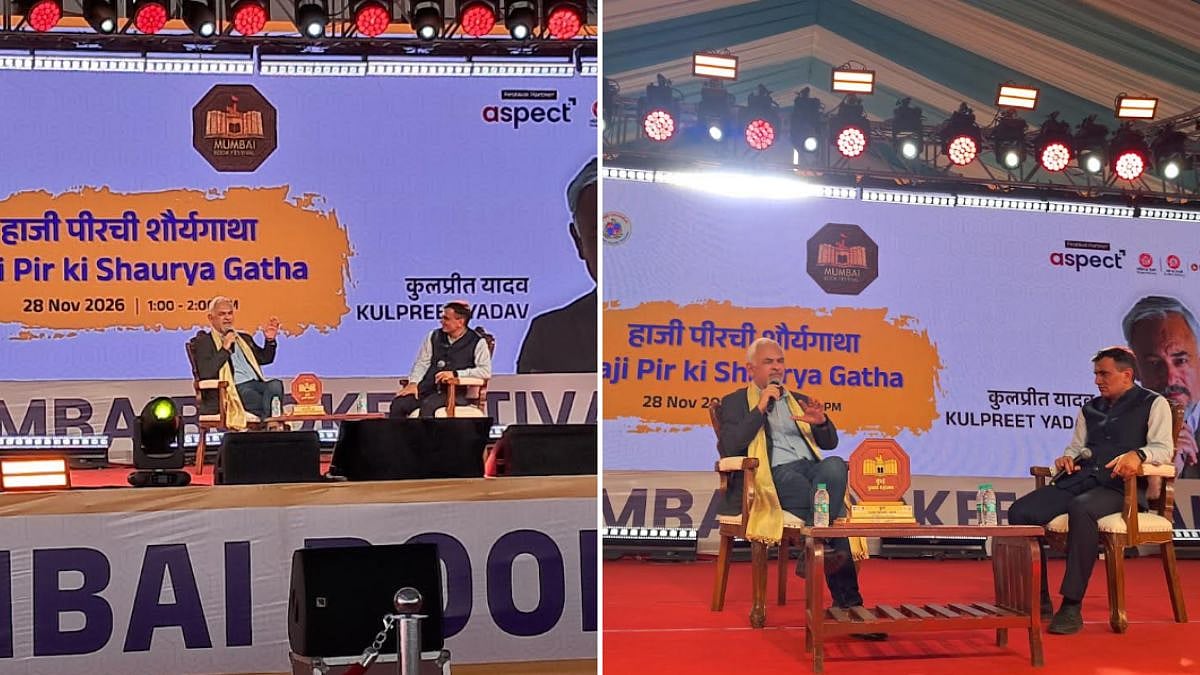
Mumbai: The decision to return the strategically important Haji Pir Pass to Pakistan after India's victory in the 1965 war, as a humanitarian gesture, is proving costly for the country today, as the route has become a passage for infiltrators, said author Kulpreet Yadav during an interaction at the Mumbai Book Festival.
Kulpreet Yadav Revisits Historic Haji Pir Operation
Yadav, a former Indian Coast Guard Commandant and military history writer, discussed the historical significance of the Haji Pir operation and the extraordinary courage displayed by Indian soldiers during the 1965 India-Pakistan war. He also informed readers that the Hindi edition of his book, Haji Pir Ki Shaurya Gatha, is available at the book fair.
Located in Jammu and Kashmir, the Haji Pir Pass was captured by Indian forces in August 1965 in a daring military operation led by Major Ranjit Singh Dyal of 1 PARA. The pass held immense strategic importance as it provided a crucial route connecting areas across the ceasefire line and was used by Pakistan to facilitate infiltration into Indian territory.
Indian Soldiers Overcame Challenging Terrain And Enemy Resistance
Yadav highlighted how Indian soldiers overcame difficult mountainous terrain, adverse weather conditions and enemy resistance to capture the pass. The operation was considered a significant military achievement as it disrupted Pakistan's infiltration plans during the war.
However, under the Tashkent Declaration in January 1966, India agreed to return territories captured during the war, including the Haji Pir Pass, to Pakistan. Yadav highlighted the long-term strategic implications of the decision, arguing that handing back the route had serious consequences for India's security, with infiltration remaining a major concern. "I personally feel that we definitely should not have given around 500 sq km of land to Pakistan. The decision was taken at the senior level, and the reason behind it is still unclear," said Yadav.
The book revisits this important but relatively less discussed chapter of India's military history, documenting the military planning, battlefield challenges and sacrifices of soldiers who participated in the operation.
The Hindi edition aims to take this story to a wider readership, particularly young readers interested in India's military history and the sacrifices of its armed forces.
The Mumbai Book Festival, being held at the University of Mumbai's Kalina campus from November 24 to 29, has brought together authors, publishers and readers through book discussions, literary interactions and cultural programmes.
To get details on exclusive and budget-friendly property deals in Mumbai & surrounding regions, do visit: https://budgetproperties.in/

