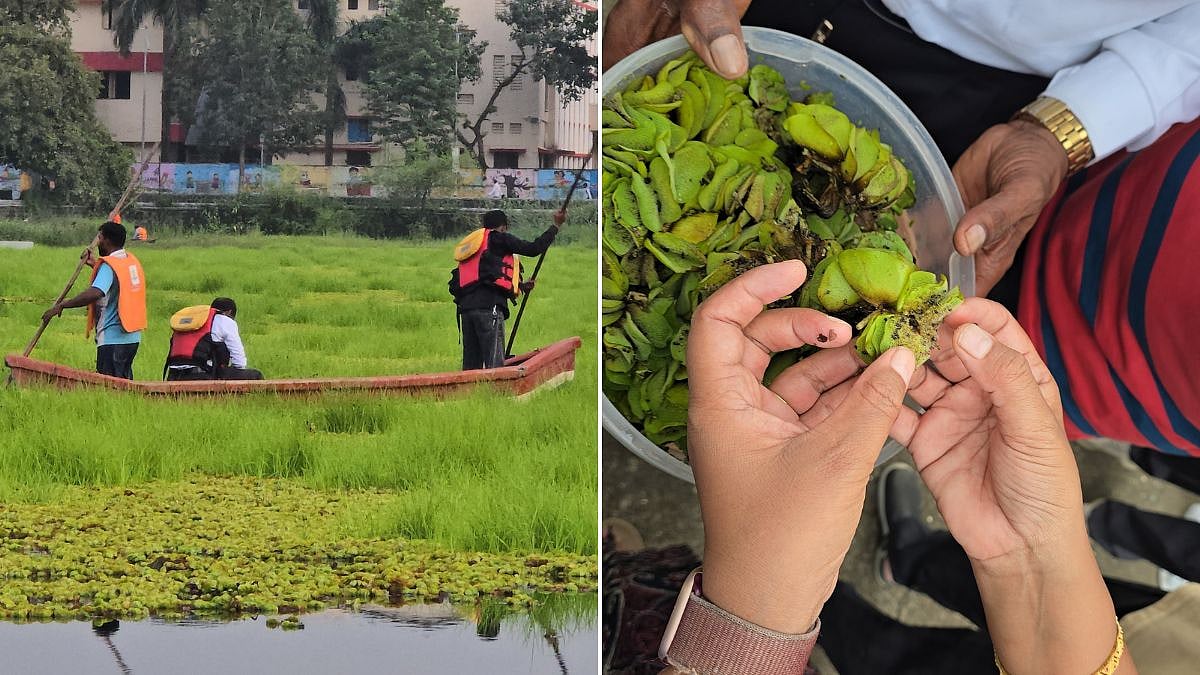
Panvel, September 15, 2026: The Panvel Municipal Corporation (PMC), in collaboration with the ICAR-Directorate of Weed Research, Jabalpur, has released another 50,000 Cyrtobagous salviniae weevils into the historic Wadale Lake as part of an ongoing biological control programme to tackle the invasive aquatic weed Salvinia molesta.
The second phase of the initiative was launched recently following the release of 20,000 weevils in the first phase on May 7, 2026. Civic officials said the insects have multiplied naturally in the lake's favourable conditions, prompting the release of another batch to accelerate the control of the weed.
The initiative was undertaken following directions from Panvel mayor Nitin Patil and municipal commissioner Mangesh Chitale.
Biological Control Measures
Cyrtobagous salviniae is a biological control agent that primarily feeds on Salvinia molesta, commonly known as giant salvinia or water fern. According to the civic administration, its specific association with the invasive weed makes it a relatively targeted approach, reducing the need for chemical treatment and limiting the potential impact on other aquatic plants and organisms.
"The reduction in the spread of salvinia is expected to improve water circulation in the lake and help restore the natural balance of its aquatic ecosystem. It is also expected to create a more favourable habitat for migratory birds and other aquatic organisms," said deputy municipal commissioner Dr Vaibhav Vidhate.
The PMC said the biological control programme is aimed at addressing the salvinia infestation through a scientific and environmentally sustainable method rather than relying extensively on chemical control measures.
Impact On Lake Ecosystem
Salvinia molesta, a free-floating aquatic plant native to South America, particularly Brazil, can spread rapidly and form dense mats over water bodies. Such growth can interfere with water circulation and affect aquatic ecosystems.
Under the programme, the PMC and ICAR-Directorate of Weed Research are monitoring the gradual impact of the weevils on the weed. Officials said the salvinia is expected to begin turning yellowish and dark chocolate-brown as the biological control takes effect.
According to the projected timeline, the first visible stage of deterioration is expected by February 7, 2027, while the weed is expected to be substantially eliminated over the subsequent nine months, with the process projected to be completed by November 7, 2027.
Efforts To Restore Wadale Lake
The civic body said the initiative is intended not merely to clear the lake of the invasive weed but also to conserve its aquatic ecosystem, biodiversity and natural environmental balance.
The weed had remained unidentified for nearly two years until June 2025, when environmentalist Jyoti Nadkarni identified it with the assistance of biologist Dr. Suchandra Dutta.
Also Watch:

Determined to find a scientific solution, Nadkarni approached the Indian Council of Agricultural Research – Directorate of Weed Research in December 2025.
With support from Ranjana Sadolikar, chairperson of the Citizens United Forum, the team presented its findings to the Panvel Municipal Corporation, recommending biological control as the most sustainable and cost-effective alternative to repeated mechanical removal.
To get details on exclusive and budget-friendly property deals in Mumbai & surrounding regions, do visit: https://budgetproperties.in/

